Vintage
Oris
From Hölstein manufacture watchmaking and the 1938 Big Crown Pointer Date to vintage divers, Chronoris and the mechanical revival: the collector’s guide to Oris’s defining eras.
Vintage Oris is less about prestige mythology than practical Swiss watchmaking. The brand built its reputation on robust, accessible mechanical watches—pilot’s models, pointer dates, alarm clocks, divers and chronographs—made at serious industrial scale in Hölstein.
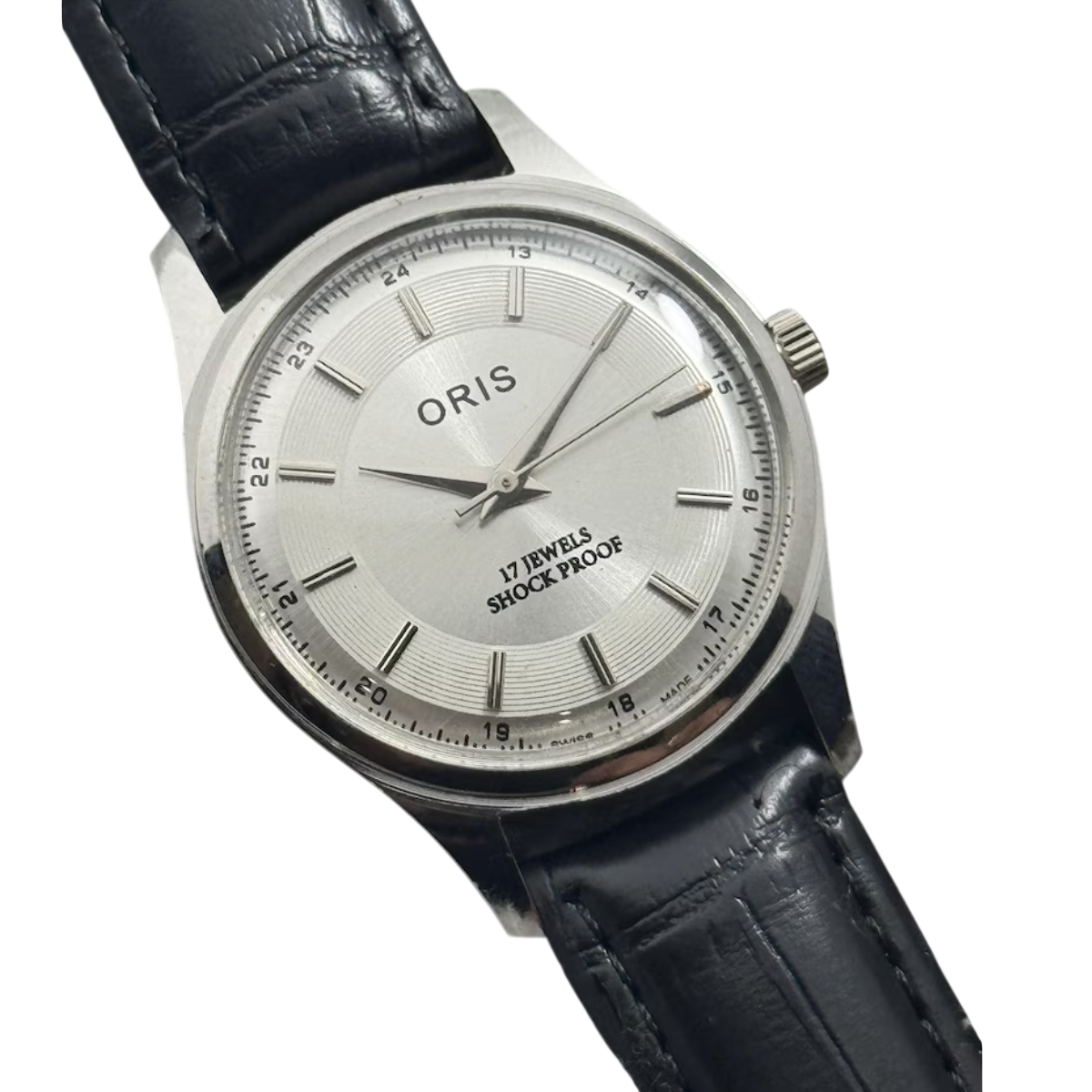
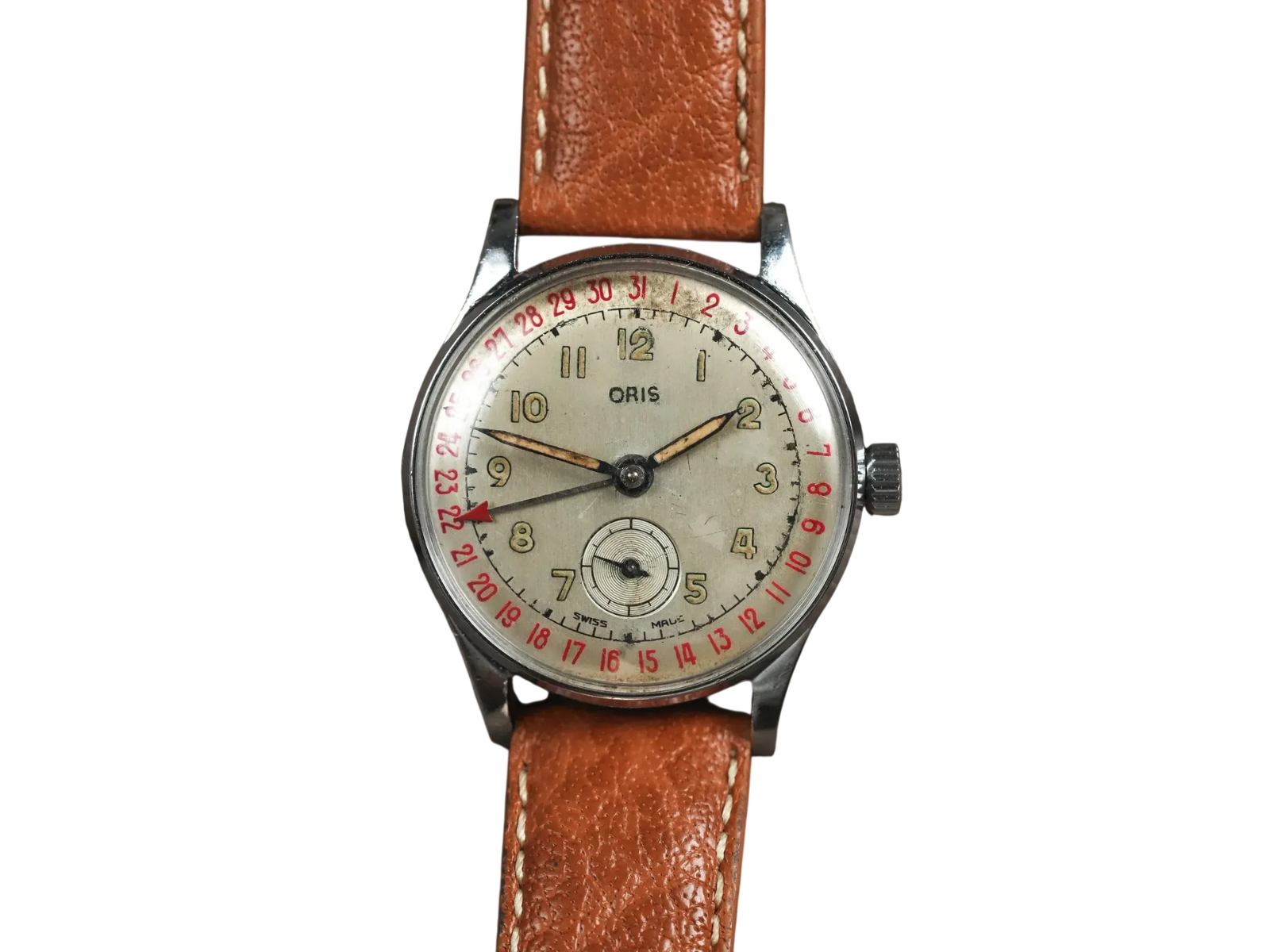
Independent Swiss watchmaking without the theatre.
Oris was founded in Hölstein in 1904 and grew into one of Switzerland’s significant industrial watch manufacturers. Its historical strength was not haute horlogerie in the traditional Geneva sense, but the ability to make reliable mechanical watches at scale while retaining distinctive practical ideas.
The 1938 Big Crown Pointer Date is the clearest example. Designed for pilots, its oversized crown and central date hand created a visual identity that has remained in the Oris catalogue for generations. Later diving watches, chronographs and automatic models expanded the same functional philosophy into sport.
For collectors, vintage Oris offers something increasingly unusual: real historical depth without the pricing intensity attached to the most famous Swiss names. Good examples reward attention to dials, cases and movements rather than logo prestige alone.
Vintage Oris is a reminder that serious Swiss watchmaking was never confined to the luxury establishment.
The quick collector’s view
Most recognisable
The Big Crown Pointer Date: Oris’s enduring aviation design, first introduced in 1938.
Connoisseur choice
An early 1960s diver, original Chronoris or sharply preserved pointer-date reference with period-correct dial and case.
Best entry point
Mid-century hand-wound and automatic Oris watches, plus later pointer dates in honest, original condition.
From Hölstein factory to mechanical independence.
Oris was founded in 1904 by Paul Cattin and Georges Christian, who took over a watch factory in Hölstein and named their new company after a nearby brook. The business expanded rapidly through vertically organised production and an emphasis on affordable mechanical watches.
By the mid-20th century, Oris had become a substantial manufacturer producing movements, escapements and finished watches. Its later history was shaped by the quartz crisis, incorporation into ASUAG and, crucially, the 1982 management buyout that restored independence and refocused the company on mechanical watchmaking.
Oris is founded in Hölstein
Paul Cattin and Georges Christian establish the company in the Swiss village that remains closely associated with the brand today.
Industrial expansion
Oris grows through large-scale production of dependable mechanical watches and develops increasing control over the components used in its movements.
The Big Crown is born
Oris introduces a pilot’s watch with an oversized crown and central pointer-calendar hand, creating the design that becomes the company’s historical signature.
Alarm clocks sustain production
Reduced international distribution during the Second World War pushes Oris to diversify into alarm clocks, including a later eight-day model.
Scale, aviation and sport
Oris expands its mechanical catalogue and enters the modern sports-watch era. By the end of the 1960s, it is among the world’s largest watch and clock manufacturers.
Chronoris and ASUAG
The Chronoris becomes Oris’s first chronograph, while the company also enters the ASUAG group as the Swiss industry consolidates around the quartz crisis.
Independence returns
Rolf Portmann and Ulrich W. Herzog lead a management buyout, restoring Oris as an independent company and setting the stage for an explicitly mechanical future.
An Oris timeline.
Oris’s major milestones trace a different version of Swiss watch history: factory scale, practical complications, accessible mechanical watches, the trauma of quartz and a deliberate return to independence.
The dates below provide a historical framework rather than a complete reference chart. Vintage Oris often requires movement- and dial-level research because formal model naming was less consistent than it is today.
Oris is founded
Paul Cattin and Georges Christian establish the company in Hölstein.
Wristwatch production expands
Oris increasingly adapts its watchmaking to the wrist as the format becomes dominant.
Big Crown Pointer Date
A pilot’s watch with oversized crown and central date hand establishes Oris’s most enduring design.
In-house escapements
Oris manufactures its own escapements as part of its increasingly integrated production structure.
Alarm-clock production
The company diversifies during wartime disruption to preserve production and employment.
Eight-day clock
An eight-day power-reserve alarm clock becomes an important post-war Oris product.
The road to full Swiss lever production
A legal and technical struggle over movement regulation becomes an important turning point in Oris’s ability to compete at higher mechanical standards.
Industrial peak
Oris employs hundreds of people and produces more than a million watches and clocks annually.
Chronoris
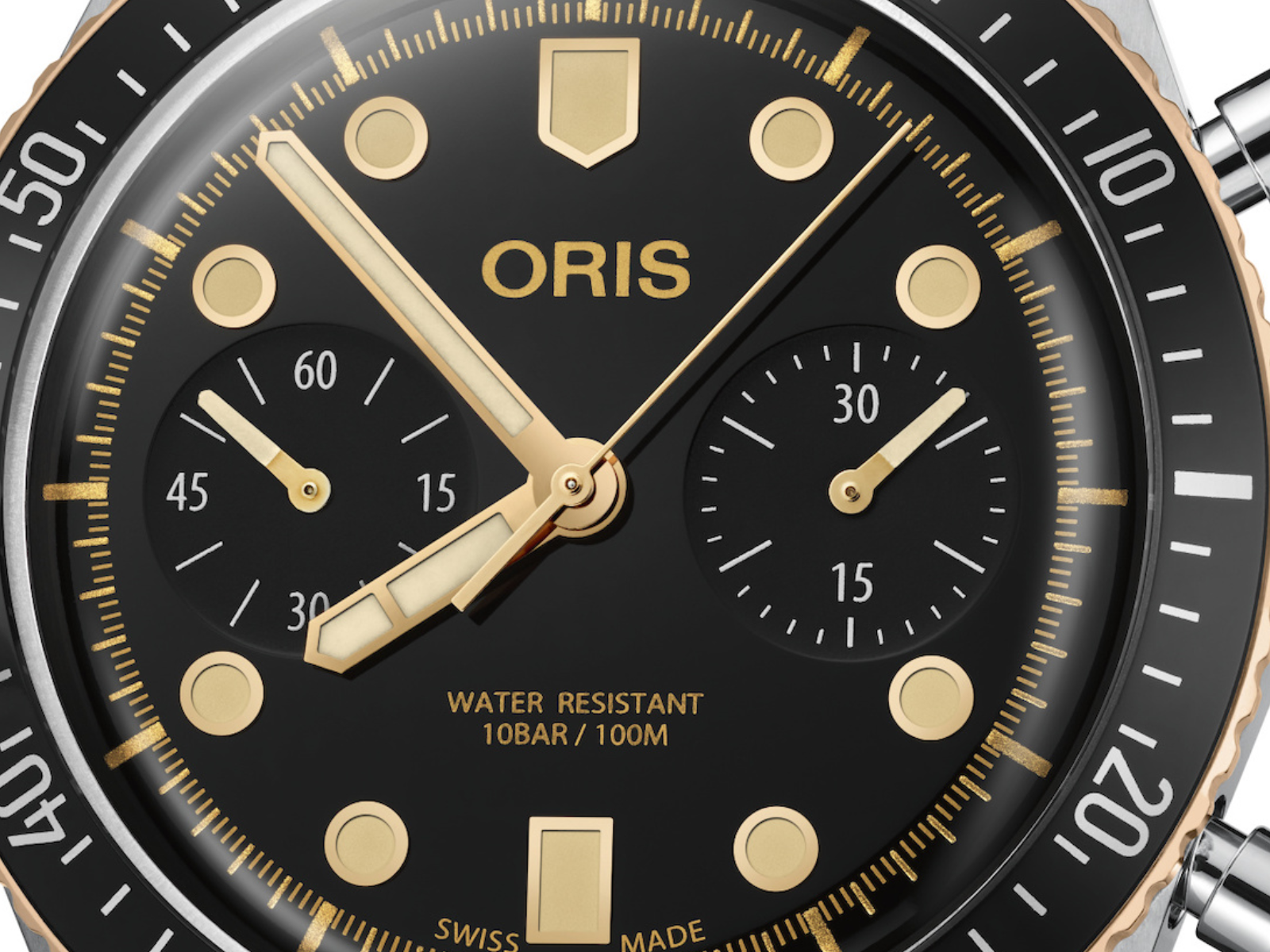
Oris introduces its first chronograph, a distinctive motorsport-inspired watch with inner timing bezel.
ASUAG era
Oris joins the industrial group that later becomes part of the Swatch Group structure.
Management buyout
Rolf Portmann and Ulrich W. Herzog restore Oris’s independence and rebuild around mechanical watches.
Calibre 581
A complicated mechanical movement with in-house-developed moon-phase module validates the renewed mechanical strategy.
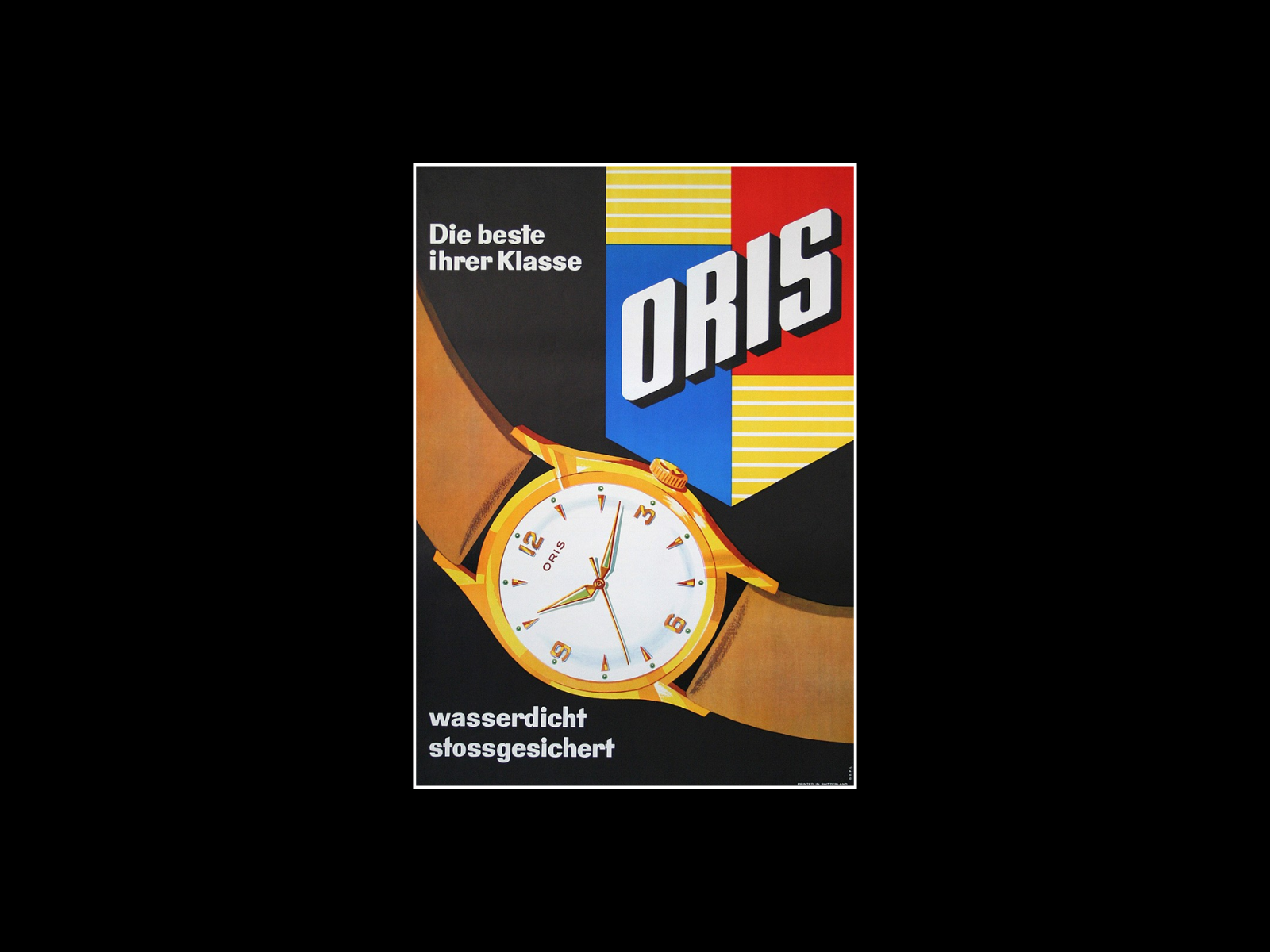
Hölstein in print.
Period advertising reveals how Oris sold practical Swiss watchmaking: legibility, useful functions, reliability and attainable mechanical ownership.
The four vintage eras.
Vintage Oris is easier to understand through changes in production and company structure rather than through a small number of famous references. The brand evolves from industrial manufacture to post-war scale, sports-watch expansion and finally mechanical independence.
Each period brings different movement architectures, dial signatures and case styles. The 1938 Big Crown sits across those eras as the strongest continuous visual thread.
Industrial foundations
Affordable mechanical watches and increasingly integrated production establish Oris as a major Hölstein manufacturer.
Big Crown and post-war growth
The Pointer Date, alarm clocks and expanding mechanical production create the core historical Oris identity.
Sport, scale and disruption
Divers, chronographs and industrial expansion culminate just as quartz and industry consolidation transform Swiss watchmaking.
Mechanical independence
The management buyout and rejection of quartz rebuild Oris as the independent mechanical brand recognised today.
Six important vintage Oris watches.
This is not a complete reference catalogue. It is a map of the watches that best explain vintage Oris: Big Crown Pointer Dates, early divers, Super models, Chronoris and the mechanical watches that bridged the company into its independent revival.
Vintage Oris reference information can be less standardised than for Rolex or Omega. Movement calibre, dial layout, case-back markings and overall coherence therefore deserve close attention.
 BC
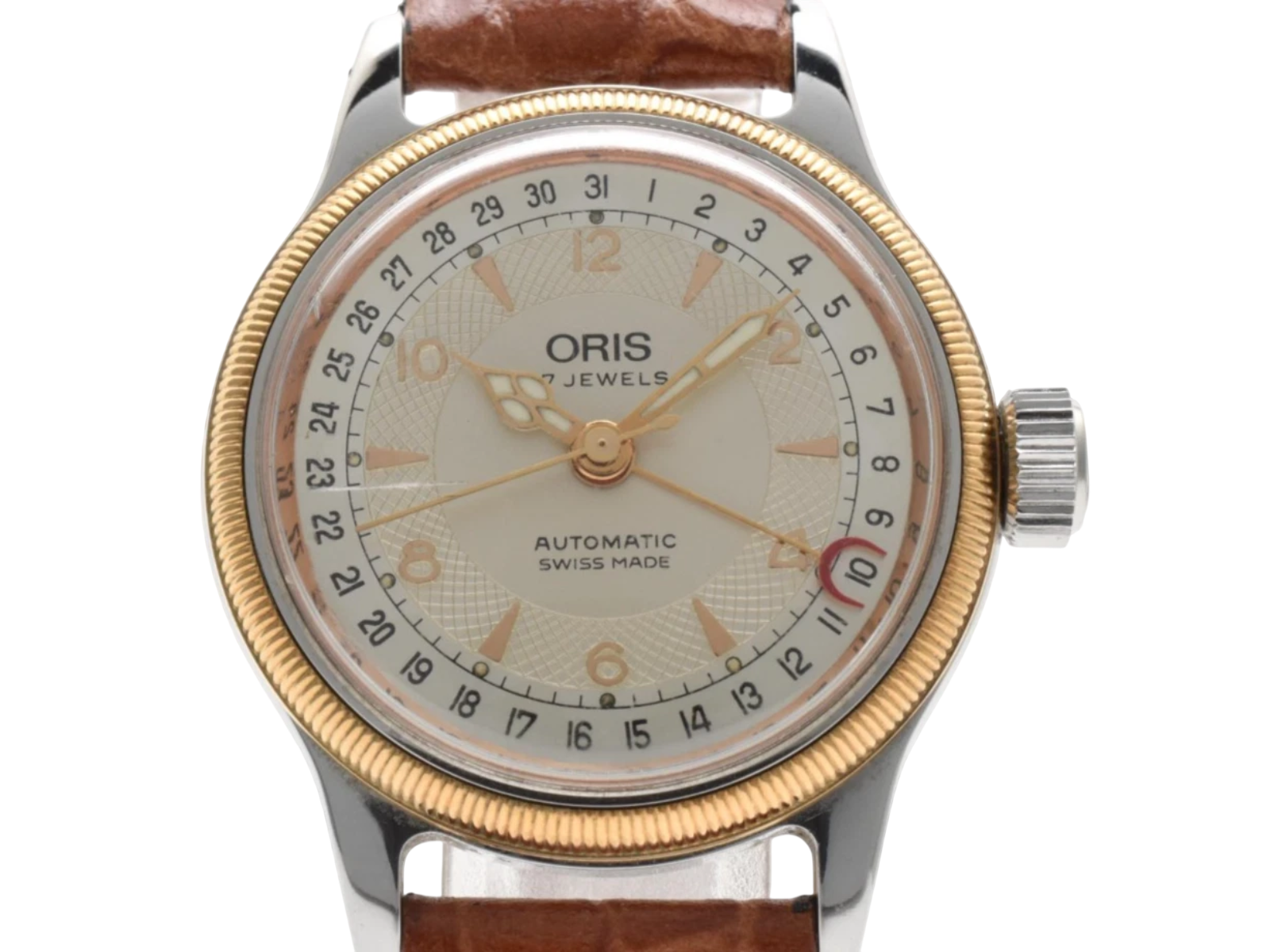
BCBig Crown Pointer Date
The defining Oris vintage watch: oversized crown, highly legible dial and central pointer-date hand.
 65
651960s Oris Diver
Mid-century Oris diving watches combine compact cases, rotating bezels and bold luminous dials with accessible tool-watch character.
 S
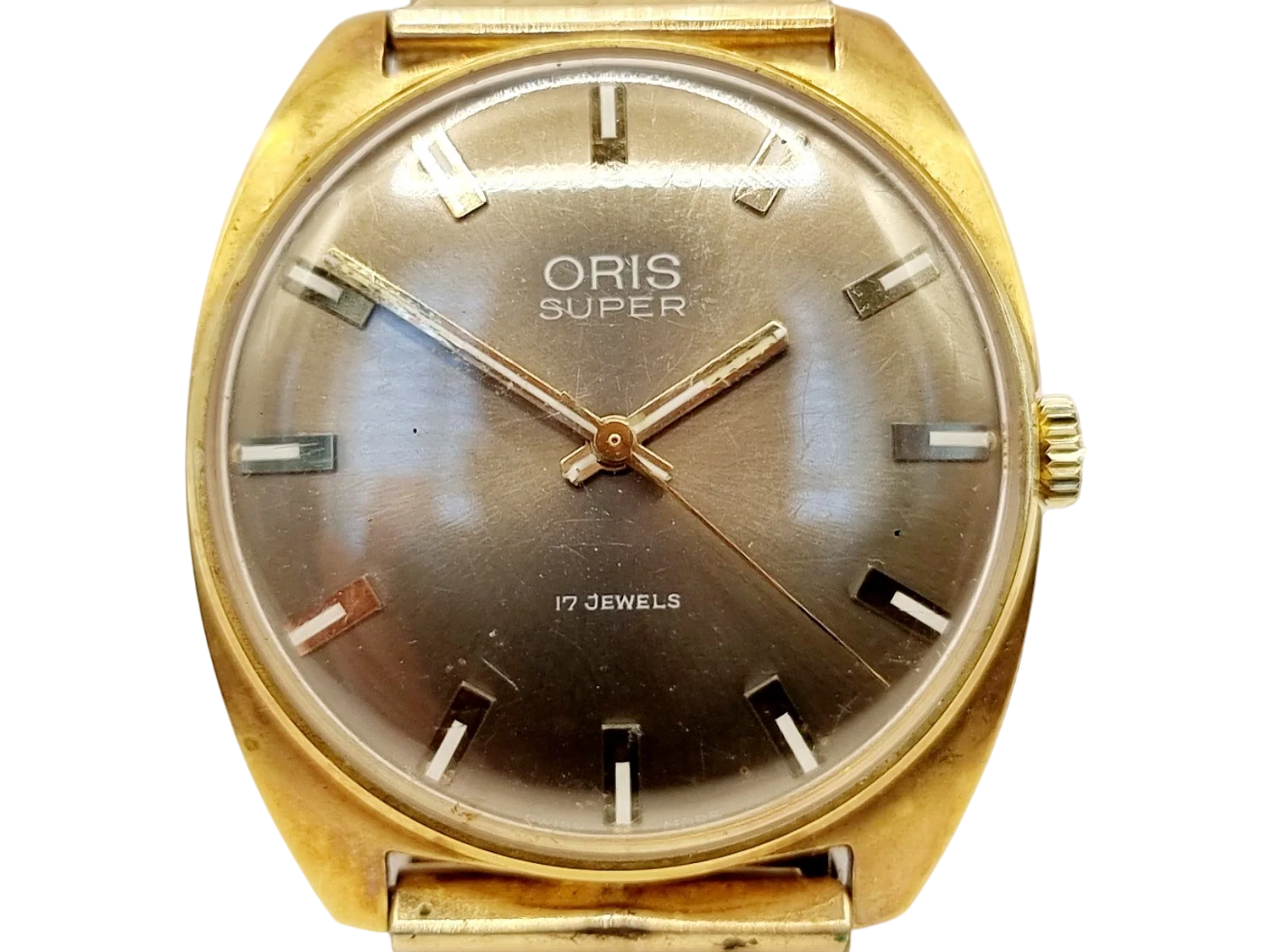
SOris Super
A broad family of better-specified mid-century watches associated with Oris’s push toward improved movement performance and finishing.
 C
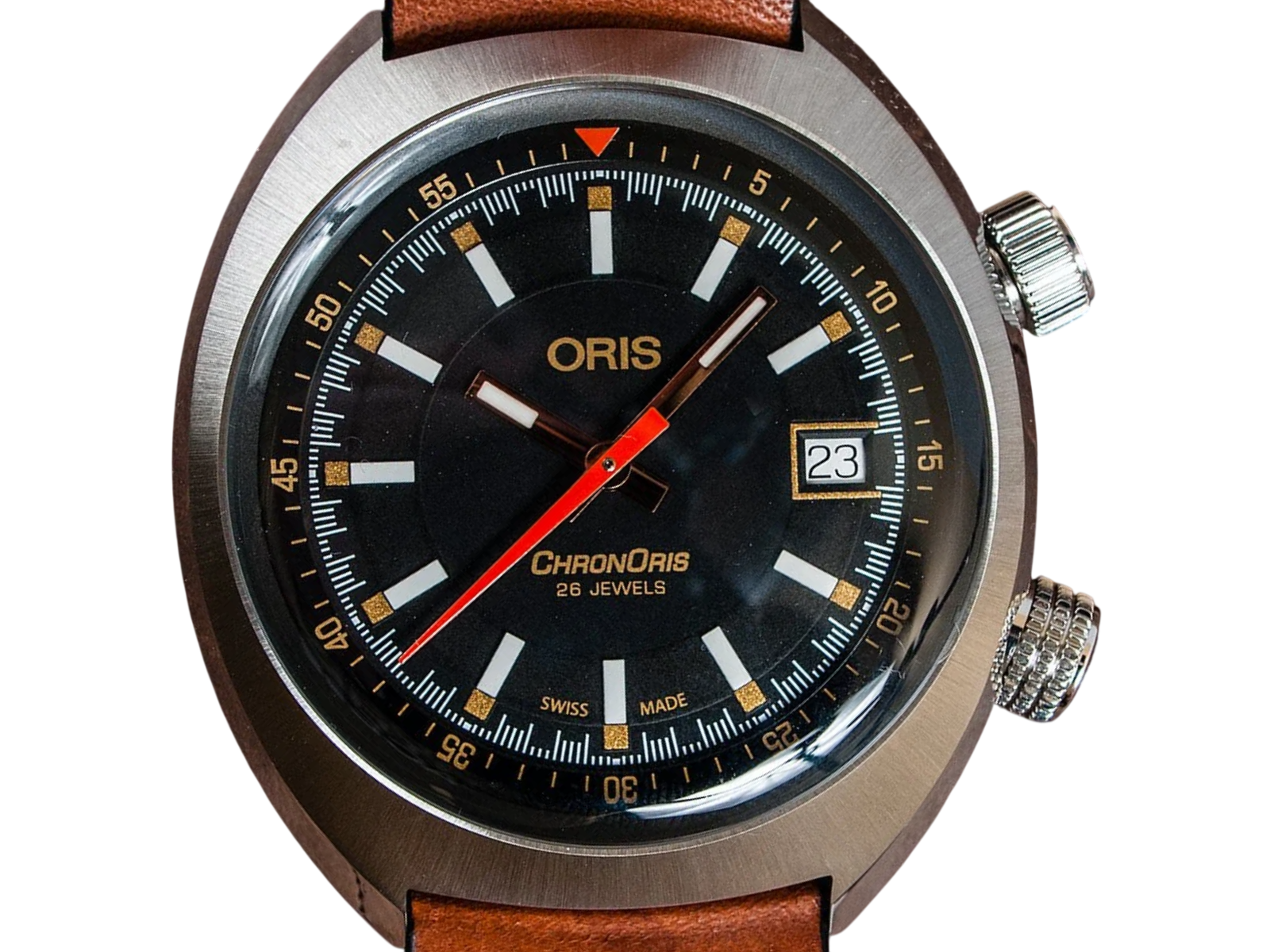
CChronoris
Oris’s first chronograph, launched in 1970 with motorsport styling and an inner rotating timing bezel.
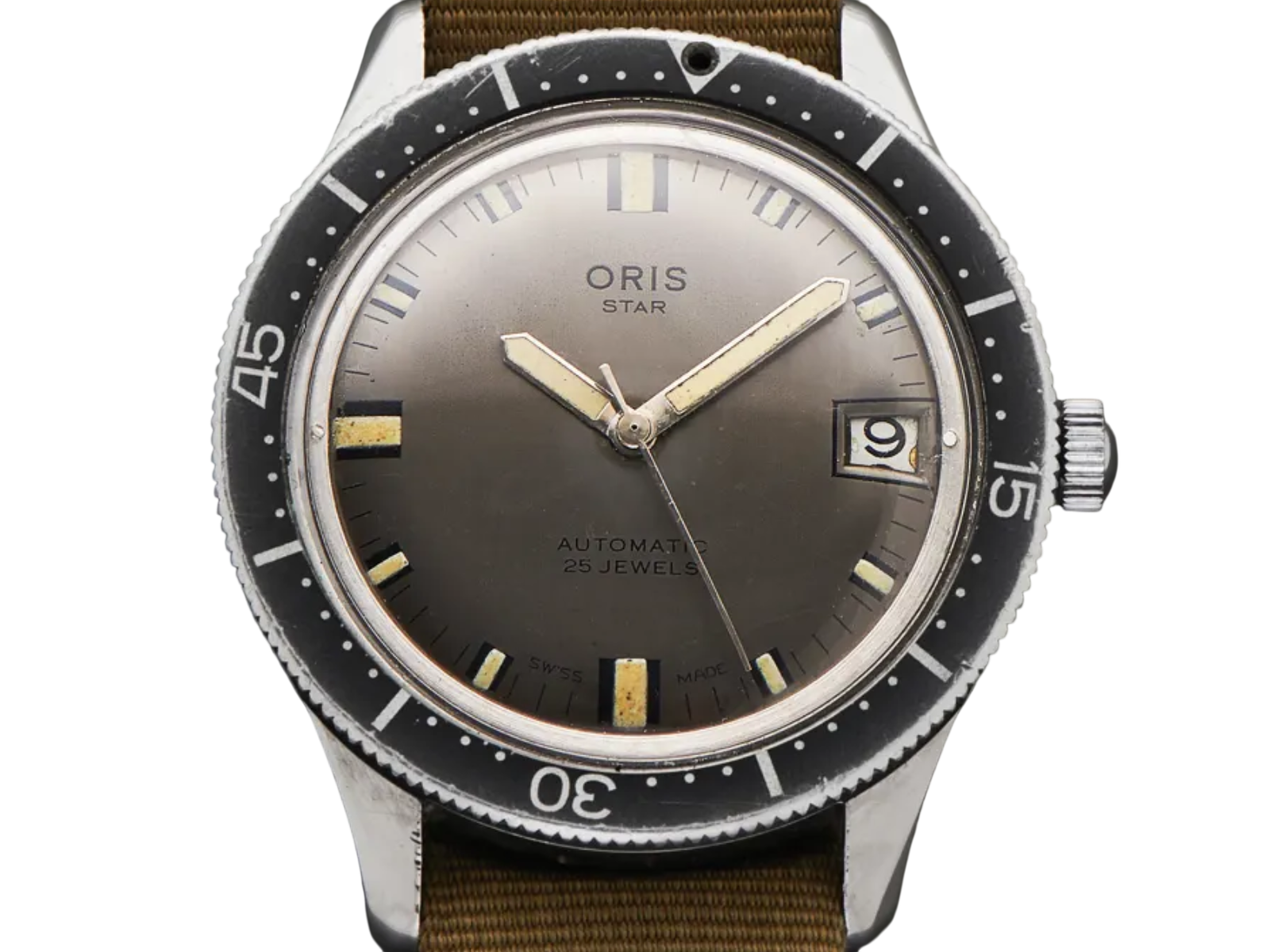 ★
★Oris Star
Period automatic models that capture the company’s late-1960s and 1970s shift toward more contemporary cases and dials.
 PD
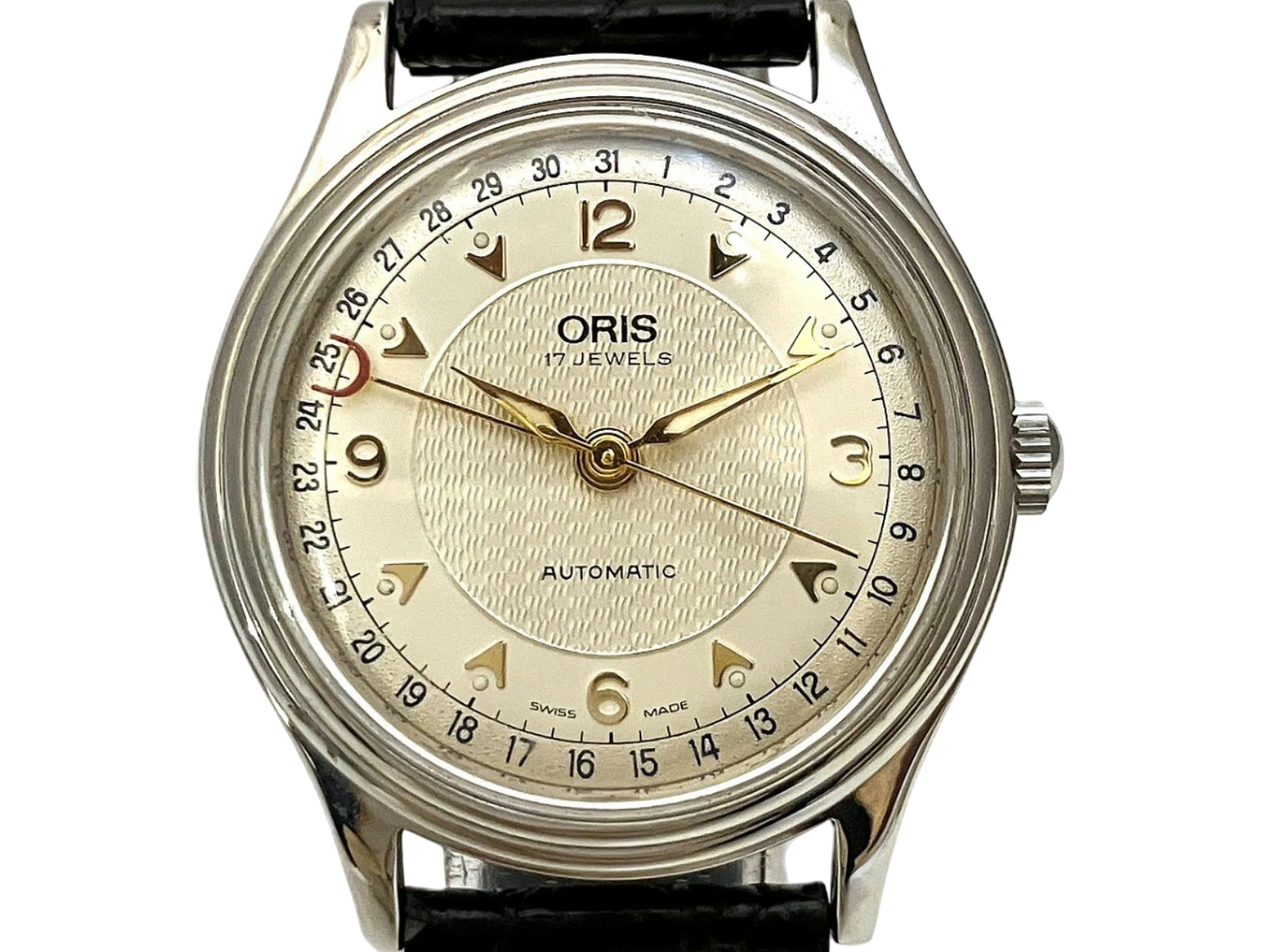
PDPointer Calendar Variants
Beyond the classic Big Crown, Oris used pointer-calendar displays across numerous practical mid-century references.
Reading the catalogue.
Old catalogues, movement tables and period advertisements are particularly useful with Oris because reference naming was historically less rigid than on many prestige brands.
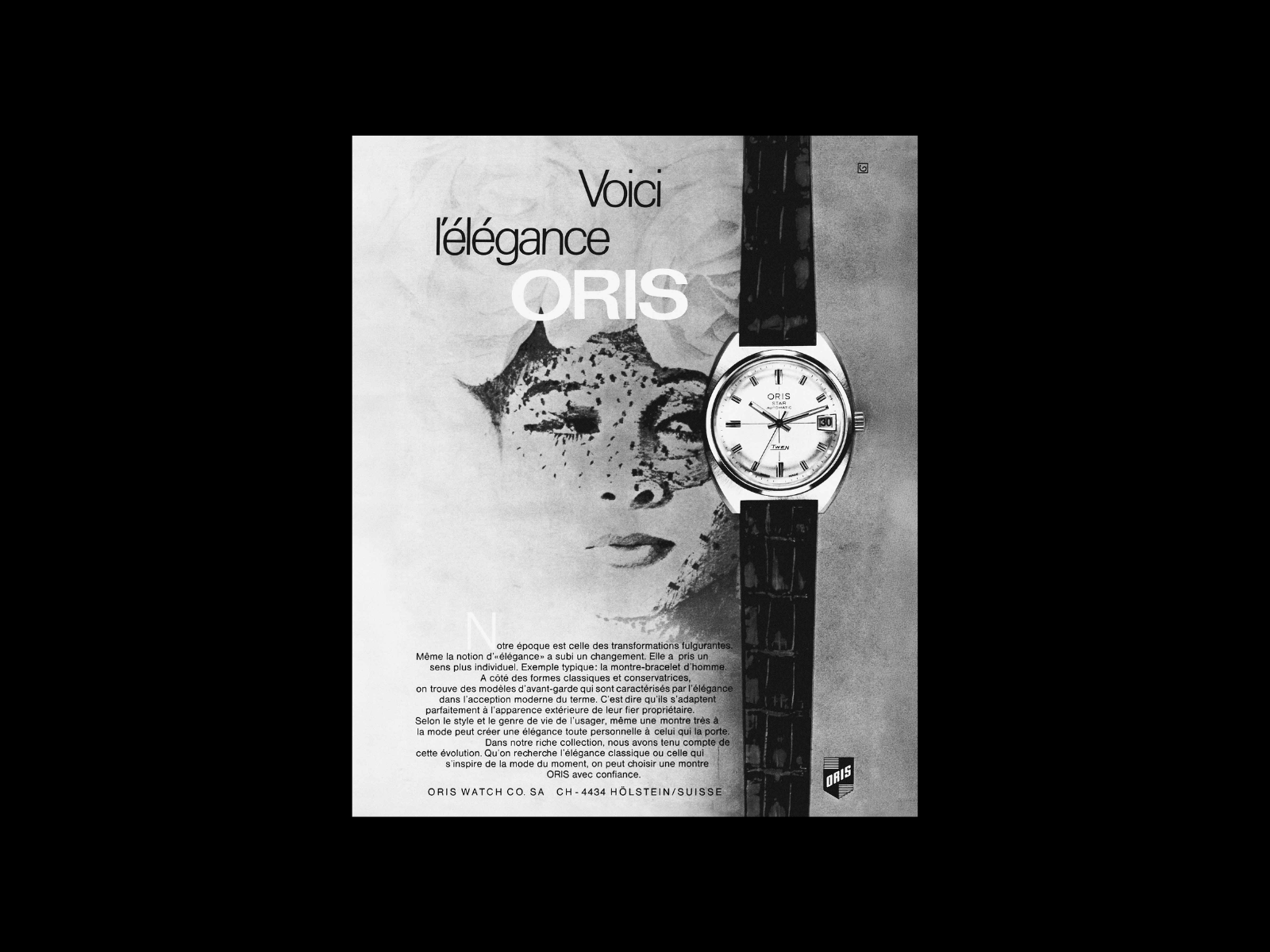
What makes a vintage Oris look like an Oris?
Vintage Oris tends to express function directly. Large crowns, pointer-date hands, high-contrast numerals, practical bezels and straightforward case construction give many watches a purposeful character.
The brand’s appeal is rarely about precious materials or decorative excess. Even its more elegant watches usually retain a sense of mechanical utility.
 31
31A complication turned into identity.
The central date hand transforms a practical calendar display into Oris’s most recognisable visual signature.
Oversized crowns
Originally intended for gloved pilots, the large crown creates both practical leverage and immediate visual character.
Functional numerals
Large Arabic figures and strong minute tracks reflect Oris’s aviation and tool-watch roots.
Industrial movements
Oris’s historic movements emphasise robust production and serviceability rather than ornamental finishing.
Accessible experimentation
Divers, inner bezels, pointer calendars and unusual case shapes show a brand willing to innovate within practical price constraints.
Three things collectors learn quickly.
Vintage Oris rewards patience because documentation is less centralised than it is for some luxury marques. Identifying the correct watch often means comparing movements, case backs and period advertising rather than relying on one definitive reference database.
Collectors also learn that value can be found in originality rather than rarity alone. A modest, untouched pointer-date watch can be more satisfying than a supposedly rare example with a refinished dial.
References can be messy.
Model names were not always used consistently. Movement and case information can be more useful than seller descriptions.
Redials are common.
Affordable vintage watches were frequently refinished rather than preserved for future collectors. Dial originality matters.
Buy condition, not hype.
Oris remains a market where a sharp, honest example can matter more than chasing the most fashionable reference.
Where the interest sits.
Collector interest is strongest around the Big Crown, early diving watches and Chronoris, where recognizable design and genuine historical significance overlap. The market remains comparatively approachable.
These ratings are editorial indicators rather than price forecasts. Dial originality, bezel condition, movement health and overall coherence often matter more than a nominally rare reference.
High
The foundational Oris design and the clearest link between the vintage and modern catalogue.
High
Strong period design, genuine tool-watch heritage and vulnerable original bezels and dials.
High
Oris’s first chronograph and one of the most visually distinctive watches in the archive.
Medium
An interesting window into the company’s improving mechanical ambitions during the 1960s.
Medium
Accessible vintage watches carrying Oris’s most characteristic complication.
Medium
Often inexpensive and stylistically bold, with growing appeal as 1970s design is reassessed.
Modern Oris alternatives.
Oris has retained unusually direct links with its archive. The Big Crown Pointer Date remains a live collection, while Divers Sixty-Five and Chronoris revivals have translated historical designs into contemporary watches.
For buyers who like the vintage aesthetic but want modern water resistance, sapphire crystals and straightforward servicing, the current catalogue offers several natural alternatives.
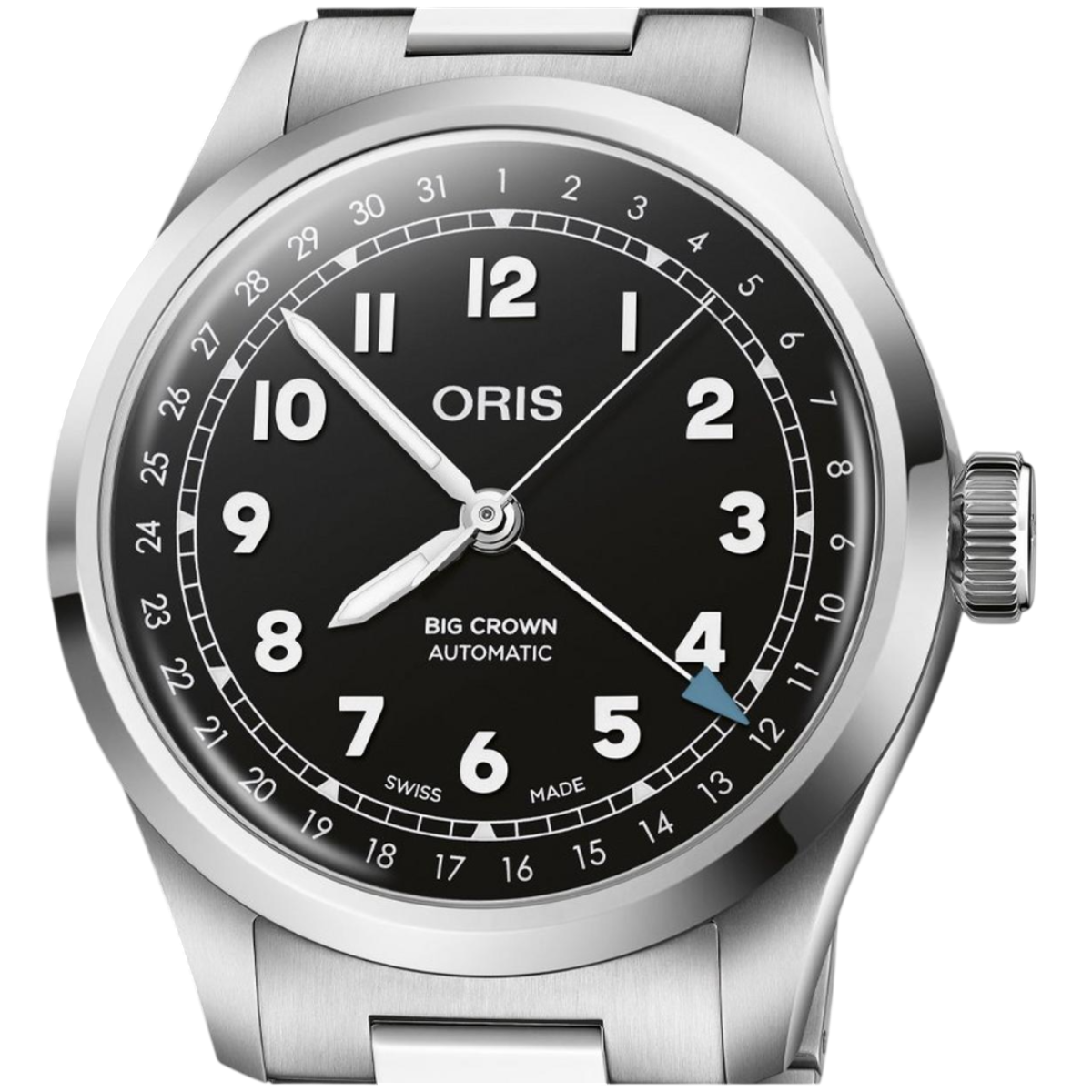
Big Crown Pointer Date
The modern continuation of Oris’s 1938 aviation icon.
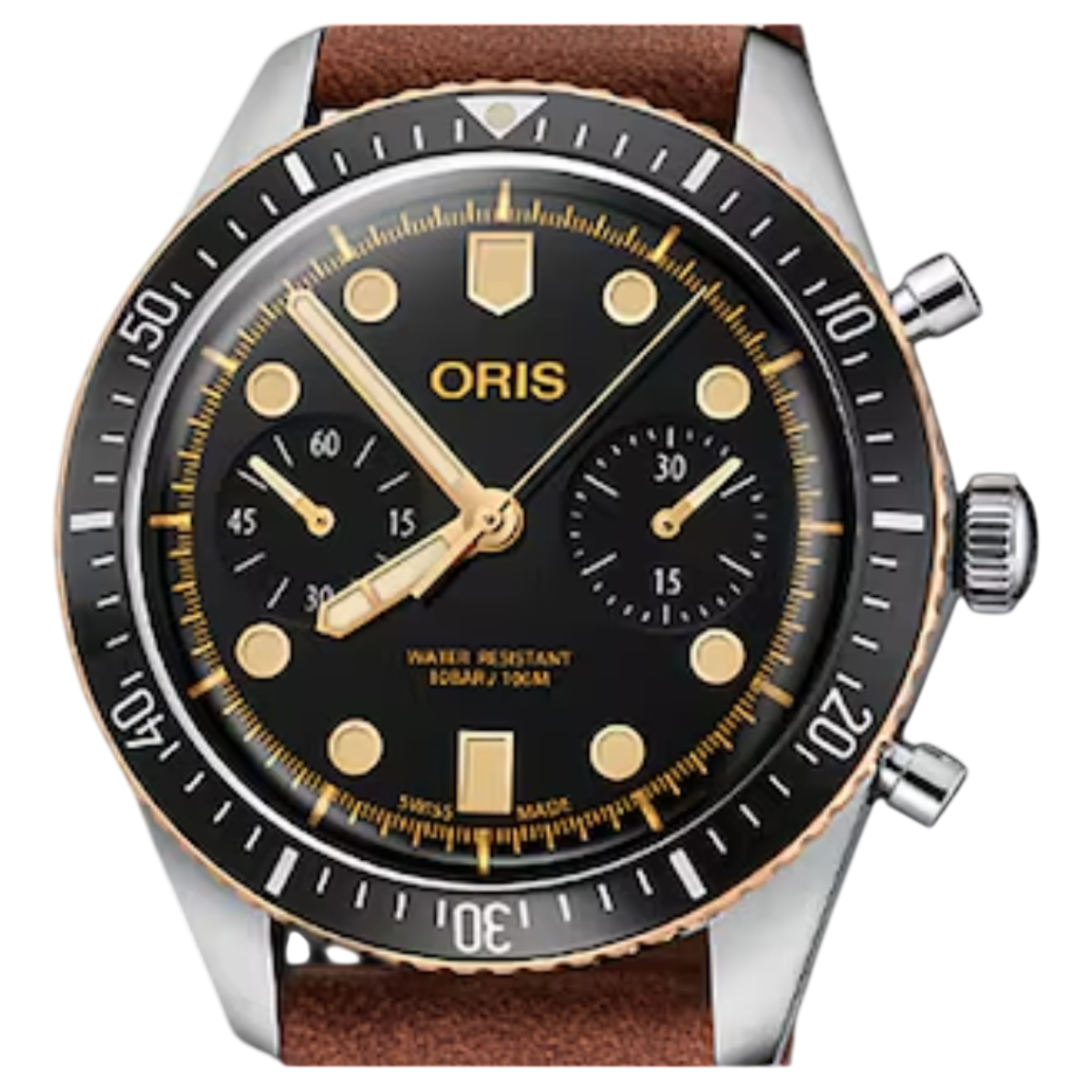
Divers Sixty-Five
A modern dive watch deliberately rooted in Oris’s mid-1960s underwater designs.
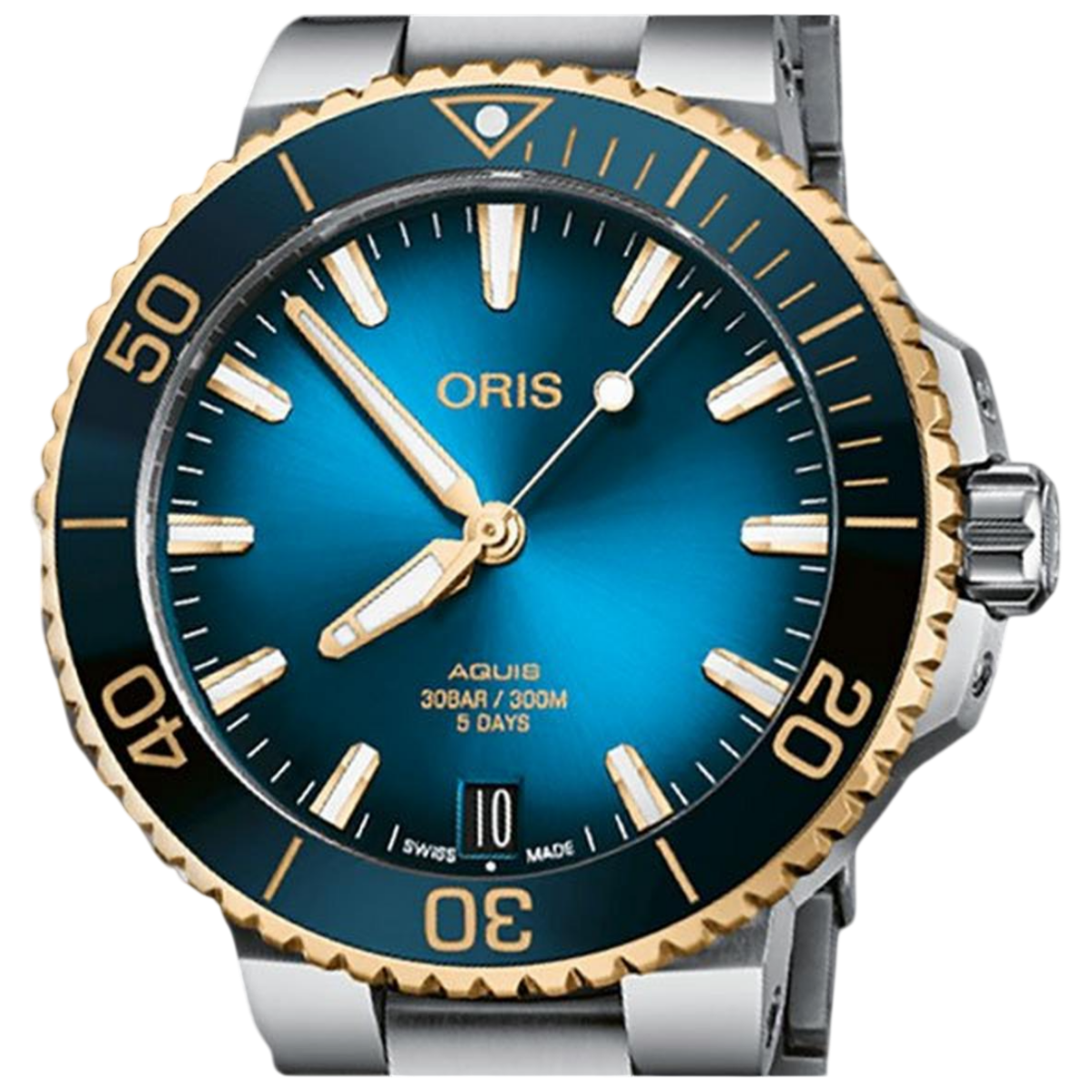
Aquis Date
A contemporary Oris diver for buyers who prefer modern engineering to direct vintage styling.
The Oris archive is a history of practical independence.
The Big Crown may be the natural entry point, but the richer story moves through industrial Hölstein watchmaking, mid-century mechanical production, diving watches, Chronoris and the management buyout that allowed Oris to rebuild around mechanical watches.