Vintage
Panerai
From Florence workshop and naval instruments to the Radiomir, Ref. 3646, Luminor crown guard and pre-Vendôme revival: the collector’s guide to Panerai’s rare historical era.
Vintage Panerai is unlike most vintage watch collecting. Genuine wartime and post-war military watches were produced in tiny numbers for specialist use, while the civilian Panerai story only begins in earnest in the 1990s.


A military instrument before it was a luxury watch.
Panerai’s historical importance begins not with a conventional watch manufacture but with a Florentine watch shop, workshop and supplier of precision instruments. Its relationship with the Italian Navy led to luminous sights, underwater equipment and eventually large wristwatches designed for specialist military operators.
The early watches were purpose-built and extremely scarce. Panerai relied on externally supplied movements and cases—most famously Rolex-sourced components—then modified dial construction, luminosity and case architecture to meet naval requirements.
For collectors, this means provenance matters unusually strongly. A genuine military Panerai is not simply an old watch from a famous brand; it is a rare technical object whose case, movement, dial construction and service history must be interpreted together.
Vintage Panerai is not a broad market. It is a narrow archive of military tools, prototypes and a handful of civilian revival pieces.
The quick collector’s view
Most recognisable
The Ref. 3646 Radiomir: 47 mm cushion case, wire lugs, luminous sandwich dial and military purpose.
Connoisseur choice
A documented 6152/1 with crown-protection bridge and Angelus 8-day movement, or an early pre-Vendôme Luminor.
Best entry point
Pre-Vendôme 1993–97 Panerai, where rarity remains significant but provenance is easier to establish than on wartime pieces.
From Florentine workshop to secret naval supplier.
Giovanni Panerai opened his first watch shop in Florence in 1860. The business later became Orologeria Svizzera and developed into a supplier of watches, instruments and technical equipment, with the Panerai family building a long relationship with the Italian Navy.
The decisive transformation came through military requirements for visibility and underwater use. Radiomir luminous material, large Rolex-based cases, sandwich dials and later the distinctive crown-protection bridge created the visual language that still defines Panerai.
Giovanni Panerai opens in Florence
The first shop serves as watch retailer, workshop and watchmaking school, establishing the family business that later becomes Officine Panerai.
Radiomir is patented
A radium-based luminous compound is developed for military instruments and sights, giving Panerai the name that later becomes attached to its earliest wristwatches.
The Ref. 2533 prototype
Experimental underwater watches are tested for the Italian Navy. The best-known prototype uses a Rolex-Geneva base modified by Panerai.
Ref. 3646 enters military service
The large cushion-cased Radiomir becomes the defining wartime Panerai, with wire lugs, highly luminous dial and Rolex/Cortebert-based hand-wound movement.
Luminor and the crown-protection bridge
The Luminor name is registered for a new luminous material, while the case evolves toward integrated lugs and the patented lever-operated crown-protection device.
The 6152/1 evolves
Selected watches receive the crown-protection bridge, tritium-based luminosity and, in some examples, the Angelus SF240 movement with an eight-day power reserve.
The pre-Vendôme civilian era
Panerai launches limited civilian Luminor, Luminor Marina and Mare Nostrum models. These watches create the bridge between military obscurity and modern luxury recognition.
A Panerai timeline.
Panerai’s history is defined by long periods of secrecy followed by sudden visibility. Many of the watches now considered iconic were originally components in a wider military instrument programme rather than commercial luxury products.
The dates below provide a framework. Genuine vintage Panerai often requires case- and movement-level research because surviving military watches may have been modified, serviced or reconfigured during use.
Florence beginnings
Giovanni Panerai opens his first watch shop and workshop.
Radiomir patent
The luminous compound developed for military equipment is formally documented.
Ref. 2533 prototype
Experimental underwater wristwatches are tested for the Italian Royal Navy.
Ref. 3646
The archetypal wartime Radiomir enters military supply in its large 47 mm cushion case.
Luminor trademark
Panerai registers the Luminor name as its luminous-material technology evolves beyond Radiomir.
Refs. 6152 and 6154
More robust cases with integrated lugs are tested for increasingly demanding underwater military use.
Crown-protection patent
The lever-operated bridge that later defines the Luminor is patented internationally.
6152/1 with Angelus 8-day movement
Selected military watches adopt the long-running Angelus SF240 calibre and evolved dial construction.
First civilian collection
Panerai launches Luminor, Luminor Marina and Mare Nostrum watches for the public.
Slytech
Sylvester Stallone’s association with Panerai brings the obscure Florentine brand wider visibility.
Vendôme acquisition
The Vendôme Group acquires Officine Panerai and prepares the brand for international luxury distribution.
International launch
Panerai makes its modern international debut and the large-watch aesthetic begins to influence the wider market.
Telling Panerai’s story in vivid colour.
Historic Panerai material is shows off the brand’s strong maritime credentials.

The four vintage eras.
Panerai does not divide neatly into conventional commercial watch generations. Its archive is better understood through military development, the evolution from Radiomir to Luminor, and the sudden transition into civilian collecting in the 1990s.
That structure also explains why true vintage Panerai is so scarce. For decades these watches were produced for specialist military use rather than a retail market.
Florence and military instruments
Orologeria Svizzera, precision equipment and luminous technology create the foundations before the first diving-watch prototypes.
The Radiomir era
Prototype and wartime watches establish the 47 mm cushion case, luminous sandwich dial and wire-lug architecture.
The Luminor evolution
New luminous material, integrated lugs, crown protection and long-power-reserve movements refine Panerai’s naval instruments.
Pre-Vendôme and rebirth
Limited civilian watches, Slytech and the Vendôme acquisition transform a secretive military supplier into a luxury watch brand.
Six important vintage Panerai watches.
This is not a conventional market shortlist. Some of these references are exceptionally rare military watches, while others belong to the pre-Vendôme civilian period that established modern Panerai collecting.
For genuine military examples, provenance and technical coherence outweigh almost everything else. Reference labels alone are not enough.
 2533
2533Ref. 2533 Prototype
The 1935 experimental Panerai based on Rolex-Geneva components and associated with the first underwater trials.
 3646
3646Radiomir Ref. 3646
The defining wartime Panerai: 47 mm cushion case, wire lugs, luminous dial and Rolex/Cortebert-derived movement.
 6152
6152Ref. 6152
A post-war evolution with more robust integrated lugs and revised case architecture for demanding underwater use.
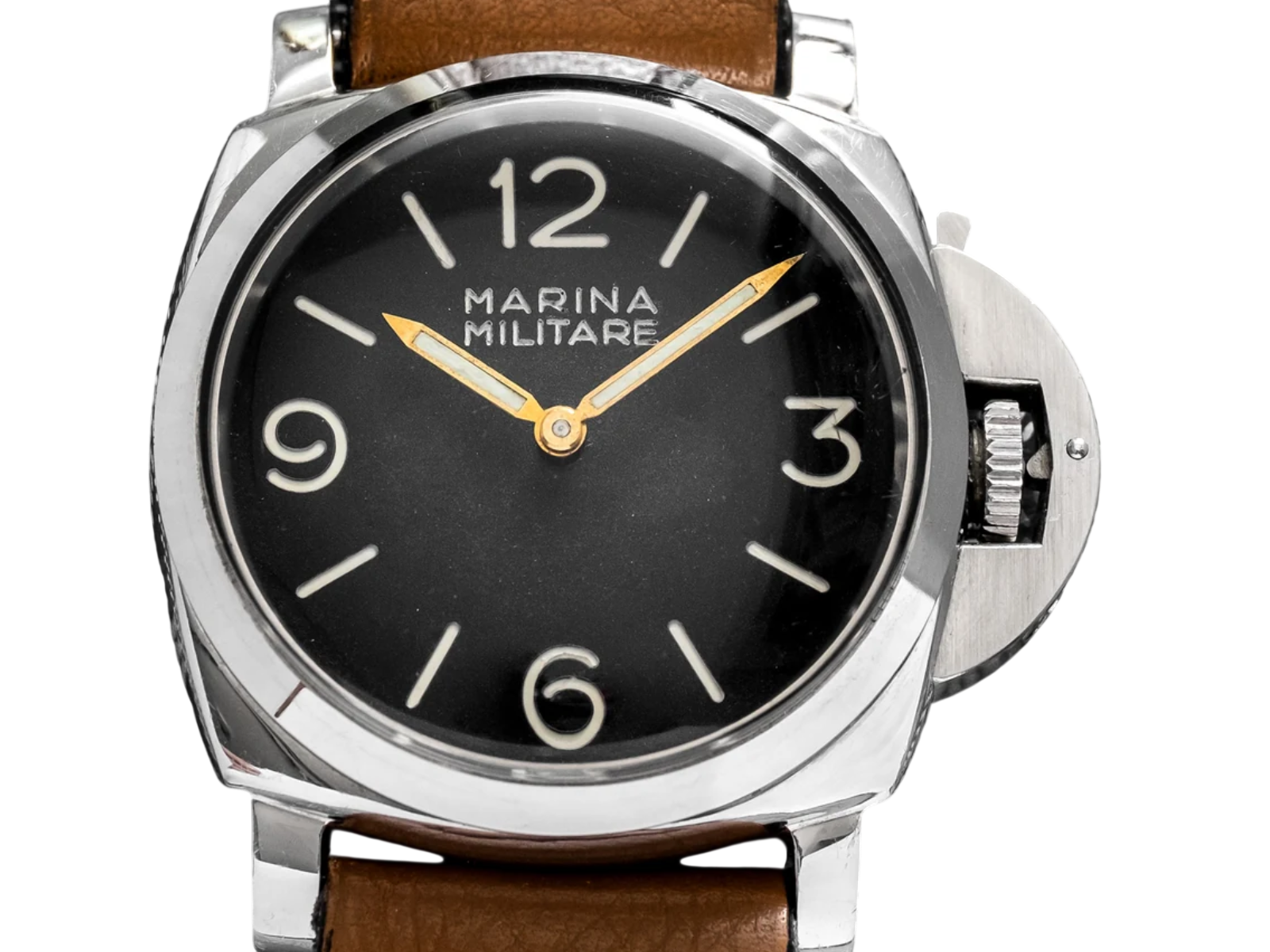 6152/1
Ref. 6152/1
The reference most closely associated with the emerging Luminor form, including examples fitted with crown-protection bridge and Angelus 8-day movement.
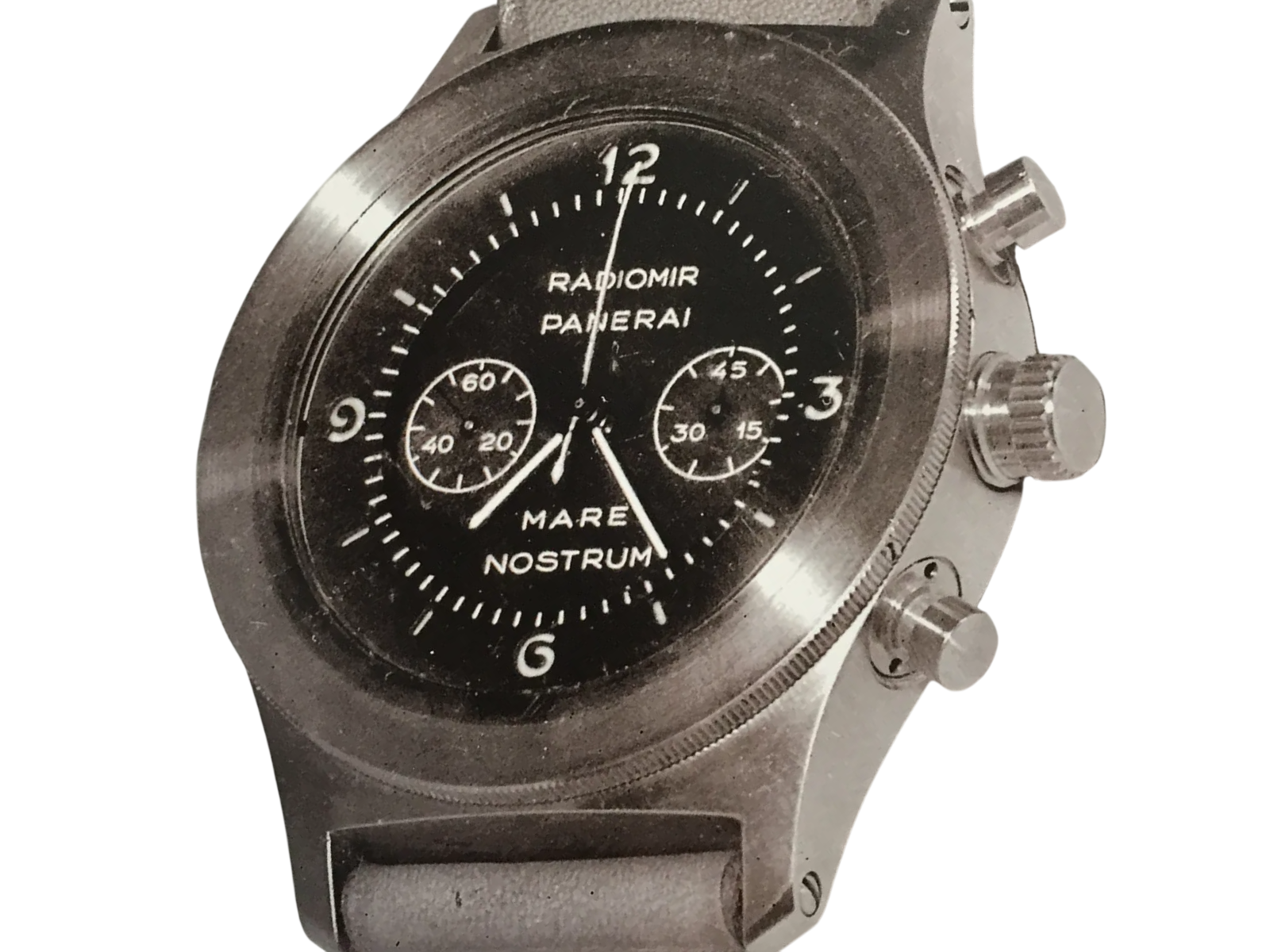 MN
MNMare Nostrum Prototype
An extraordinarily rare chronograph concept intended for deck officers and known from only a tiny number of surviving examples and records.
 PV
PVPre-Vendôme Luminor
The 1993–97 civilian watches that transformed Panerai from military obscurity into one of the most influential cult brands of the 1990s.
Reading the archive.
Panerai, patents, naval records, case studies, surviving military documents and traditional retail catalogues tell the story of the brand.

What makes a vintage Panerai look like a Panerai?
Panerai’s visual language is unusually concentrated: huge cushion cases, minimal numerals, extreme luminosity, sandwich-dial construction and oversized crowns. Almost every element originated in a practical military requirement.
The later Luminor crown-protection bridge turned technical necessity into one of the most recognisable silhouettes in modern watch design.
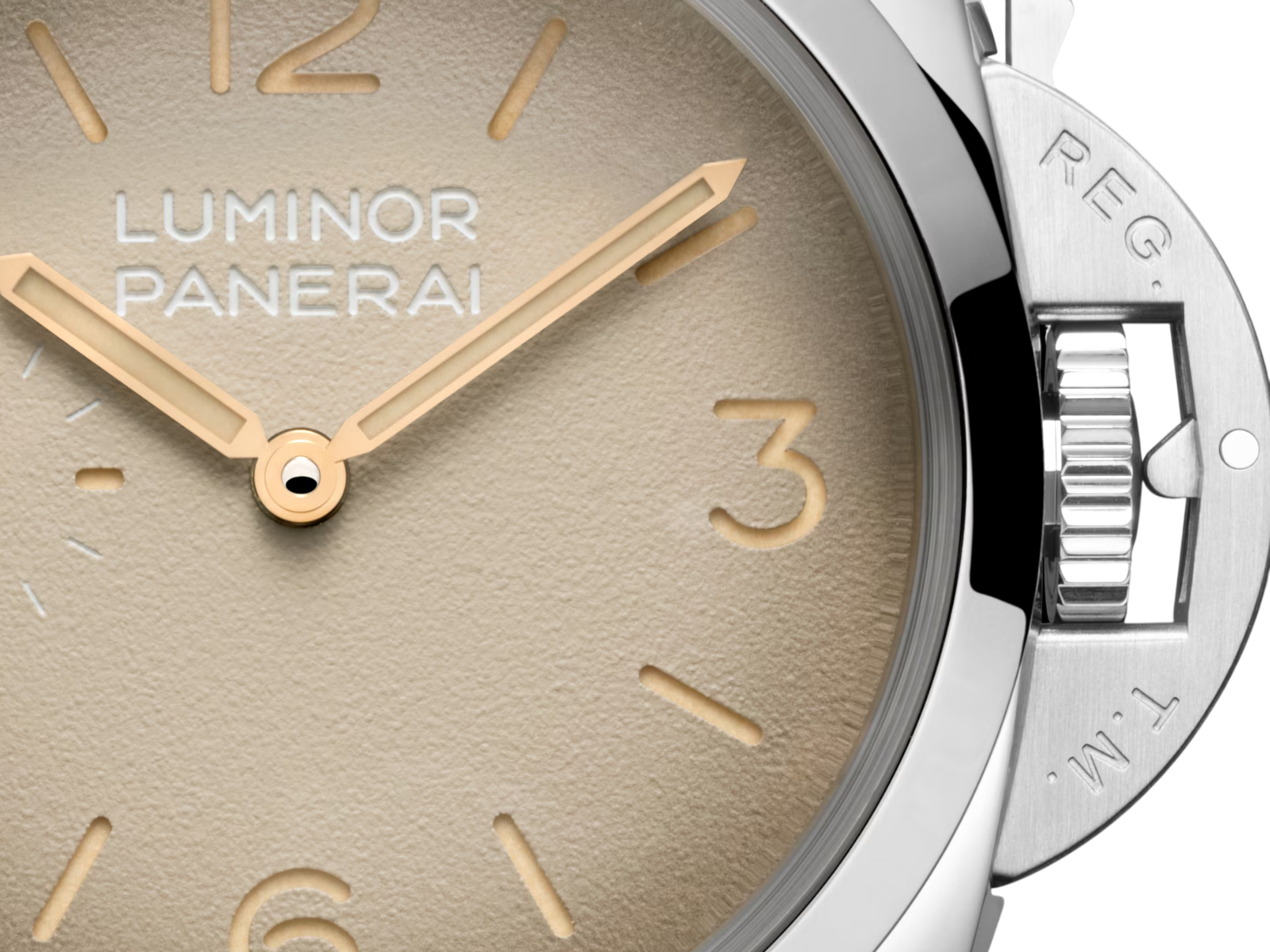 8
8Maximum legibility with minimum graphics.
Layered dial construction allowed luminous material to shine through cut-out numerals and markers, creating exceptional visibility underwater and in darkness.
47 mm cushion case
Large dimensions made the dial easy to read and allowed pocket-watch-derived movements to be used on the wrist.
Wire and integrated lugs
Early Radiomir wire lugs later evolved into stronger integrated constructions for military durability.
Crown-protection bridge
The lever-operated bridge presses the crown into the case and becomes the defining visual signature of the Luminor.
Long power reserve
Angelus 8-day movements reduced the need to manipulate the crown frequently and became an important part of Panerai’s functional DNA.
Three things collectors learn quickly.
Vintage Panerai is dominated by scarcity and provenance. The number of genuine early military watches is tiny, and seemingly small differences in dial construction, movement, case and military history can be decisive.
Collectors also learn that many famous modern Panerai design cues are historical reinterpretations rather than direct continuations of mass-produced vintage watches. Distinguishing authentic period pieces from later homage or service configurations is essential.
Provenance is everything.
A convincing military history can matter more than cosmetic condition on a genuine wartime watch.
Rolex components are historically correct.
Early Panerai relied heavily on Rolex-supplied cases and movements; this is part of the original specification, not an anomaly.
Pre-Vendôme is its own collecting field.
The 1993–97 civilian watches are not wartime vintage, but their scarcity and historical importance make them central to modern Panerai collecting.
Where the interest sits.
Collector interest is concentrated rather than broad. Genuine military watches occupy an entirely different level from modern heritage pieces, while pre-Vendôme watches form a separate and highly active niche.
These ratings are editorial indicators rather than price forecasts. Provenance, dial originality, movement correctness and military history can outweigh nominal reference rarity.
Extreme
Foundational prototype status and extraordinary rarity place it effectively in museum territory.
Very high
The archetypal wartime Panerai and the reference most associated with the brand’s military identity.
Very high
Critical transition references linking Radiomir architecture to the later Luminor form.
Extreme
An exceptionally rare chronograph project known from only a tiny number of surviving examples and records.
High
The civilian watches that created modern Panerai collecting and remain scarce in their own right.
High
A culturally important pre-Vendôme sub-family tied directly to Panerai’s breakthrough into wider public awareness.
Modern Panerai alternatives.
Modern Panerai remains unusually faithful to the silhouettes of its military archive. Radiomir and Luminor continue the two defining case families, while Submersible extends the professional underwater idea into a more contemporary form.
For most enthusiasts, these modern watches are the sensible way to experience the historical design language without entering the highly specialised world of genuine military Panerai.

Radiomir
The closest modern continuation of Panerai’s early cushion-case military watch.

Luminor Marina
The modern expression of the crown-guard case architecture developed from the 6152/1 era.

Submersible
A contemporary professional diver that takes Panerai’s naval DNA into a more conventional modern dive-watch format.
The Panerai archive is small enough to study deeply.
Its importance lies not in volume but concentration: Radiomir luminosity, Rolex-based military watches, sandwich dials, the Luminor crown guard, Angelus 8-day movements and the pre-Vendôme watches that brought the whole story into public view.