Vintage
TUDOR
From the Oyster Prince and early Submariners to Marine Nationale Snowflakes, Home Plate chronographs, Montecarlo and Big Block: the collector’s guide to TUDOR’s defining vintage eras.
Vintage TUDOR is built around a deceptively simple idea: combine proven Rolex case architecture with robust outsourced movements and sell the result at a more attainable price. Over time, that formula produced watches with an identity increasingly distinct from Rolex itself.
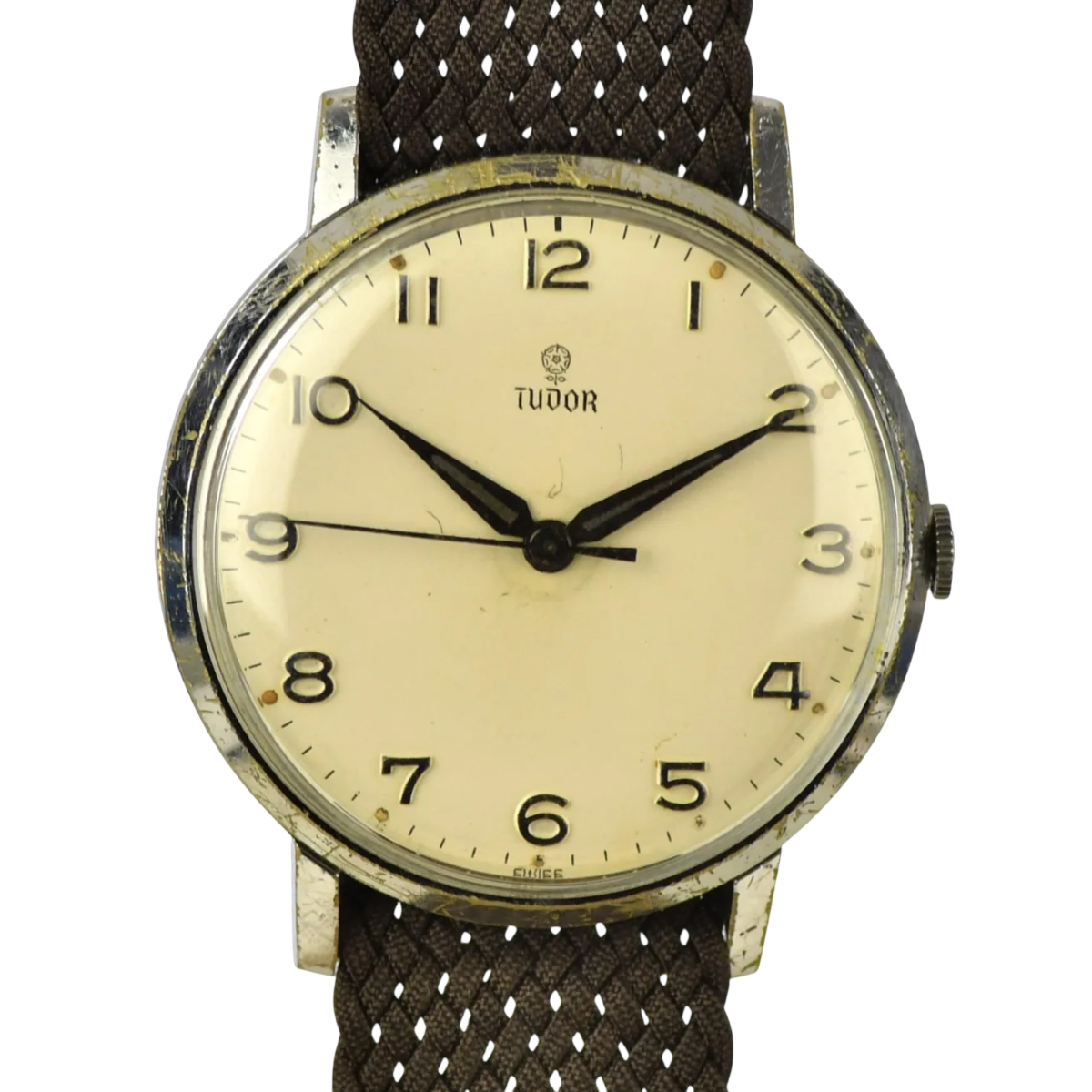
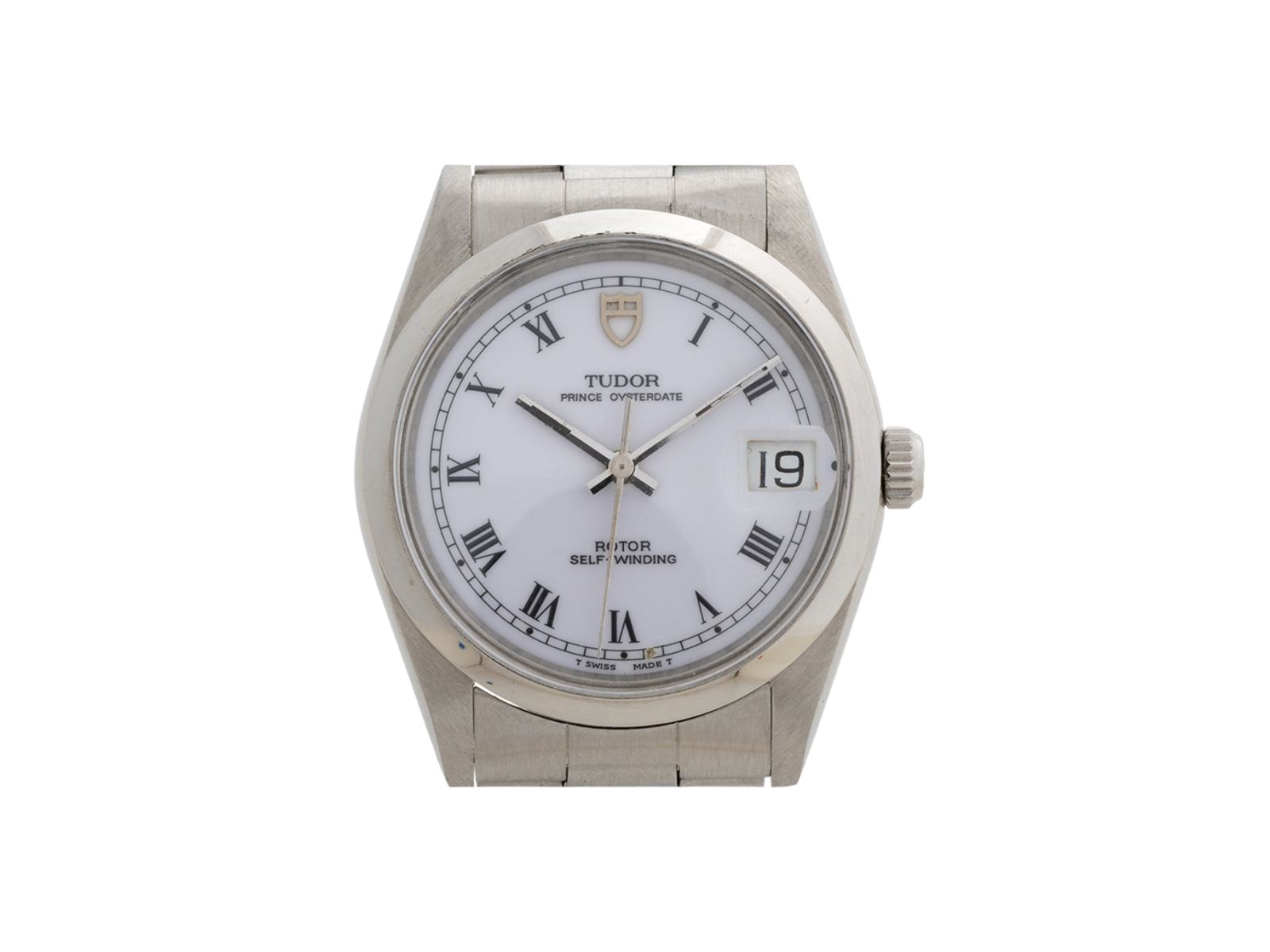
Rolex foundations, increasingly independent character.
TUDOR was conceived around Hans Wilsdorf’s belief that a watch could deliver the dependability associated with Rolex while using more economical movements. That proposition gave the brand access to Oyster cases, screw-down crowns and robust bracelets while leaving space for a different kind of watch.
By the 1950s and 1960s, TUDOR had moved decisively into professional territory. Oyster Prince watches accompanied the British North Greenland Expedition, Submariners entered military service, and the later Snowflake dial created a diving-watch language that was unmistakably TUDOR.
The chronographs of the 1970s pushed the separation further. Home Plate, Montecarlo and Big Block references used bold colour and unconventional layouts that had no direct equivalent in the Rolex catalogue.
Vintage TUDOR is where borrowed architecture gradually becomes an independent design identity.
The quick collector’s view
Most recognisable
The Snowflake Submariner: square markers and angular hands that gave TUDOR its own diving-watch face.
Connoisseur choice
A documented Marine Nationale Submariner, early Ref. 7928 or original Home Plate chronograph.
Best entry point
Later Prince Oysterdate, 1980s Submariners and selected Big Block chronographs in honest condition.
Hans Wilsdorf’s second watch brand grows into its own.
The TUDOR name was registered in 1926, and in 1946 Hans Wilsdorf established Montres TUDOR SA with a clear commercial purpose: provide the reliability associated with Rolex at a more accessible price.
What began as a value proposition evolved into a distinct identity. Oyster cases and Rolex-signed components remained important, but TUDOR increasingly differentiated itself through movement choices, military use, bold sports-watch design and unusually expressive chronographs.
The TUDOR name is registered
The brand name begins appearing before the company is formally established under Hans Wilsdorf’s direction.
Montres TUDOR SA
Hans Wilsdorf formally establishes TUDOR as a separate company intended to combine trusted case construction with more economical movements.
Oyster Prince
The Oyster Prince becomes the foundational TUDOR line, pairing a waterproof Oyster-type case with self-winding mechanical movement.
British North Greenland Expedition
TUDOR Oyster Prince watches are used during the expedition, giving the young brand an important real-world test of robustness.
The TUDOR Submariner
The first TUDOR Submariner establishes the brand in professional diving and begins a line that will remain in the catalogue for decades.
The Snowflake identity
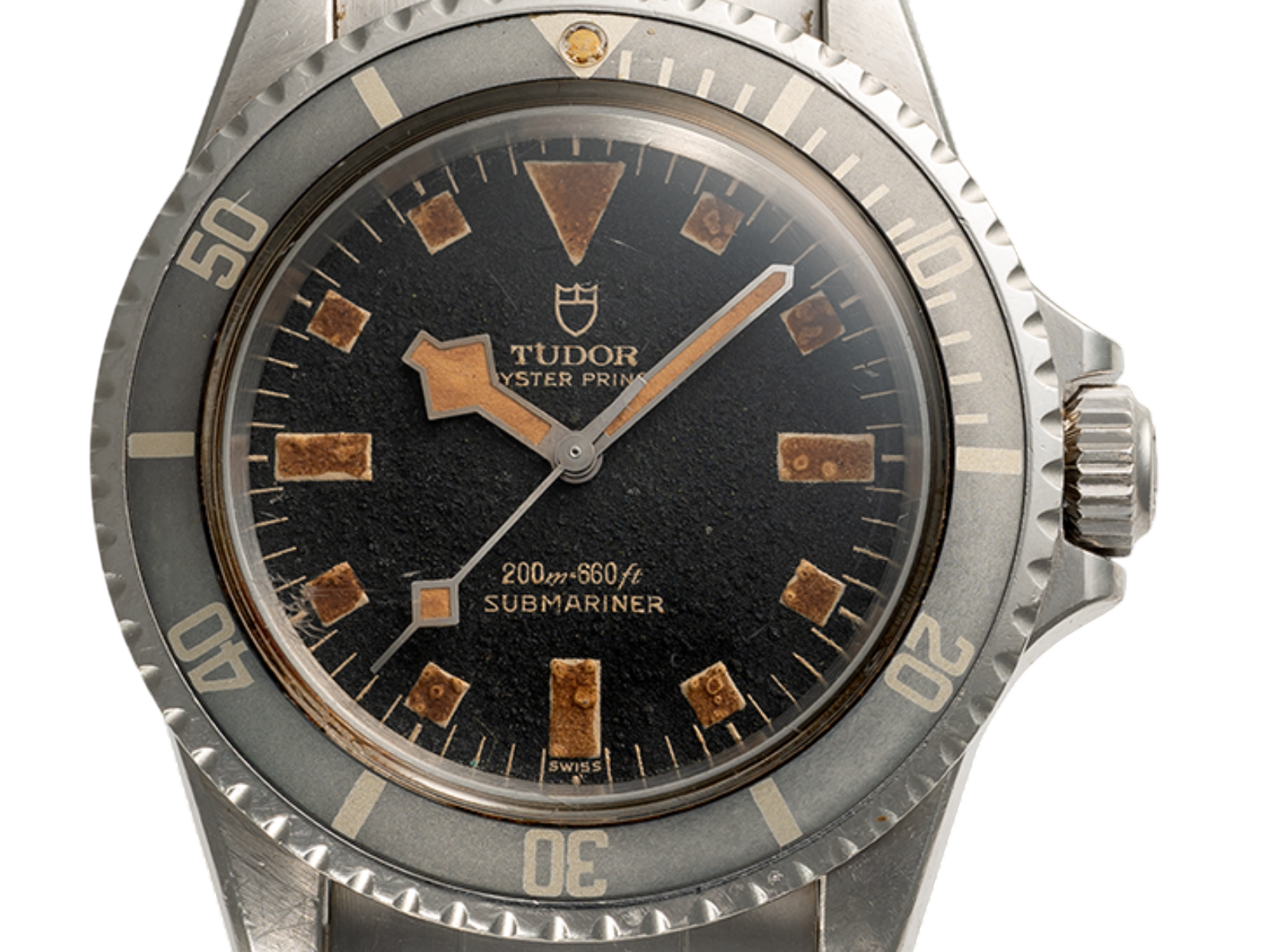
Square luminous markers, angular Snowflake hands and the shield logo give the Submariner a visual identity clearly distinct from Rolex.
Chronographs break free
Home Plate, Montecarlo and Big Block models introduce bright colours, unusual markers and automatic chronograph movements to the TUDOR catalogue.
A TUDOR timeline.
TUDOR’s major milestones show a brand moving from shared Rolex architecture toward increasingly independent visual codes. The Submariner and chronograph families are the clearest evidence of that shift.
The dates below provide a framework rather than a complete reference chart. Individual dial generations, case signatures, bracelets and military markings should still be researched separately.
TUDOR trademark
The TUDOR name is registered for watches.
Montres TUDOR SA
Hans Wilsdorf formally establishes the TUDOR watch company.
Oyster Prince
The self-winding Oyster Prince creates the technical foundation of the post-war brand.
North Greenland
Oyster Prince watches accompany members of the British North Greenland Expedition.
First Submariner
TUDOR enters professional diving with the Oyster Prince Submariner.
Ref. 7924 “Big Crown”
A larger winding crown and more serious diving specification make the 7924 one of the key early Submariners.
Ref. 7928
Crown guards appear and the basic Submariner architecture becomes more mature.
Snowflake Ref. 7016
Square markers and angular hands create the defining vintage TUDOR diving-watch aesthetic.
Home Plate chronograph
The first Oysterdate chronograph introduces Valjoux 7734 power, bright colour and pentagonal hour markers.
Montecarlo
The 7100-series chronographs refine the first generation with new movements and memorable blue-grey dial variants.
Big Block
TUDOR introduces its first self-winding chronograph, creating the thick-cased Prince Oysterdate family collectors nickname Big Block.
Submariner era ends
The long-running TUDOR Submariner disappears from the catalogue after decades of evolution.
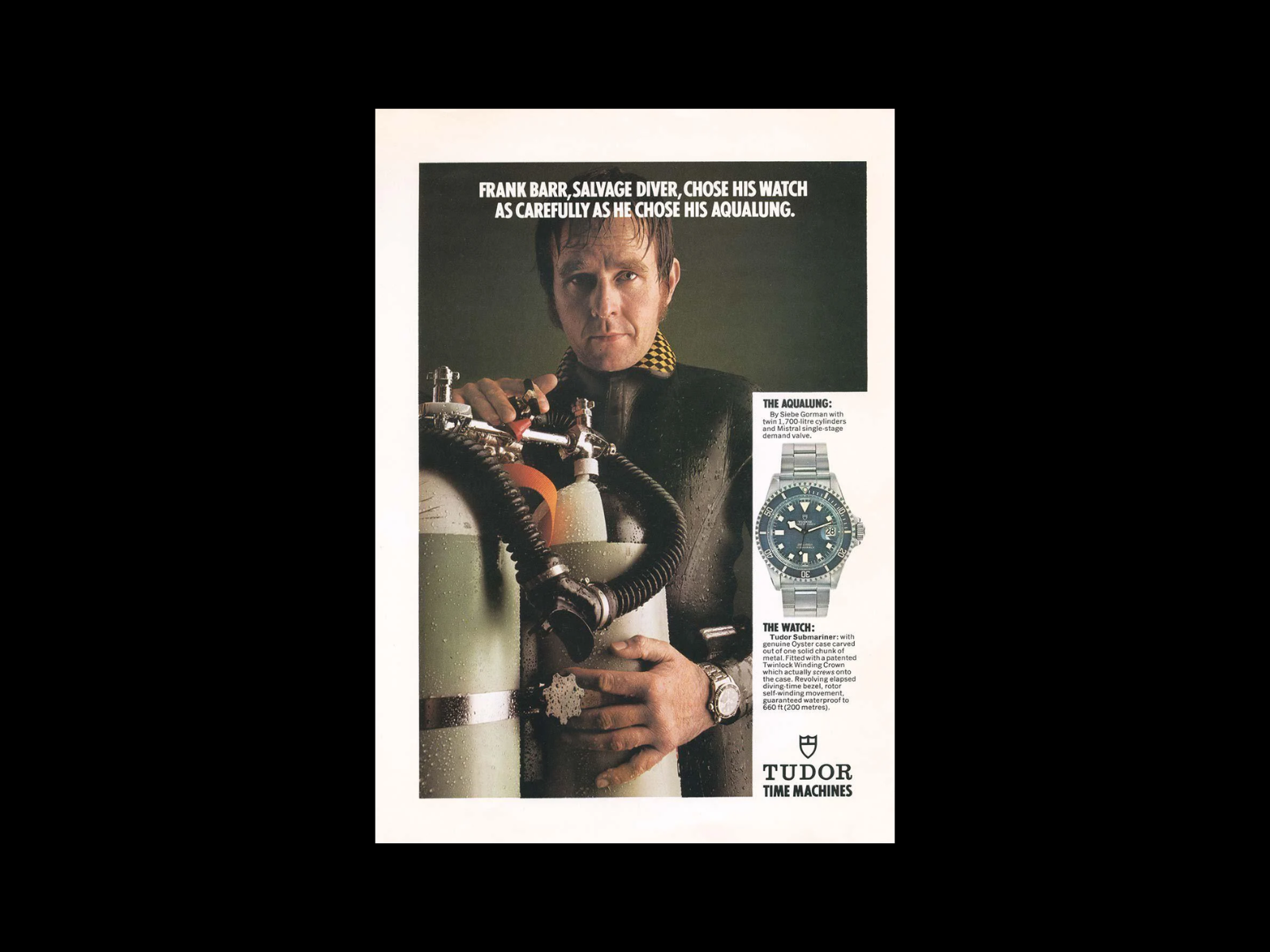
Built tough in print.
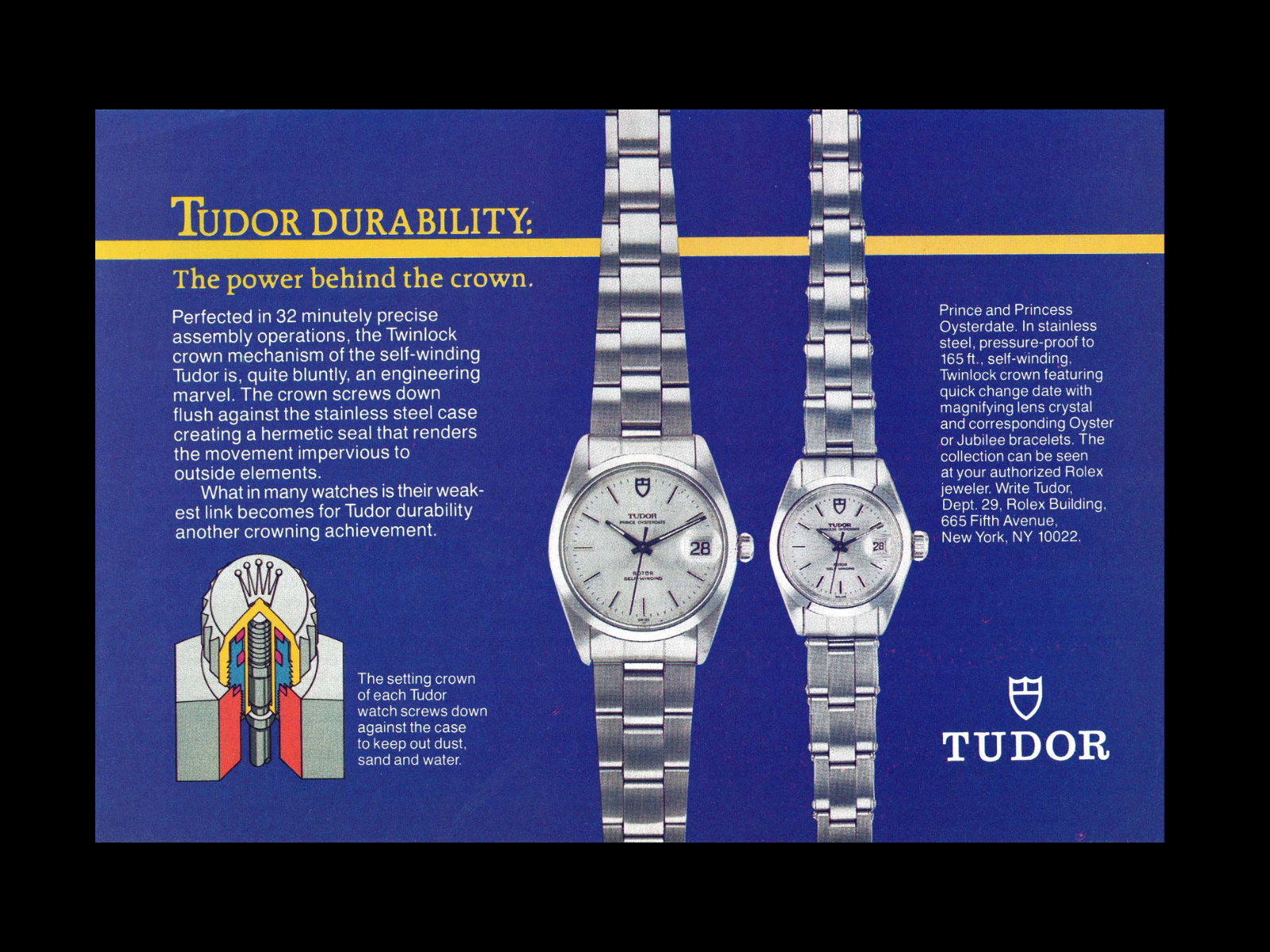
Period advertising shows TUDOR emphasising punishment tests, expedition use, hard work and professional reliability rather than traditional luxury symbolism.
The four vintage eras.
Vintage TUDOR is easiest to understand as a progression from early Rolex-linked dress watches to Oyster Prince tool watches, then into the great Submariner and chronograph period before the late-century transition.
Each era carries different signatures, movement families and degrees of Rolex component sharing. Understanding that evolution is essential to judging originality.
The Wilsdorf foundations
Early TUDOR-branded watches establish the proposition before Oyster Prince formalises the post-war identity.
Oyster Prince and early Submariner
Expedition testing, self-winding watches and increasingly capable divers create professional credibility.
Snowflake and chronograph golden age
Snowflake divers, Home Plate, Montecarlo and Big Block establish the strongest independent vintage TUDOR design language.
Professional continuity
Later Submariners, military use, Big Block evolution and increasingly TUDOR-signed components bridge the brand toward its modern revival.
Six important vintage TUDORs.
This is not a complete reference catalogue. It is a map of the watches that best explain vintage TUDOR: early Submariner, Snowflake, Marine Nationale, Home Plate, Montecarlo and Big Block.
With TUDOR, originality can involve both TUDOR and Rolex-signed components. A Rolex crown, case back or bracelet may be completely correct for the period.
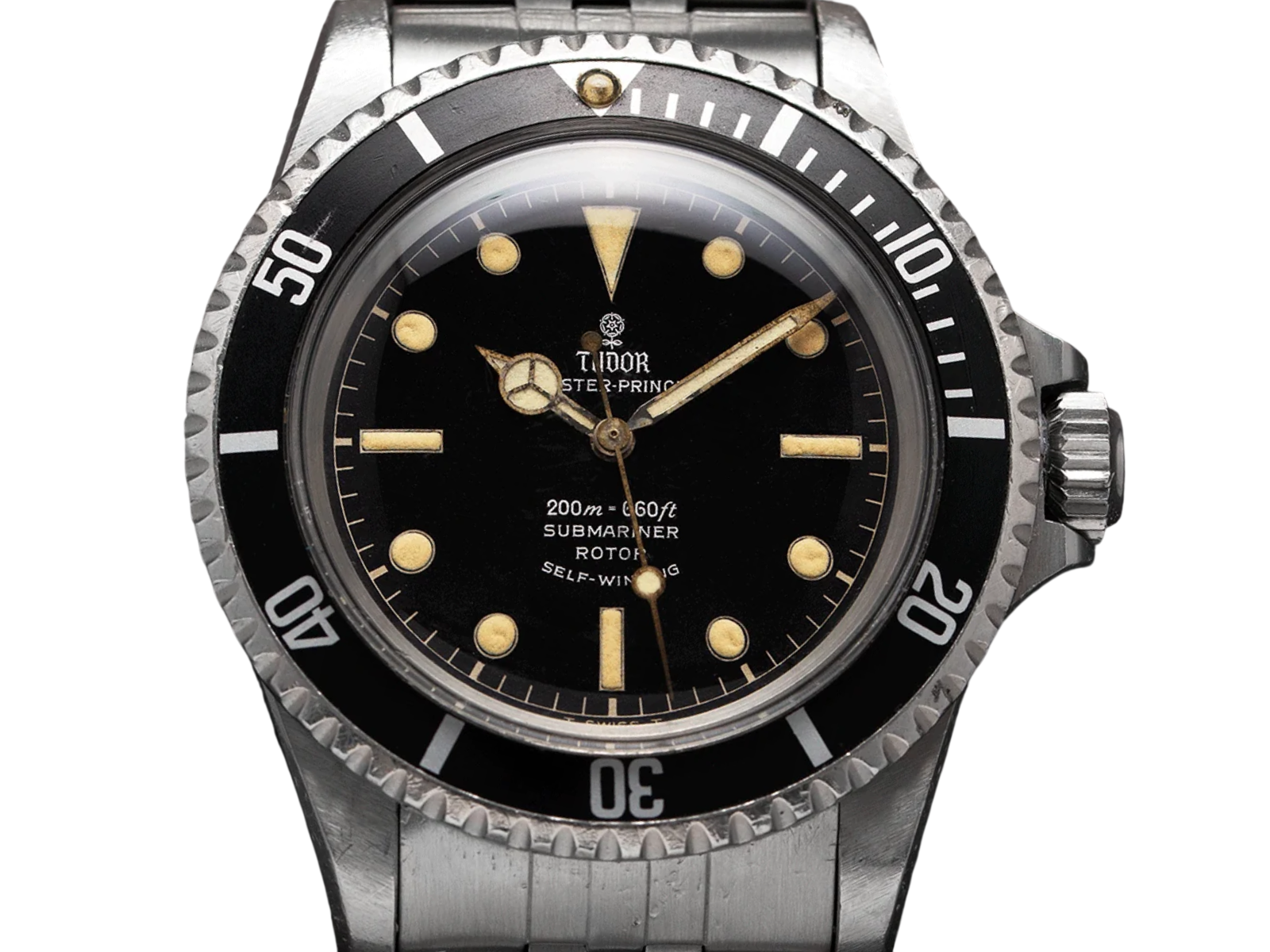 7928
7928Submariner Ref. 7928
The mature early TUDOR Submariner, introducing crown guards and establishing a case architecture used through much of the 1960s.
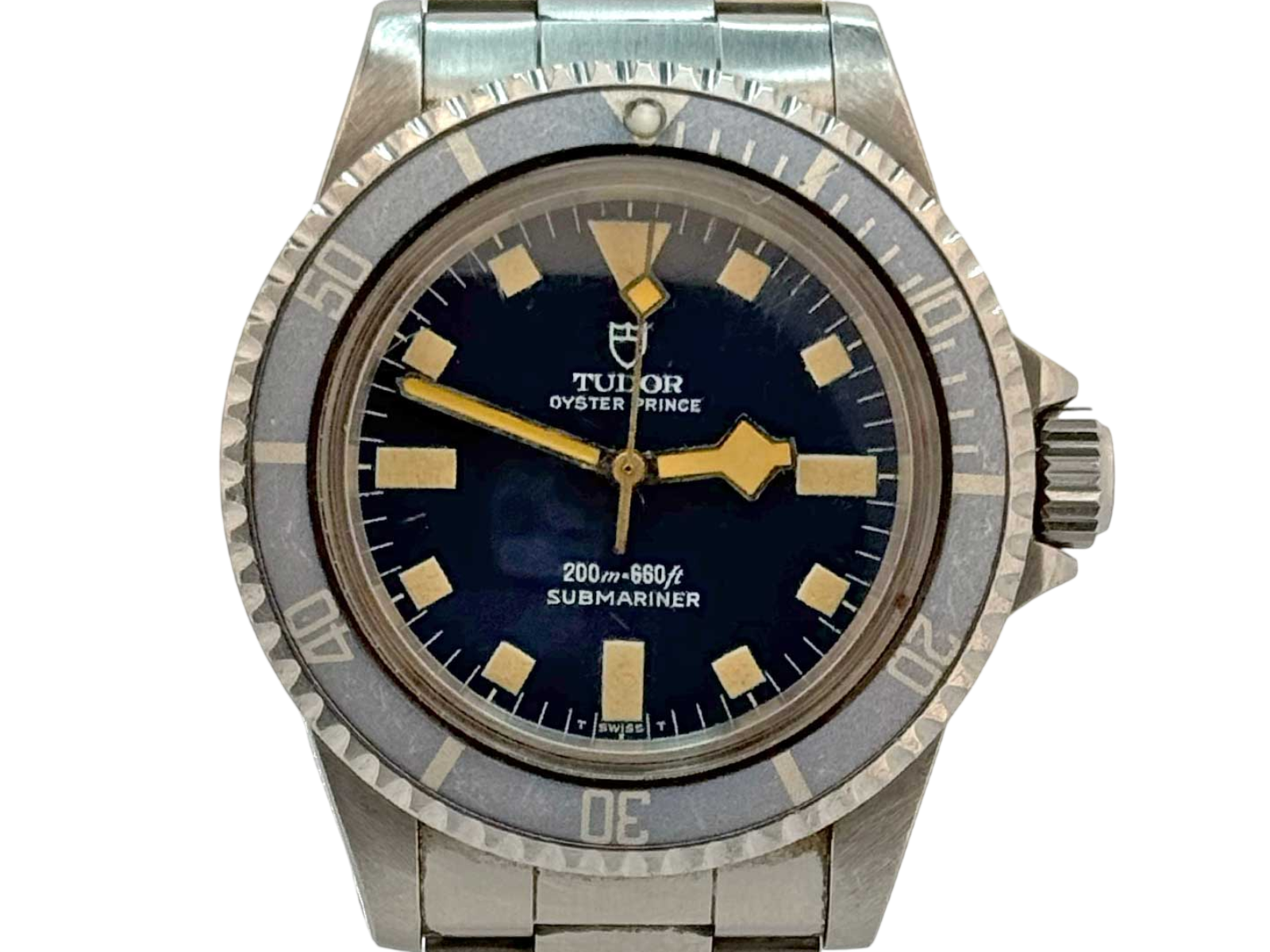
 7016
7016Snowflake Ref. 7016
The 1969 diver that gave TUDOR its signature square-marker and angular-hand identity.
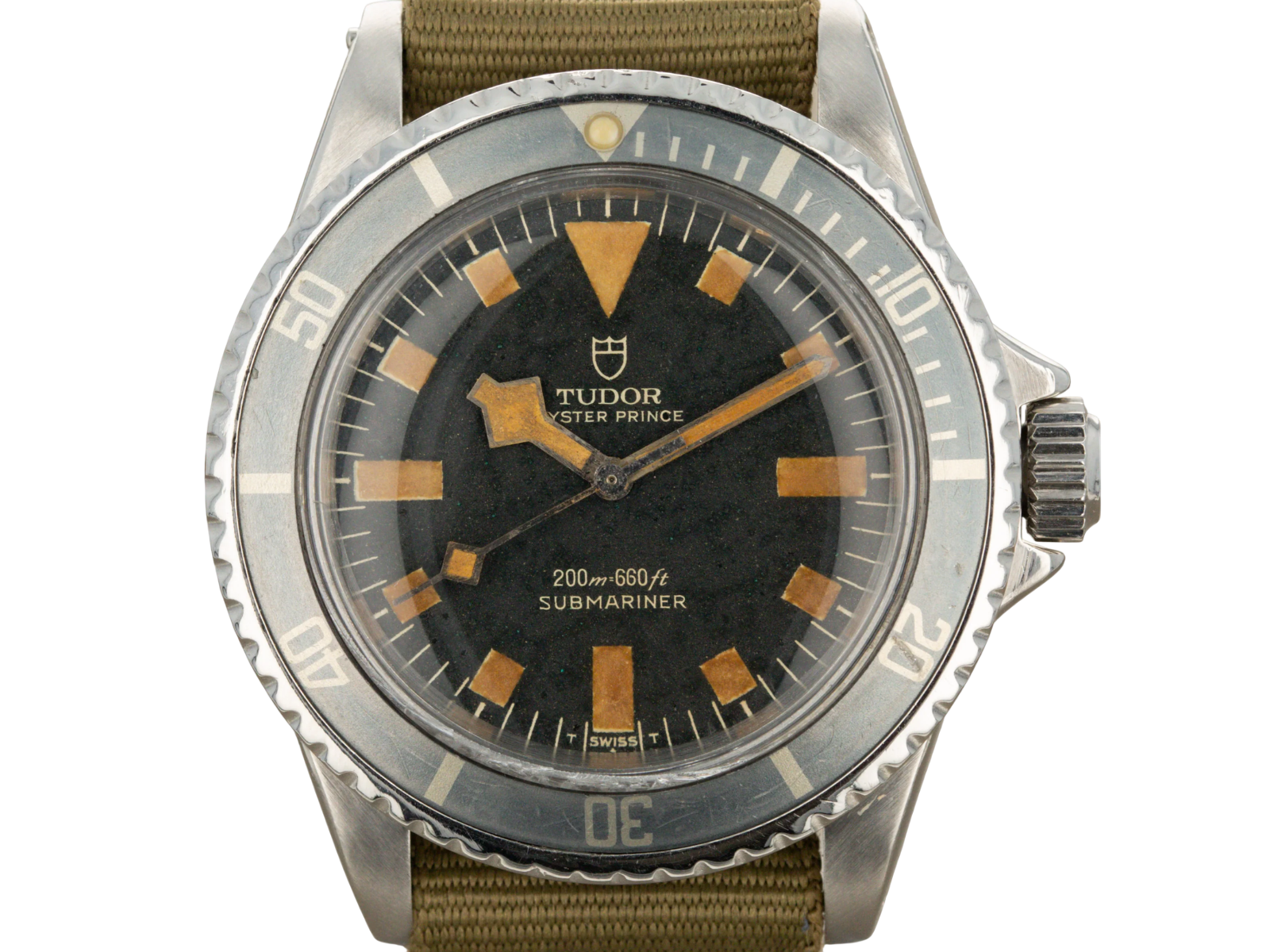
 MN
MNMarine Nationale Submariner
Military-issued TUDOR divers used by the French Navy and prized for documented provenance and distinctive issue engravings.
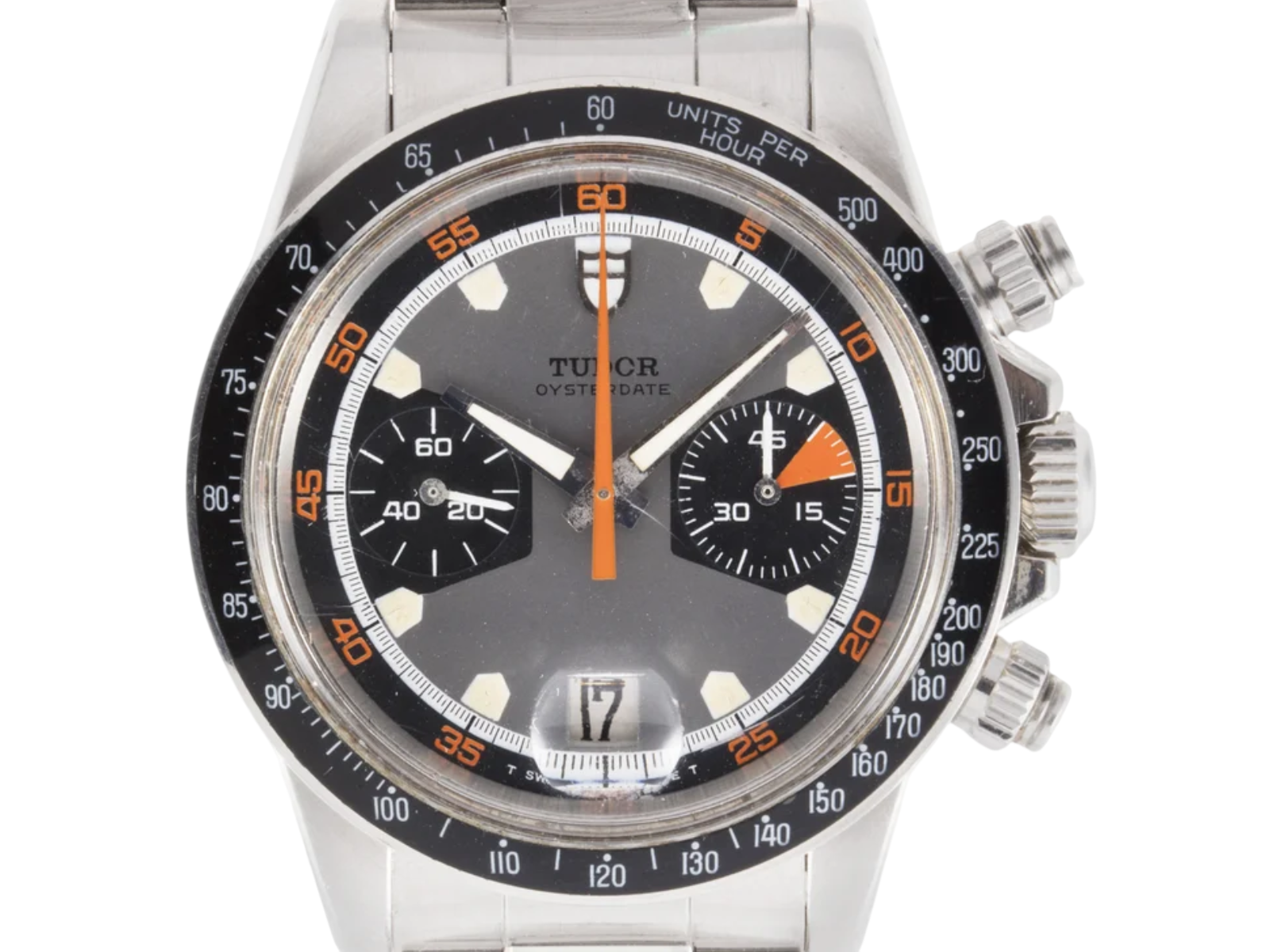 7031
7031Oysterdate Ref. 7031 “Home Plate”
TUDOR’s first production chronograph, famous for pentagonal markers, two-register layout and a bold racing-era palette.
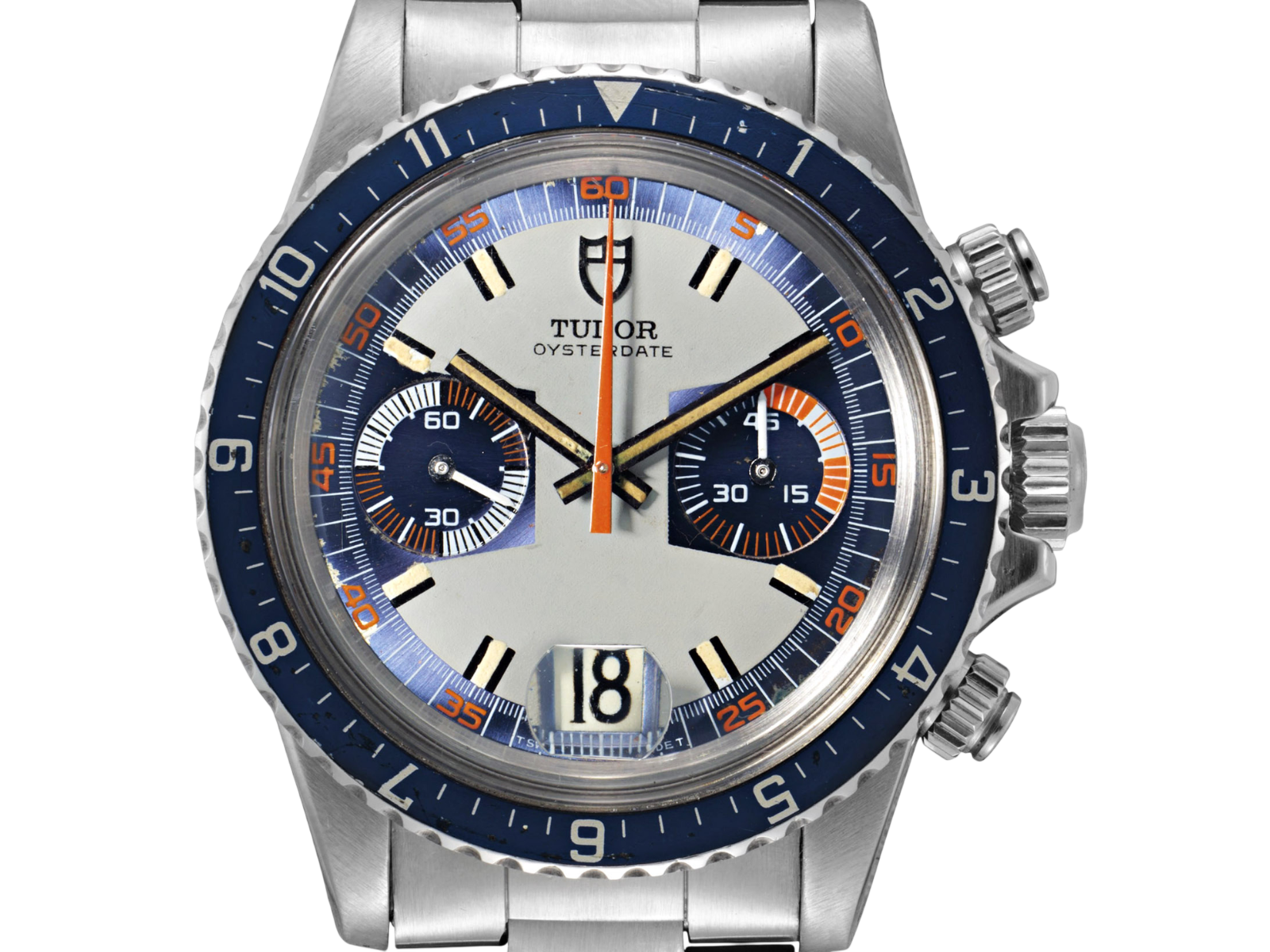 7169
7169Montecarlo Ref. 7169
A second-generation chronograph with rotating 12-hour bezel and one of the most memorable blue-grey dials of the 1970s.
 9430
9430Prince Oysterdate “Big Block”
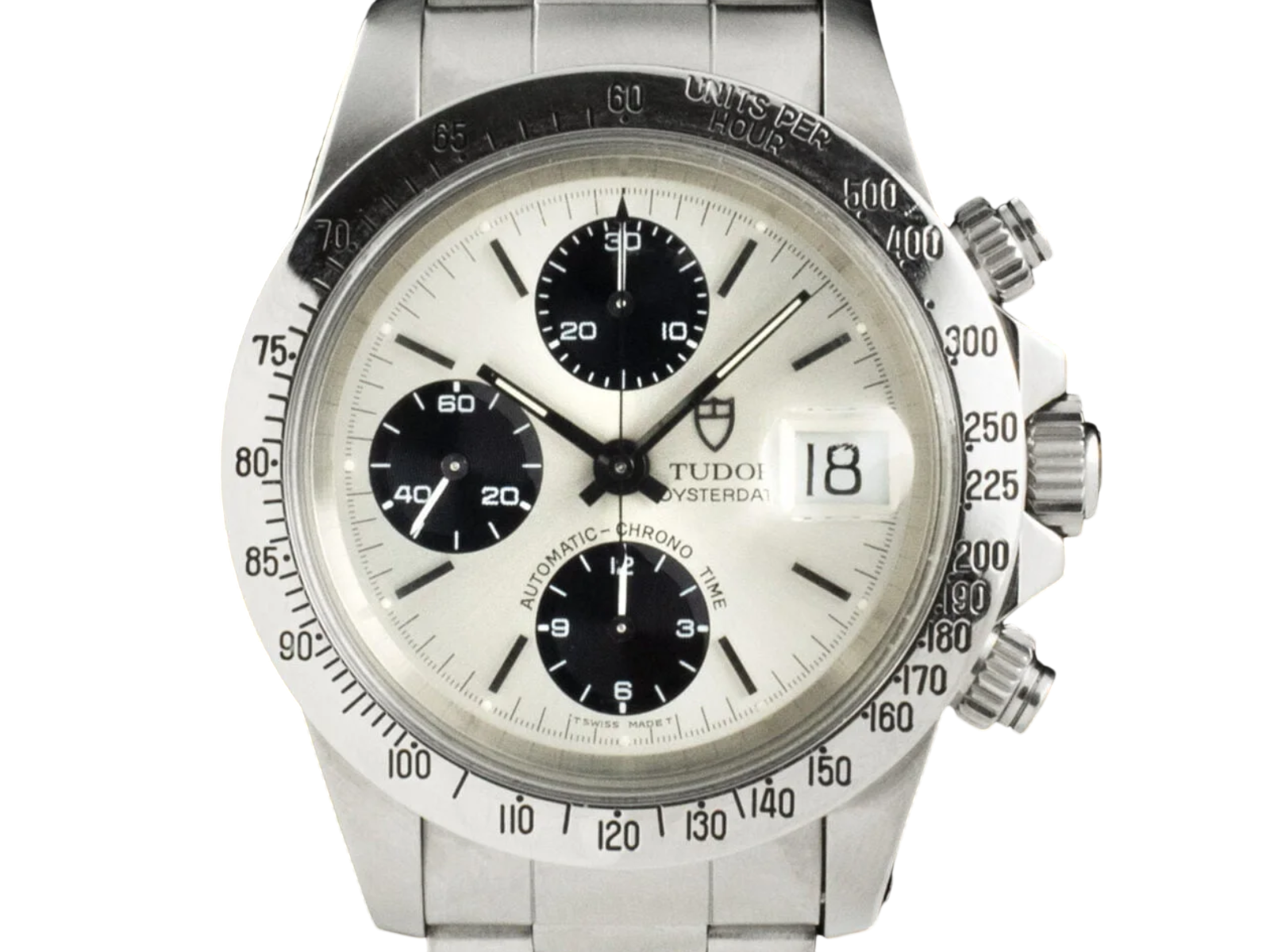
TUDOR’s first self-winding chronograph, using the Valjoux 7750 and a thick case that earned its enduring collector nickname.
Reading the catalogue.
Old catalogues and military records help decode how Rolex-signed cases, TUDOR dials, outsourced movements and evolving bracelets fit together across different periods.
What makes a vintage TUDOR look like a TUDOR?
Vintage TUDOR begins with familiar Oyster architecture but becomes increasingly distinctive through dial design. Rose and shield logos, Snowflake hands, square luminous markers and colourful chronograph layouts create a visual identity that eventually stands apart from Rolex.
The most compelling watches often combine shared hardware with unmistakably TUDOR graphics.
 SN
SNLegibility becomes a signature.
Square luminous plots and angular hands were developed for clearer underwater reading and became one of TUDOR’s most recognisable design codes.
Rose and shield logos
The early rose symbol gives way to the shield, marking a visual transition from elegance toward robustness.
Rolex Oyster architecture
Cases, crowns, case backs and bracelets may carry Rolex signatures and still be completely correct for vintage TUDOR.
Colourful chronographs
Home Plate and Montecarlo models use orange, blue and grey far more aggressively than contemporary Rolex chronographs.
Workhorse movements
ETA and Valjoux calibres embody TUDOR’s historical strategy of combining proven external movements with robust case construction.
Three things collectors learn quickly.
Vintage TUDOR rewards an understanding of component sharing. Rolex-signed crowns and case backs are not evidence of a frankenwatch when they belong to the correct production period.
Collectors also learn that TUDOR dials can be the decisive element. Snowflake plots, Home Plate markers and Montecarlo colourways define much of the desirability of the best vintage references.
Rolex signatures can be correct.
Do not reject a watch simply because its crown, case or bracelet carries Rolex branding.
Military provenance needs evidence.
Marine Nationale engravings are valuable enough to attract imitation. Documentation and expert comparison matter.
Chronograph dials are everything.
Colour, printing, marker shape and sub-dial execution can transform the value of superficially similar watches.
Where the interest sits.
Collector interest is strongest where military provenance, distinctive dial design and early production overlap. Marine Nationale Snowflakes and first-generation chronographs therefore occupy the top tier.
These ratings are editorial indicators rather than price forecasts. Dial originality, bezel condition, issue history and correct Rolex/TUDOR component mix can materially change desirability.
Very high
Military provenance, Snowflake design and documented issue history create exceptional collector interest.
Very high
Foundational TUDOR divers closely tied to Rolex architecture but increasingly distinctive in execution.
Very high
TUDOR’s first chronograph family and one of the boldest sports-watch designs of 1970.
High
Colourful second-generation chronographs with strong visual identity and numerous desirable variants.
Medium
TUDOR’s first automatic chronograph and an important bridge into the modern brand.
Medium
A comparatively accessible route into the long-running TUDOR diving-watch lineage.
Modern TUDOR alternatives.
Modern TUDOR draws openly from its archive. Black Bay incorporates Snowflake hands and vintage Submariner proportions, while Black Bay Chrono revisits the brand’s long history of colourful, robust chronographs.
For buyers who want the visual identity without the complexity of vintage Rolex-signed components or military provenance, the current catalogue offers several direct alternatives.
Black Bay Fifty-Eight
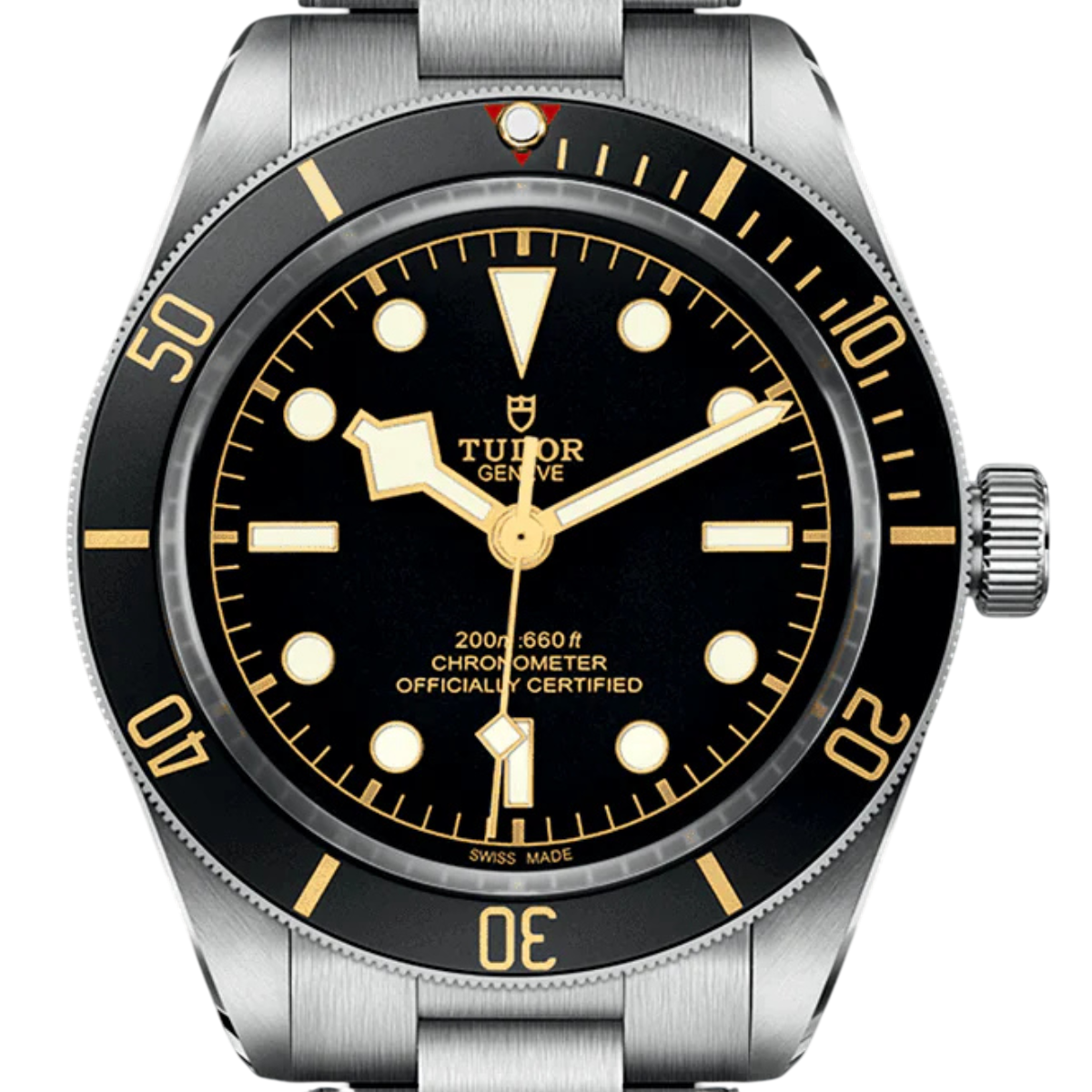
A compact modern diver rooted in the proportions and visual language of early TUDOR Submariners.
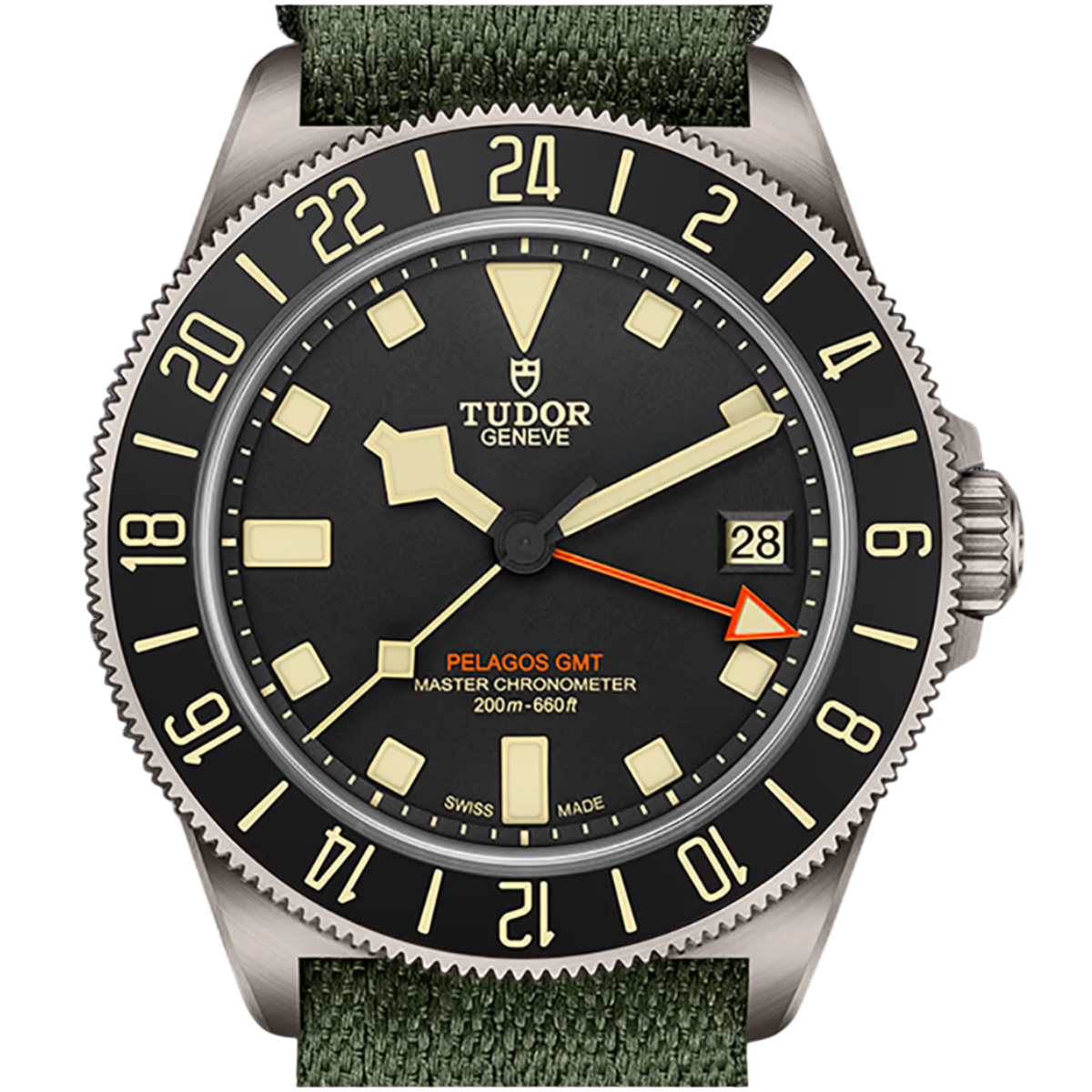
Pelagos
The modern professional TUDOR diver, retaining Snowflake hands while pushing the tool-watch brief forward.
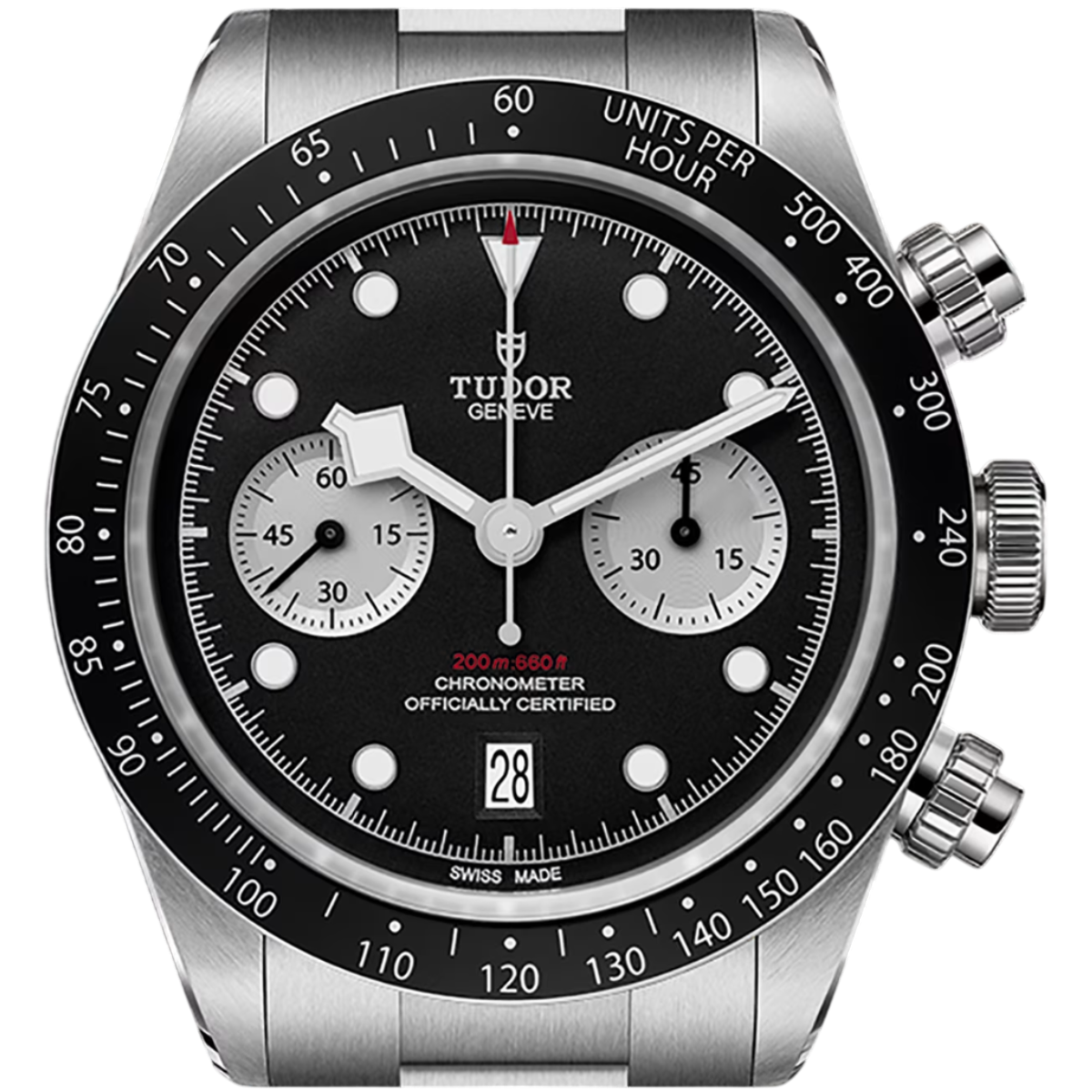
Black Bay Chrono
A contemporary chronograph connecting modern TUDOR with the Home Plate, Montecarlo and Big Block lineage.
The TUDOR archive is the story of differentiation.
What began as Hans Wilsdorf’s more accessible Oyster watch became something increasingly independent: expedition watches, military Submariners, Snowflake hands, vivid chronographs and the workhorse movements that gave TUDOR its own character.