Vintage
Breitling
From precision timers and cockpit instruments to the Navitimer, Co-Pilot and Top Time: the collector’s guide to Breitling’s most important eras.
Breitling’s vintage identity was built on usefulness. Its finest watches were not conceived merely as luxury objects, but as instruments for pilots, engineers, divers, racers and professionals who needed information at a glance.

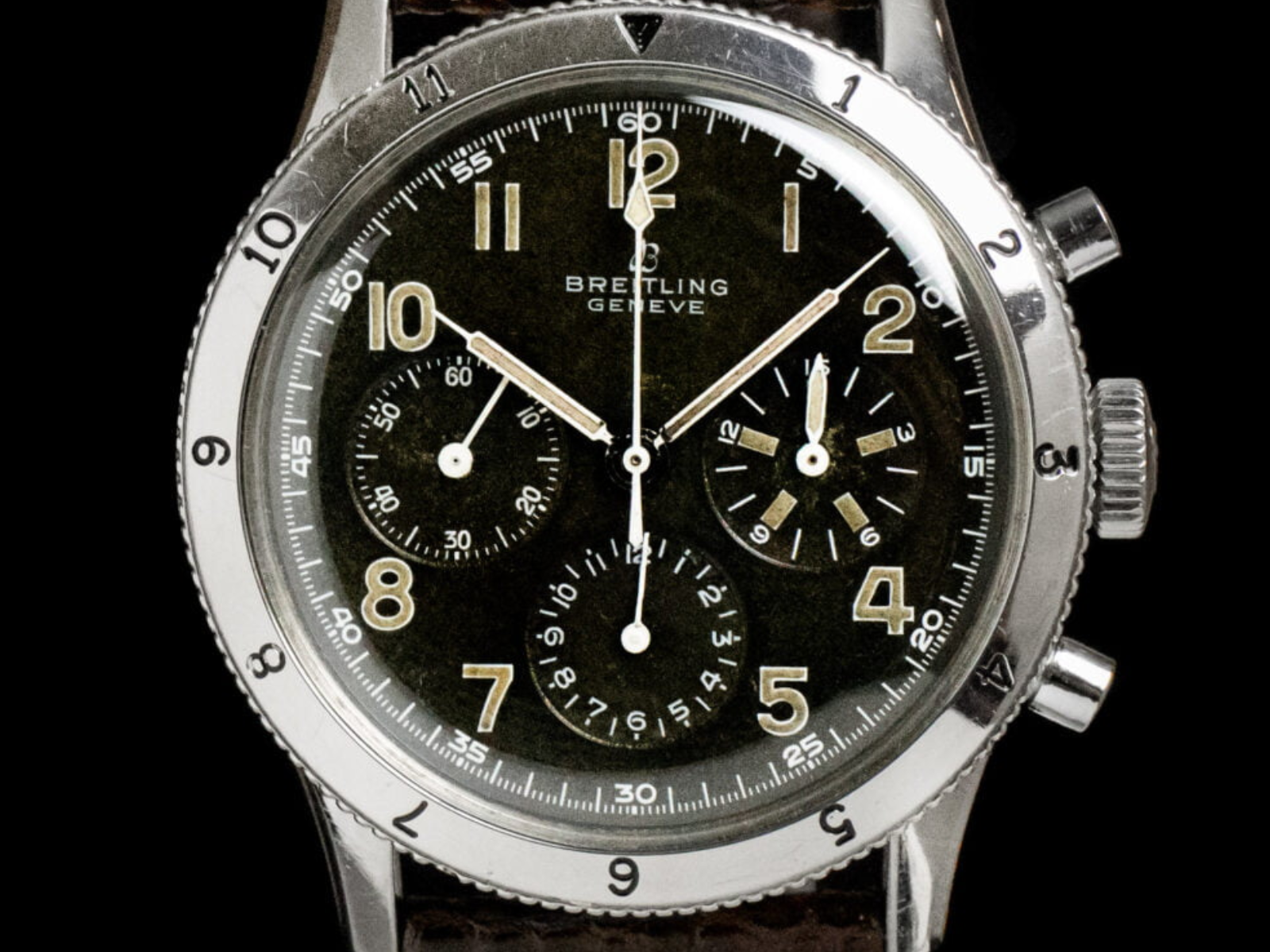
Built for information, not ornament.
Long before the modern luxury-sports watch became a category, Breitling was defining what a specialist wrist instrument could be. The company’s reputation grew through precise counters, chronographs and dashboard instruments, followed by increasingly sophisticated wristwatches designed around aviation, diving and elapsed-time measurement.
That functional origin explains the density of many vintage Breitling dials. Scales, sub-registers, slide rules and sharply differentiated hands were part of an information system. The resulting watches can look visually complex, but the best examples remain unusually coherent because every detail had a purpose.
For collectors, vintage Breitling is also broader than the Navitimer. Early Chronomats, Premiers, AVI and Co-Pilot references, Superoceans, Top Times and lesser-known chronographs reveal a manufacturer that moved confidently between professional equipment and expressive mid-century design.
Breitling’s most compelling vintage watches are miniature instruments from an age when mechanical timing still shaped how people flew, raced and explored.
The quick collector’s view
Most recognisable
Navitimer Ref. 806, with its circular slide rule and unmistakably technical dial.
Connoisseur choice
AVI and Co-Pilot references, especially strong examples with convincing provenance.
Best entry point
Selected Top Time, Premier and later manual-wind chronographs in honest condition.
From workshop timer to aviation icon.
Breitling’s history is best understood as a succession of practical innovations rather than a sequence of famous watches. Each generation refined the chronograph, made it easier to operate, or placed more calculation and timing capability on the wrist. Rather than pursuing luxury for its own sake, Breitling earned its reputation by building reliable instruments for pilots, racers and professionals who depended on accurate timekeeping.
This practical philosophy shaped every era of the brand. From early cockpit chronographs to the Navitimer and Top Time, Breitling consistently prioritised clarity, functionality and mechanical innovation over ornament. Understanding that progression makes the vintage catalogue easier to navigate—and reveals why the brand remains one of the most distinctive names in tool-watch history.
Léon Breitling and the specialist workshop
Léon Breitling established his workshop in Saint-Imier at a time when industrial production, sport and scientific measurement were increasing demand for accurate timers. Rather than becoming a generalist watch house, Breitling developed a lasting specialism in chronographs, counters and precision instruments.
The modern chronograph takes shape
Breitling helped make the wrist chronograph more practical through the separation of chronograph controls from the winding crown. The development of independent pushers made elapsed-time functions faster and more intuitive to operate, establishing a layout that would become an industry standard.
Instruments for the cockpit
Through its Huit Aviation department, Breitling produced onboard chronographs and flight instruments for aircraft. This period embedded aviation within the brand’s identity and created the technical foundation for the pilot’s wristwatches that followed.
Premier, Chronomat and post-war confidence
The Premier expressed a more elegant side of the chronograph, while the Chronomat introduced a circular slide rule to the wrist. Together they showed that a technical watch could also be sophisticated, wearable and visually distinctive.
The golden age
The Navitimer, AVI and Co-Pilot watches, Superocean divers and youthful Top Time chronographs made the post-war decades Breitling’s defining vintage period. Aviation remained central, but the catalogue expanded into diving, motoring and modern lifestyle design.
Automatic chronographs and the quartz crisis
Breitling participated in the development of the Chrono-Matic automatic chronograph movement in 1969. Yet the wider shift toward quartz technology destabilised the traditional Swiss industry, and the original family company ceased operations at the end of the 1970s.
The Schneider revival
Ernest Schneider acquired the Breitling name and revived it around robust aviation watches, professional instruments and a bold new design language. These later watches differ from the mid-century pieces, but they preserved the brand’s association with pilots and purposeful equipment.
A Breitling timeline.
The essential milestones behind the watches collectors encounter today reveal how consistently Breitling returned to the same core problem: making elapsed time easier to measure, read and use. Seen together, they trace the brand’s movement from specialist workshop to one of the defining names in professional chronographs.
The dates below identify broad historical developments rather than every reference variation. Individual watches should still be researched separately, particularly where dial layouts, movements and production details changed during the same period.
The company is founded
Léon Breitling establishes a specialist workshop for chronographs, timers and precision counters.
A separate chronograph pusher
Breitling produces an early wrist chronograph with its control separated from the winding crown.
The two-pusher format
A second independent pusher separates start/stop from reset, anticipating the familiar modern chronograph layout.
Huit Aviation
The specialist aviation department supplies cockpit chronographs and onboard instruments.
Chronomat
The Chronomat brings a rotating circular slide rule to the wrist and establishes a key Breitling design idea.
Premier
Breitling introduces a chronograph line that gives technical timing a more elegant, civilian expression.
Navitimer
Developed for the Aircraft Owners and Pilots Association, the Navitimer combines a chronograph with flight calculations.
AVI takes flight
The AVI family develops Breitling’s pilot-watch language beyond the densely scaled Navitimer.
Superocean
Breitling enters professional diving with both time-only and chronograph models.
Top Time
A younger, more expressive chronograph line reflects the changing style of the 1960s.
Chrono-Matic
Breitling joins the race to commercialise the automatic chronograph and adopts the distinctive left-crown architecture.
A chapter closes—and another begins
The original company ceases operations during the quartz crisis; Ernest Schneider acquires the name and begins Breitling’s revival.
The brand in its own words.
Period advertising reveals how Breitling presented technical watches for international markets before they became luxury collectibles: as practical instruments for aviation, calculation and professional timing.

The four vintage eras.
Dividing the brand into eras is more useful than treating every old Breitling as part of a single category. Each period reflects a different balance of technical ambition, design fashion and professional purpose, from early specialist timers to the bold automatic chronographs of the 1970s.
The design language, movements, rarity and buying risks change significantly across those periods. Understanding the era first makes it easier to judge whether a particular watch is historically coherent, fairly valued and suited to the kind of collecting you want to pursue.
The specialist years
Pocket chronographs, counters, early wrist instruments and the technical development of chronograph controls. Historically important, often scarce and usually requiring specialist knowledge.
Elegance meets calculation
Early Chronomats, Premiers and refined multi-scale chronographs establish the visual vocabulary that later made Breitling famous.
The golden age
Navitimer, AVI, Co-Pilot, Superocean and Top Time. This is the richest and most recognisable period for mainstream vintage Breitling collecting.
Automatic and experimental
Chrono-Matic movements, larger cases, stronger colour and unmistakably 1970s forms. More polarising, but often full of mechanical and design interest.
Six important vintage Breitlings.
This is not a complete reference catalogue. It is a map of the families that best explain vintage Breitling, from the calculation-heavy Navitimer and Chronomat to the purposeful AVI, elegant Premier, youthful Top Time and rare professional divers.
Each family opens a different route into the archive and brings its own hierarchy of dials, movements and case executions. These six therefore provide the strongest starting points for further research rather than a definitive ranking of every important Breitling ever made.
 806
806Navitimer Ref. 806
The defining vintage Breitling: visually dense, historically important and produced in enough variation to reward serious study.
 765
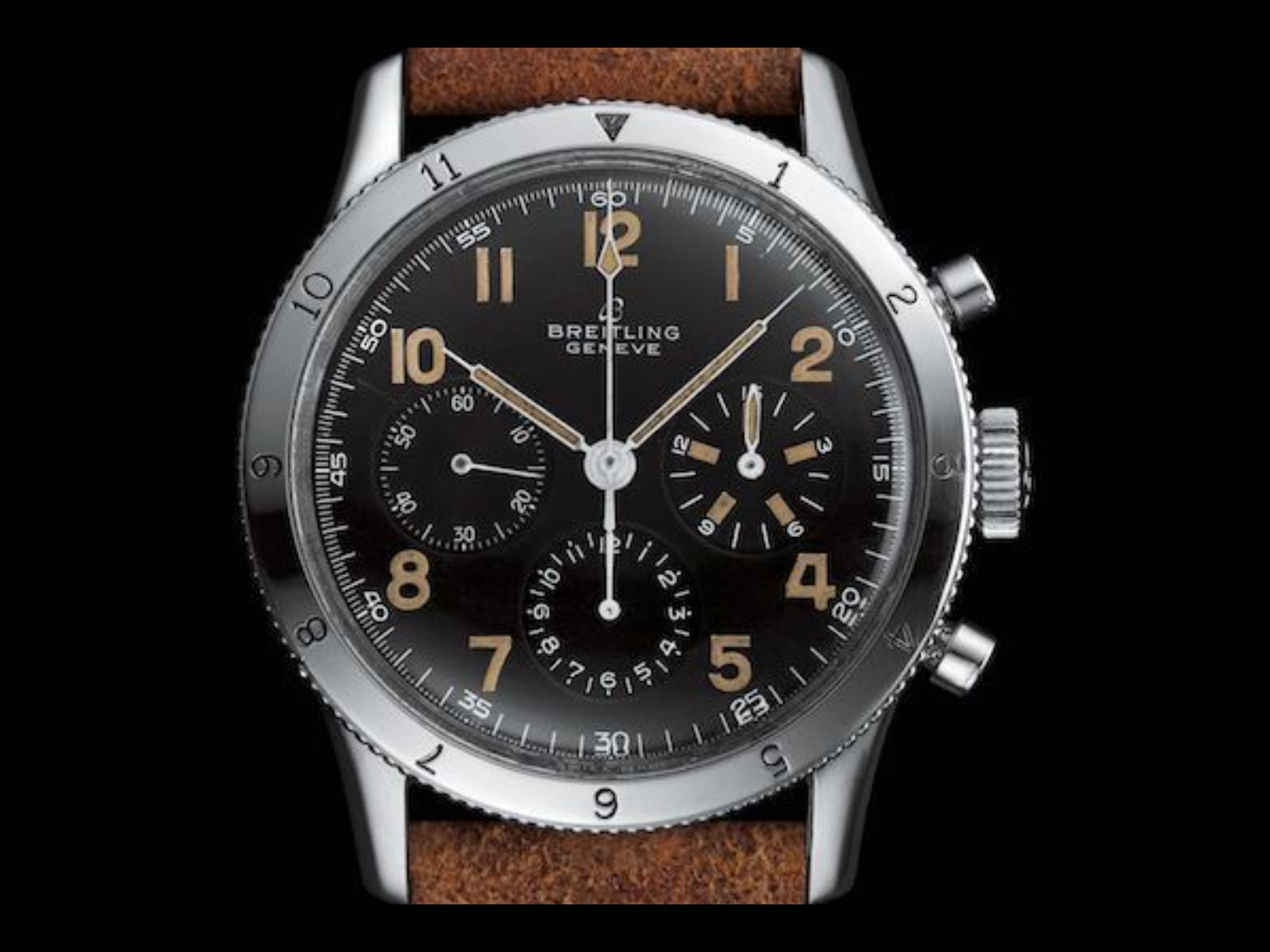
765AVI / Co-Pilot Ref. 765
A large, purposeful pilot’s chronograph with strong military-instrument character and several highly collectible configurations.
 769
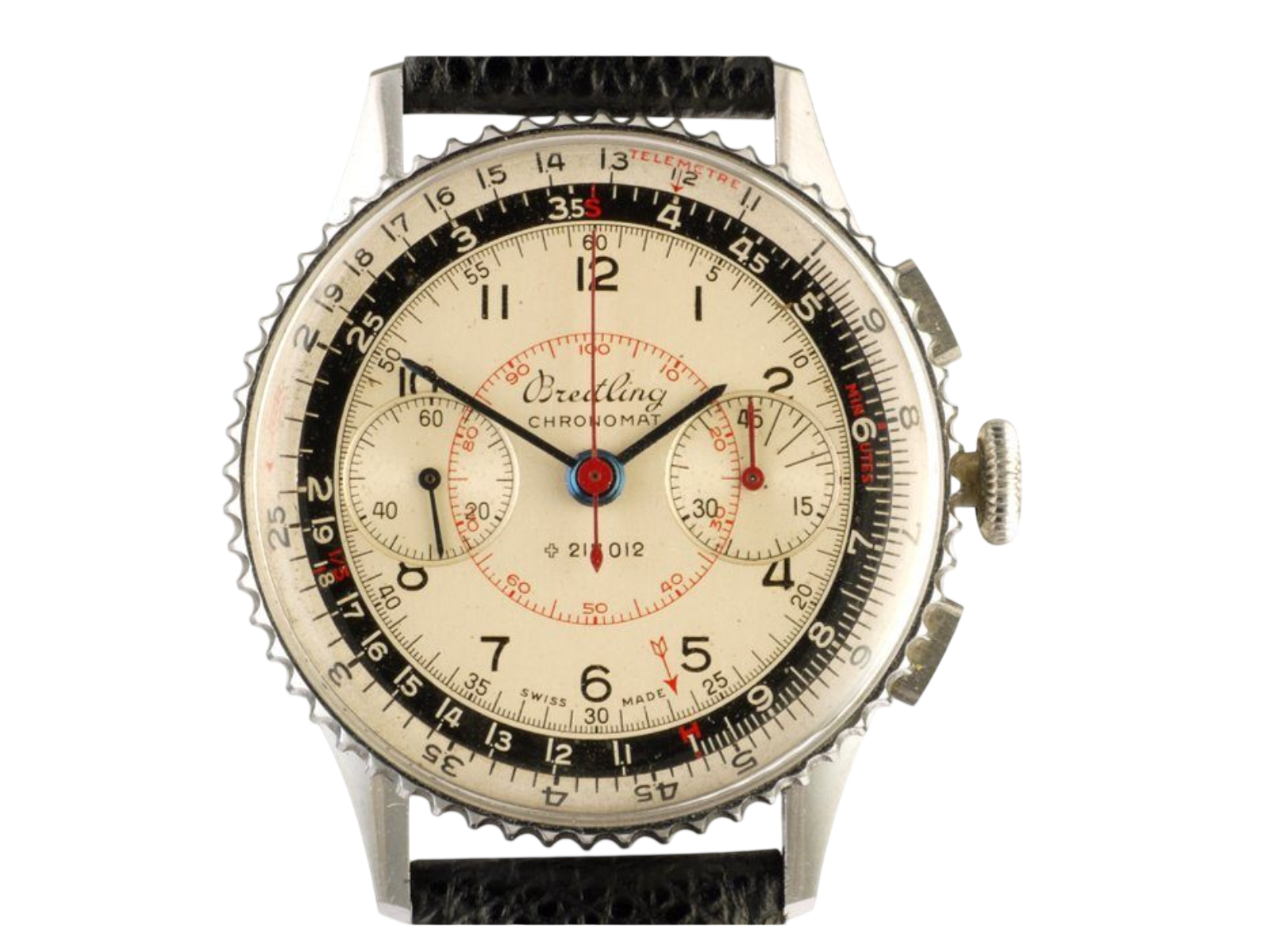
769Chronomat Ref. 769
The intellectual precursor to the Navitimer, combining chronograph timing with a circular slide rule in a more restrained package.
 SO
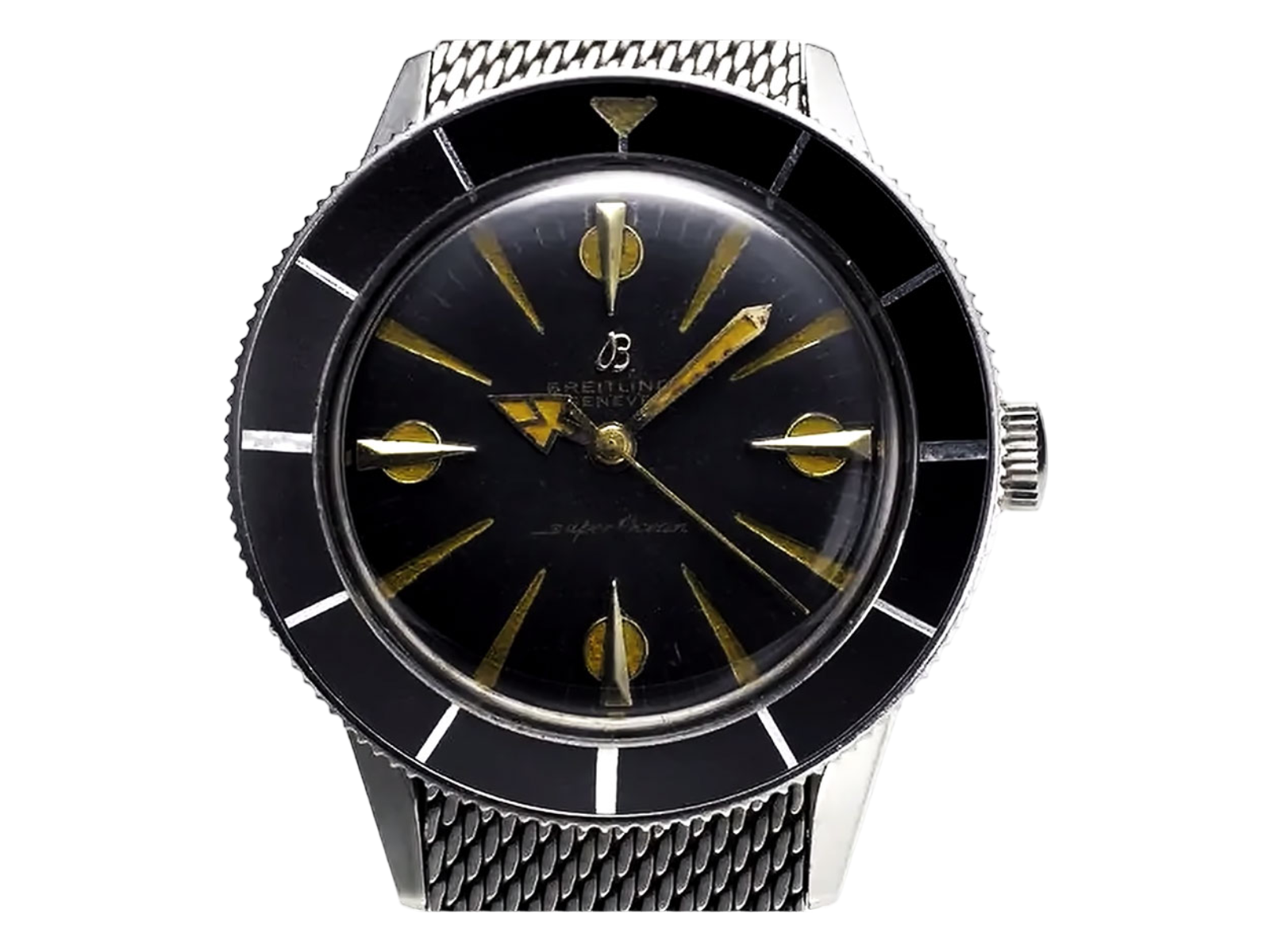
SOEarly Superocean
The original diving family expands the brand beyond aviation. Surviving examples can be rare, expensive and difficult to authenticate.
 TT
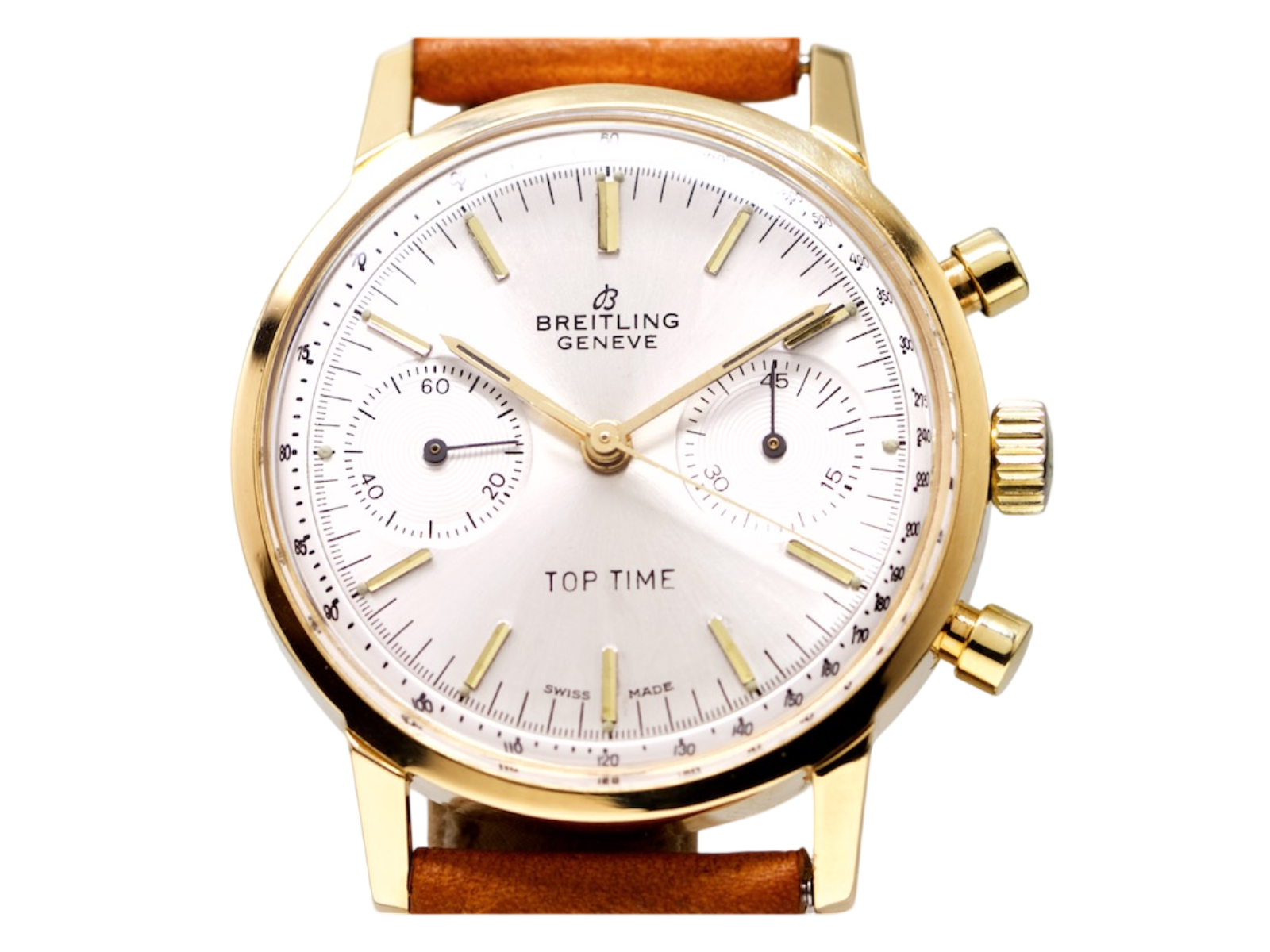
TTTop Time
A more youthful face of Breitling, ranging from clean two-register watches to highly expressive racing-inspired dials.
 P
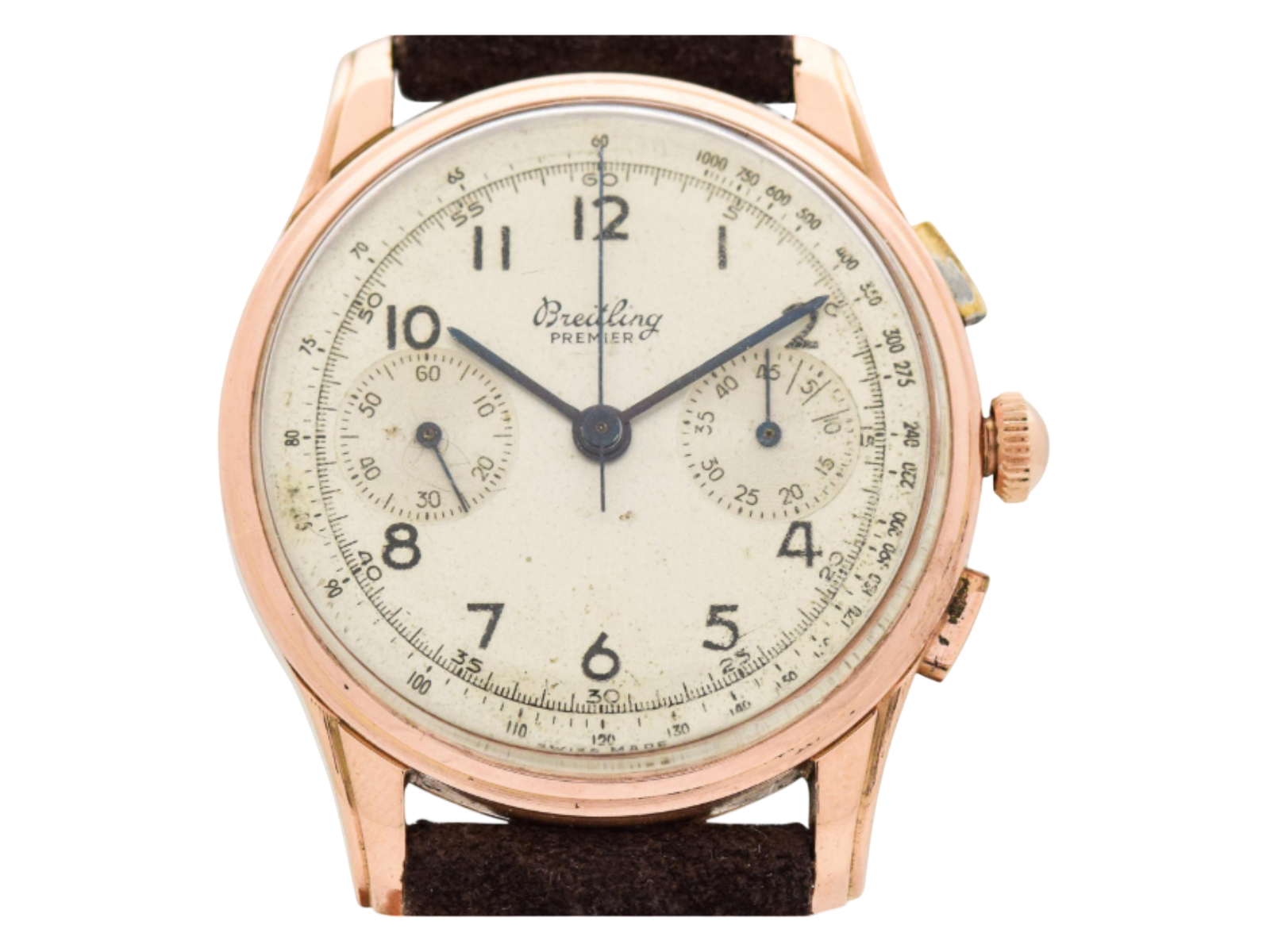
PPremier chronographs
Elegant cases, balanced dials and classic hand-wound movements make Premier references an appealing counterpoint to Breitling’s tool watches.
Reading the catalogue.
Old catalogues, dealer sheets and technical drawings can clarify intended dial layouts, model positioning and period-correct details when surviving watches have been altered over decades of use.

What makes a vintage Breitling look like a Breitling?
The recurring details are functional before they are decorative. Dense scales, rotating bezels, oversized counters and strongly differentiated hands were introduced to help a wearer calculate, measure or read information quickly rather than simply to create visual drama.
Learning that design vocabulary helps distinguish the brand’s major families and makes inconsistencies easier to spot. It also explains why even Breitling’s most complicated vintage dials can feel coherent when every component belongs together.
 806
806
The dial as an instrument panel.
Breitling often layered several types of information onto one dial: elapsed time, tachymeter or telemeter scales, logarithmic calculations and specialised counters. Successful examples remain readable because scale, contrast and hand shape create a hierarchy.
Circular slide rules
First central to the Chronomat and then inseparable from the Navitimer, the slide rule is one of Breitling’s clearest historical signatures.
Purpose-built bezels
Beads, numerals, tabs and rotating scales were designed for grip, calculation or timing. Their originality can be crucial to both appearance and value.
Bold but controlled cases
Many vintage Breitlings were large for their time, yet strong lug shape and balanced dial design usually kept them coherent rather than merely oversized.
Specialist movements
Venus, Valjoux and later automatic chronograph architecture underpin much of the vintage catalogue. Correct calibre identification is part of authentication.
Three things collectors learn quickly.
Vintage Breitling rewards close looking. A compelling watch is not simply one with the right name on the dial, but one whose components, ageing and documented history make sense together as a believable object from a particular period.
Collectors quickly learn that originality is rarely a simple yes-or-no judgement. Patina, servicing, replacement parts and restoration must be weighed together, with the strongest examples usually being those that remain coherent rather than merely pristine.
Patina must be coherent.
Warm lume or dial ageing is not automatically desirable. Hands, plots, printing and case wear should tell a believable version of the same story.
Rarity increases risk.
The scarcer the reference, the harder it becomes to compare examples. Rare Superoceans and unusual AVIs demand deeper expertise, not less scrutiny.
A serviced watch can still be original.
Mechanical maintenance is necessary. The key distinction is between sympathetic servicing and the replacement or cosmetic alteration of historically important visible parts.
Where the interest sits.
Collector interest is strongest where historical importance, visual identity and scarcity overlap. That is why the Navitimer remains the obvious entry point, while exceptional AVI, Co-Pilot and early Superocean references often command deeper specialist attention.
These ratings are editorial indicators rather than price forecasts. Condition, originality, dial execution and provenance can matter more than the family name alone, and an ordinary reference in exceptional condition may be more compelling than a rare watch assembled from incorrect parts.
High
The central vintage Breitling, but variations and replaced components require careful study.
Very high
Strong design, scarcity and specialist appeal make exceptional examples particularly desirable.
Very high
Rare professional divers with major historical interest and substantial authentication challenges.
High
Historically significant and visually distinctive, yet less universally recognised than the Navitimer.
Medium
Elegant, classic chronographs with broad appeal and strong potential when found in sharp condition.
Medium
Accessible in some forms, highly collectible in others; dial design drives much of the hierarchy.
Medium
Technically important, stylistically bold and increasingly appreciated as 1970s design matures.
Modern Breitling alternatives.
For buyers drawn to the history but unwilling to accept the uncertainty and maintenance demands of a vintage chronograph, modern Breitling offers several convincing alternatives. These watches preserve recognisable elements of the archive while adding contemporary movements, water resistance and dependable daily usability.
They are interpretations rather than replicas. The strongest choices retain the character of the original family—the Navitimer’s technical dial, the Premier’s refinement or the Superocean’s diving identity—without pretending to be untouched products of another era.

Navitimer
The clearest modern continuation of Breitling’s aviation and slide-rule heritage.

Premier B01
A refined contemporary chronograph shaped by Breitling’s elegant mid-century archive.

Superocean Heritage
Vintage diving cues translated into a more practical modern luxury sports watch.
The Breitling archive is larger than one icon.
The Navitimer is the natural entry point, but the richest collection tells a wider story: elegant Premiers, calculating Chronomats, purposeful AVIs, rare divers and the experimental chronographs of the 1960s and 1970s.