Vintage
Grand Seiko
From the first Grand Seiko of 1960 to the 44GS, 62GS, high-beat 61GS and V.F.A. pursuit of extreme accuracy: the collector’s guide to Grand Seiko’s foundational era.
Vintage Grand Seiko is a story of ambition compressed into little more than a decade. In the 1960s and early 1970s, Seiko’s Suwa and Daini facilities competed to create watches that could rival the finest Swiss chronometers in precision, finishing and design.


Japan’s pursuit of the ideal watch.
Grand Seiko was created in 1960 with a clear objective: to make a watch that could stand with the world’s best in precision, durability, legibility and beauty. The first model established the ambition; the next decade turned that ambition into a distinctive technical and visual philosophy.
The vintage catalogue is unusually concentrated. The 44GS defined the design grammar that later became known as Grand Seiko Style, while the 62GS introduced automatic winding. The 61GS and 45GS pushed frequency higher, and the V.F.A. models pursued mechanical accuracy to extraordinary levels.
For collectors, this period matters because so much of modern Grand Seiko can be traced directly back to it. Sharp planes, mirror polishing, faceted indexes, restrained dials and the obsession with practical accuracy were all established before the quartz era interrupted mechanical Grand Seiko production.
Vintage Grand Seiko is not a prehistory of the modern brand. It is the blueprint.
The quick collector’s view
Most recognisable
The 44GS: the 1967 watch that established the design language still used by Grand Seiko today.
Connoisseur choice
A 61GS or 45GS V.F.A. with a strong original case and documented movement condition.
Best entry point
Well-preserved 56GS and selected 61GS models, often offering serious vintage Grand Seiko character below the rarest references.
From national ambition to independent design language.
The first Grand Seiko appeared in December 1960 from Suwa Seikosha. It was conceived as the best practical watch the company could make, with accuracy standards intended to meet or exceed leading international benchmarks.
During the 1960s, Suwa Seikosha and Daini Seikosha developed parallel Grand Seiko lines. Their internal rivalry accelerated progress in movement frequency, case finishing and design, culminating in the high-beat and V.F.A. watches that define the peak of the vintage period.
The first Grand Seiko
The original model is released on 18 December 1960, powered by a slim manual-wind movement and certified to a demanding in-house precision standard.
Observatory competition begins
Seiko enters the Neuchâtel Observatory Competition, turning precision into a competitive engineering programme rather than merely a marketing claim.
44GS defines the style
Daini Seikosha launches the 44GS, whose sharp case planes, mirror-polished surfaces and faceted details establish the Grand Seiko Style.
62GS brings automatic winding
The first automatic Grand Seiko uses a bezel-free construction and a crown positioned at four o’clock, creating a distinctly different case architecture.
High-beat 61GS and 45GS
Automatic and manual-wind 10-beat movements push Grand Seiko toward greater stability and accuracy while retaining refined case design.
V.F.A. and Special models
Very Fine Adjusted and specially regulated models pursue mechanical accuracy to remarkable levels, representing the technical summit of vintage Grand Seiko.
Quartz and the return of the name
As quartz transforms watchmaking, the original mechanical Grand Seiko era fades. The name later returns with high-grade quartz before mechanical Grand Seiko is revived again.
A Grand Seiko timeline.
Grand Seiko’s early history moves unusually quickly. In little more than a decade, the brand progressed from its first prestige watch to a complete design grammar, automatic and high-beat movements, observatory-level competition and V.F.A. regulation.
The dates below provide a framework for the original vintage era. Individual references, case numbers, dial signatures and Suwa or Daini origins should still be researched separately.
First Grand Seiko
The brand is launched with a manual-wind watch intended to represent Seiko’s highest level of precision and quality.
Neuchâtel Observatory
Seiko begins participating in Swiss observatory competition as part of its pursuit of world-class mechanical accuracy.
44GS
The watch establishes the core visual rules later formalised as Grand Seiko Style.
62GS
The first automatic Grand Seiko introduces a bezel-free case and four-o’clock crown.
61GS
Japan’s first automatic 10-beat Grand Seiko pushes frequency and positional stability higher.
45GS
A thinner manual-wind 10-beat movement brings high-frequency performance to an elegant hand-wound watch.
Geneva Observatory success
Suwa Seikosha achieves the highest mechanical wristwatch movement ranking in its first Geneva Observatory appearance.
61GS V.F.A.
Very Fine Adjusted regulation targets an exceptional monthly rate for a mechanical wristwatch.
45GS V.F.A.
The manual-wind high-beat line receives the same extreme-accuracy philosophy.
56GS
A slimmer automatic 8-beat movement responds to demand for lighter, more practical watches.
61GS Special
Special adjustment standards tighten the performance of the automatic high-beat family further.
9F quartz renewal
The Grand Seiko name returns with the 9F quartz series, beginning the path toward the modern brand.
Precision in print.
Period advertising and catalogues reveal how Grand Seiko was positioned around accuracy, finishing and restrained prestige rather than lifestyle imagery.

The four vintage eras.
Grand Seiko’s vintage history is shorter than that of most Swiss marques, but it is dense with change. The catalogue moves from early prestige watches to a formal design language, then into high-beat precision and finally the quartz-led transition.
Each era brings different case geometries, calibre families and dial conventions. Suwa and Daini production also matters, because the two factories developed distinct technical paths.
The prestige foundations
First, 57GS and related manual-wind watches establish Grand Seiko as Seiko’s highest-grade line.
The design breakthrough
44GS and 62GS establish two foundational case architectures and the visual principles of Grand Seiko Style.
High-beat and V.F.A.
61GS, 45GS, Special and V.F.A. models represent the mechanical peak of the original era.
Quartz and transition
Mechanical Grand Seiko recedes as quartz dominates, before the 9F series revives the name in the early 1990s.
Six important vintage Grand Seikos.
This is not a complete reference catalogue. It is a map of the watches that best explain vintage Grand Seiko: the First, 44GS, 62GS, 61GS, 45GS and V.F.A. families.
Individual case references, dial codes, movement numbers and factory origins matter. The same family name can encompass watches with significantly different levels of rarity and collectability.
 3180
3180First Grand Seiko
The 1960 original: formal, compact and historically essential as the watch that established the Grand Seiko name.
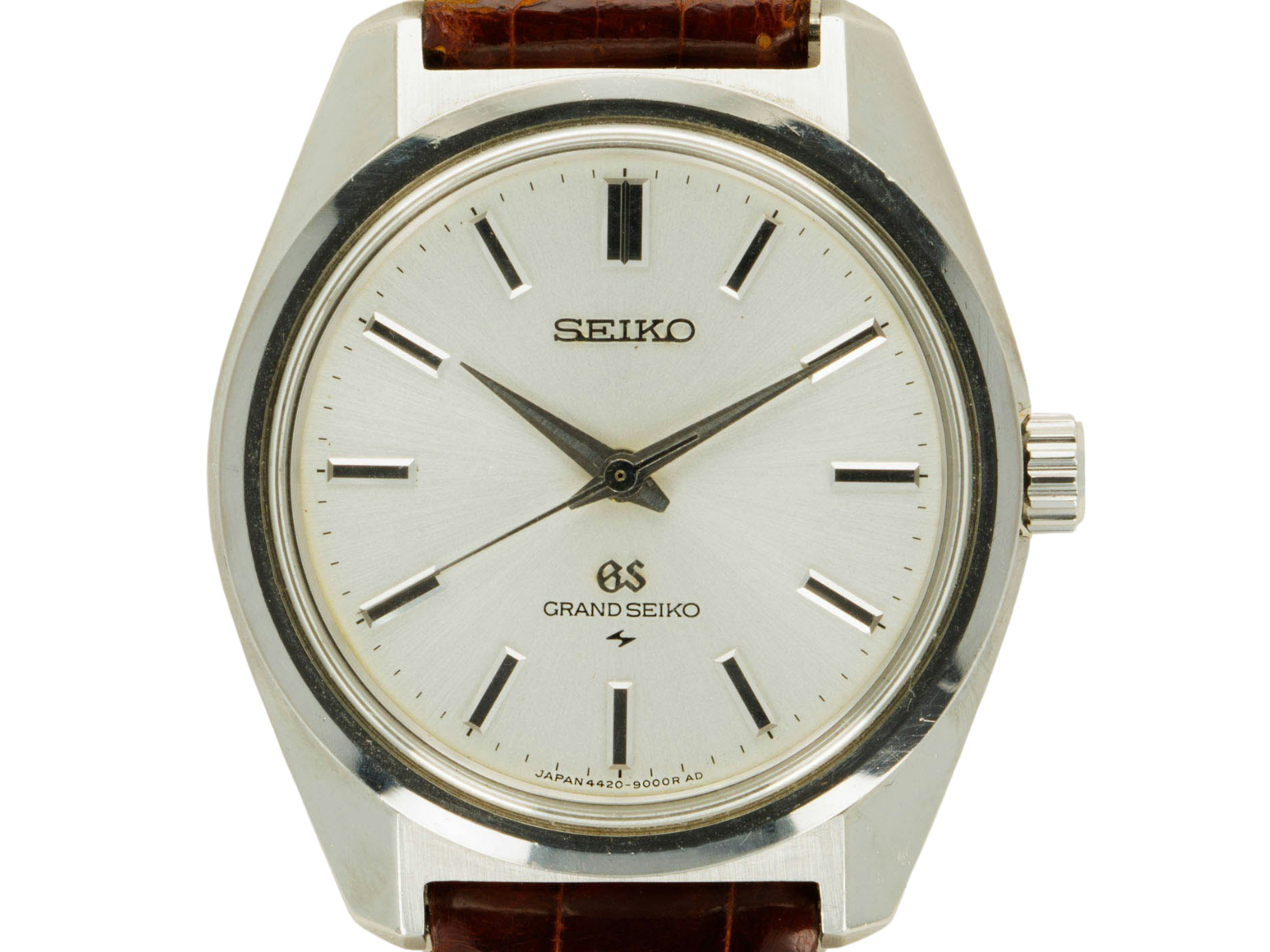 44GS
44GS44GS
The design landmark that established Grand Seiko Style through sharp planes, mirror surfaces and highly faceted detailing.
 62GS
62GS62GS
The first automatic Grand Seiko, distinguished by a bezel-free case and recessed four-o’clock crown.
 61GS
61GS61GS
A high-beat automatic family that combined 10-beat performance with practical daily wear and increasingly ambitious regulation.
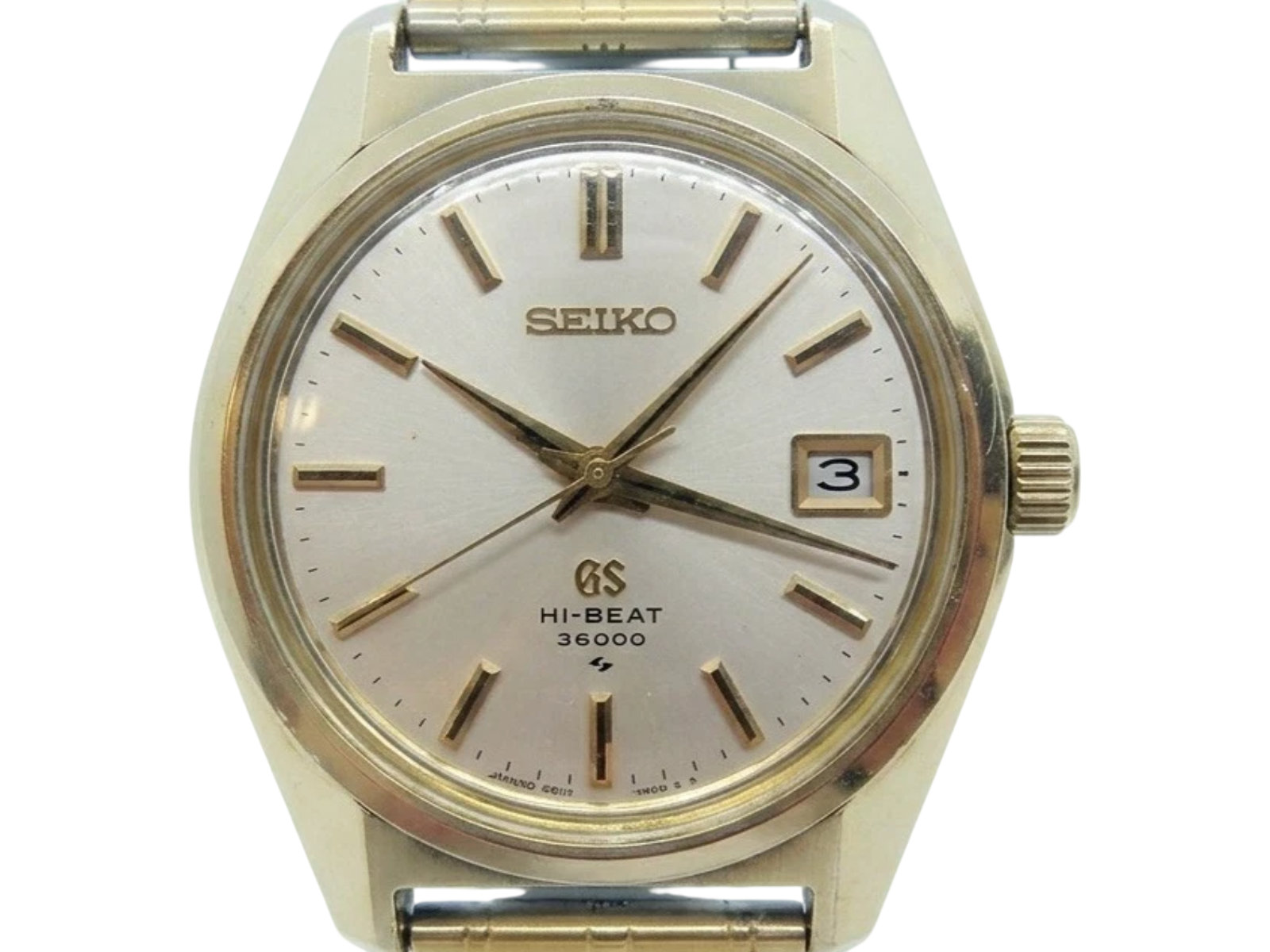 45GS
45GS45GS
A slimmer manual-wind 10-beat Grand Seiko whose crisp design and technical purity make it a favourite among specialists.
 VFA
VFAV.F.A.
Very Fine Adjusted models represent the summit of Grand Seiko’s mechanical accuracy programme in the original era.
Reading the catalogue.
Old Seiko catalogues, case-back codes and movement references are essential for understanding how Grand Seiko evolved across Suwa and Daini production.

What makes a vintage Grand Seiko look like a Grand Seiko?
The defining visual language is based on light rather than ornament. Broad mirror-polished planes, sharp ridgelines, faceted indexes and flat, highly legible dials are designed to create strong contrast as the watch moves.
The 44GS codified this approach most clearly, but its principles spread throughout later Grand Seiko. Original case geometry is therefore especially important to collectors.
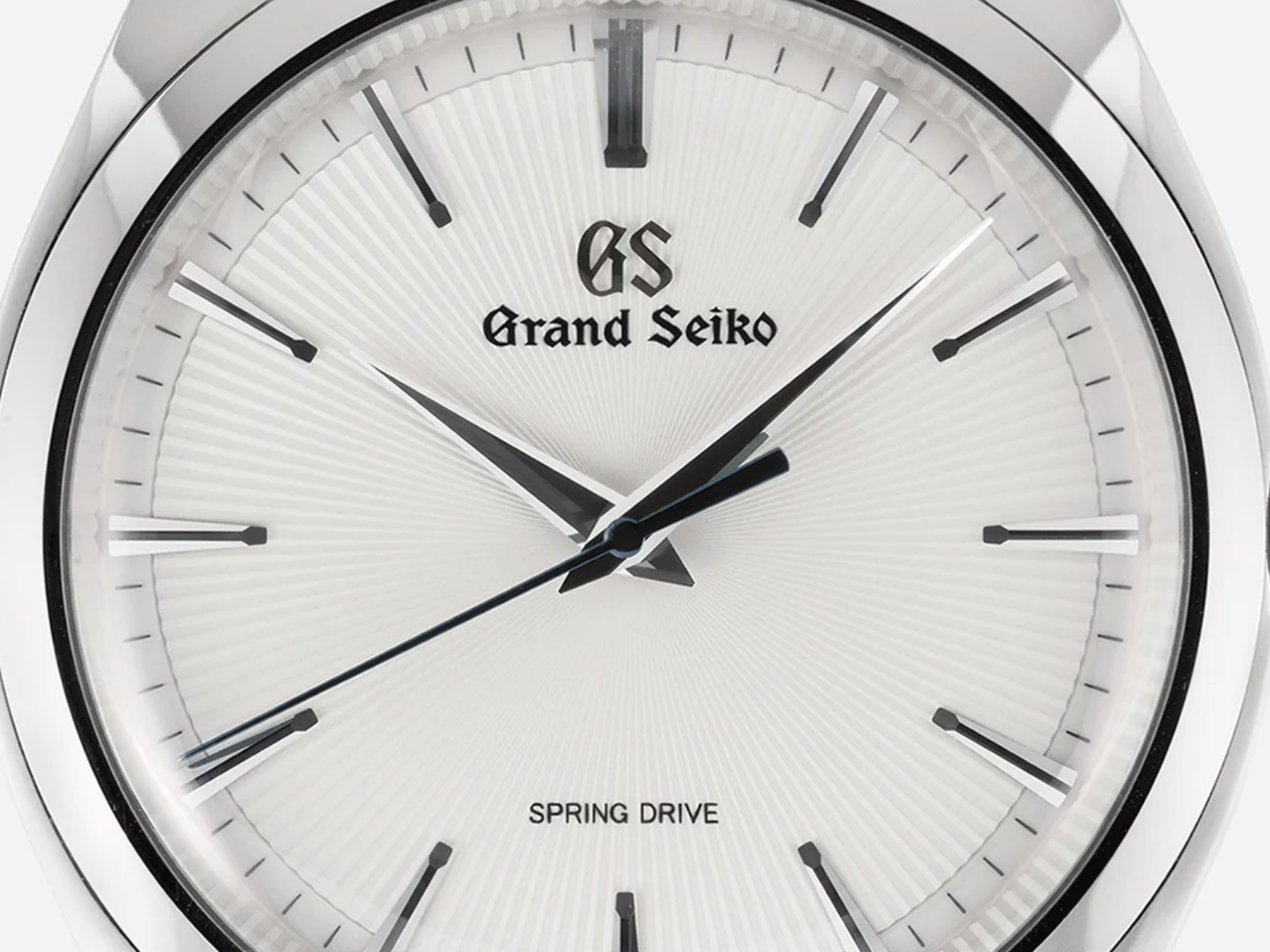 44
44Light shaped by geometry.
Flat mirror surfaces, sharp ridge lines and highly faceted hands and indexes create the distinctive play of light that became central to Grand Seiko design.
Zaratsu-polished planes
Distortion-free mirror surfaces give vintage cases their precision and make over-polishing particularly damaging.
Faceted indexes
Multi-sided applied markers catch light from different angles and reinforce legibility without luminous paint.
High-beat movements
10-beat calibres in the 61GS and 45GS families embody Grand Seiko’s obsession with positional stability and accuracy.
Restrained dial hierarchy
Grand Seiko branding, applied markers and date windows are carefully balanced so technical ambition never overwhelms visual calm.
Three things collectors learn quickly.
Vintage Grand Seiko rewards case-condition discipline. Much of the brand’s design identity lives in the transitions between polished planes, so aggressive refinishing can remove the very geometry collectors want.
Collectors also learn that the catalogue is more technical than it first appears. Suwa and Daini movements, dial codes, case references and regulation grades all matter when identifying an important example.
Polishing matters enormously.
A bright case is not necessarily a good case. Softened ridgelines can materially reduce both character and value.
Factory lineage matters.
Suwa and Daini developed different movements and design solutions. Knowing which made the watch is part of understanding it.
High beat means service complexity.
61GS, 45GS and V.F.A. watches deserve specialist servicing because condition and regulation are central to their historical significance.
Where the interest sits.
Collector interest is strongest around the watches that define either the brand’s design language or its pursuit of extreme mechanical precision. The 44GS and V.F.A. families therefore occupy especially important positions.
These ratings are editorial indicators rather than price forecasts. Case sharpness, dial originality, calibre condition and rarity within a reference family can materially change desirability.
Very high
The foundational 1960 watch, with significant variation in case material, dial and surviving condition.
High
The watch that established Grand Seiko Style and remains central to the modern brand’s design identity.
Very high
The technical summit of the original mechanical era, with rarity and servicing complexity to match.
High
The first automatic Grand Seiko and one of the brand’s most distinctive early case designs.
Medium
An important high-beat automatic family with strong technical significance and broader availability.
Medium
A practical, slim and relatively accessible route into vintage Grand Seiko ownership.
Modern Grand Seiko alternatives.
Grand Seiko’s modern catalogue openly revisits its foundational designs. The 44GS and 62GS families remain active design platforms rather than static heritage pieces.
For buyers who admire the vintage aesthetic but want modern water resistance, servicing and movement technology, the contemporary Heritage Collection is the natural place to start.

Modern 44GS
The clearest continuation of the 1967 design language, with contemporary cases and 9S-series movements.
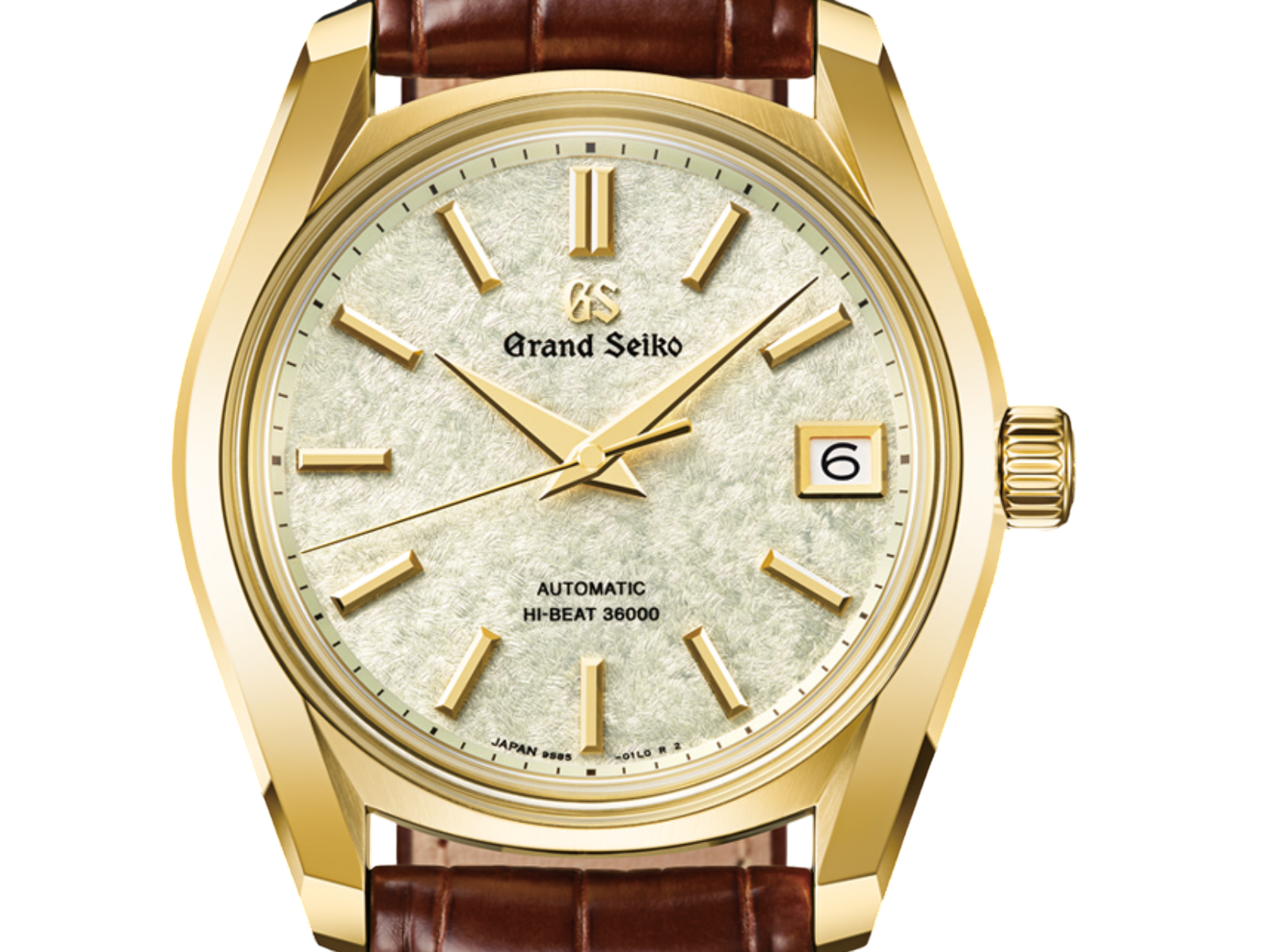
Modern 62GS
A contemporary reinterpretation of Grand Seiko’s first automatic case architecture.
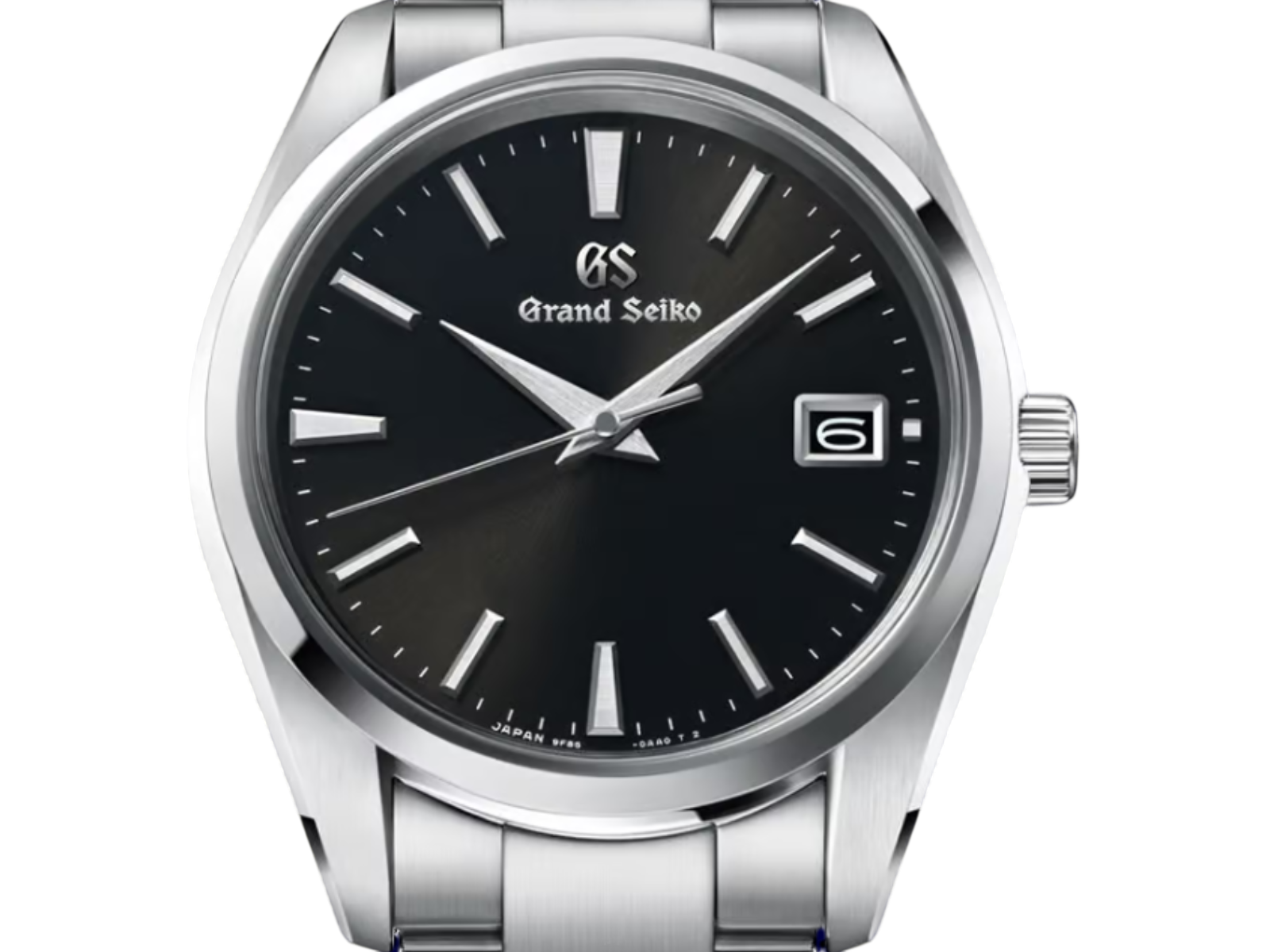
Heritage Collection
The modern collection most directly connected to Grand Seiko’s original pursuit of precision and restrained design.
The Grand Seiko archive is short, concentrated and foundational.
The first watch of 1960 opened the story, but the decisive years came immediately afterwards: 44GS design, 62GS automatic winding, high-beat 61GS and 45GS movements, and the extraordinary V.F.A. pursuit of mechanical accuracy.