Vintage
IWC
From American industrial ambition and Schaffhausen pocket watches to the Portugieser, Mark 11, Ingenieur and Aquatimer: the collector’s guide to IWC’s defining eras.
Vintage IWC is built around clarity, engineering and restraint. Its strongest watches rarely shout. Instead, they reveal their quality through precise movements, disciplined dials and cases designed around a clearly defined purpose.
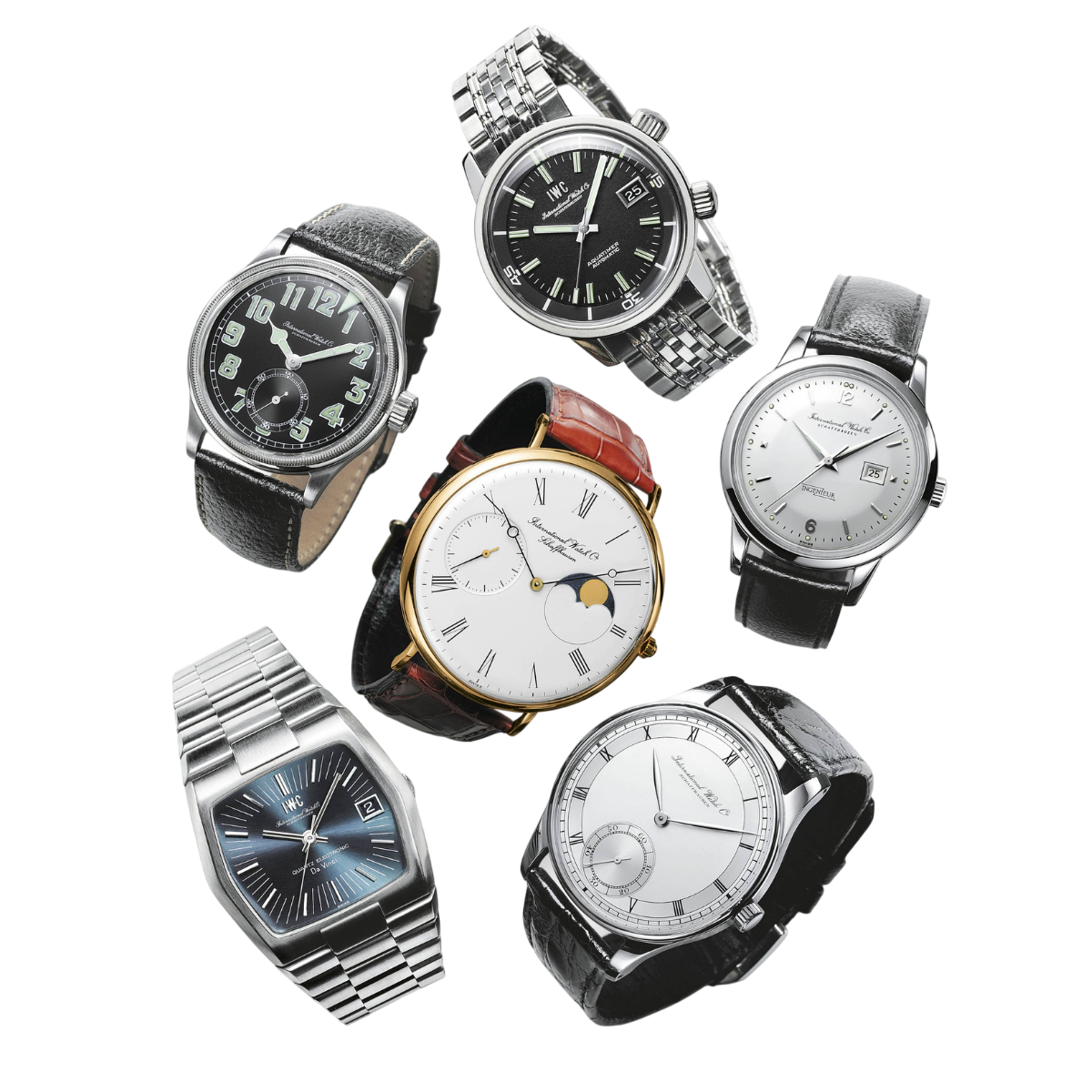

Engineering without theatre.
IWC was founded on an unusual combination: American industrial thinking applied to Swiss watchmaking in Schaffhausen. That identity gave the company a distinctive position within the Swiss industry. Its best watches unite efficient production, robust movement construction and an understated visual language.
The vintage catalogue is unusually broad. It stretches from finely made pocket watches and restrained dress watches to military navigation instruments, oversized Portugiesers, anti-magnetic Ingenieurs, professional Aquatimers and technically ambitious late-century complications.
For collectors, the attraction often lies beneath the surface. Calibres such as the 89 and the Pellaton-wound automatic movements matter as much as the name on the dial, while apparently simple cases and typography reward close study.
The finest vintage IWCs are defined by the confidence to make complexity look calm.
The quick collector’s view
Most recognisable
The Mark 11: a military navigation watch whose clarity and purpose shaped IWC’s pilot-watch identity.
Connoisseur choice
Early Portugieser Ref. 325 or a sharp first-generation Ingenieur Ref. 666 with the correct movement and dial.
Best entry point
Well-preserved calibre 89 dress watches, Yacht Clubs and later hand-wound or automatic Schaffhausen references.
From industrial experiment to engineer of watchmaking.
IWC’s story begins with Florentine Ariosto Jones, an American watchmaker who sought to combine Swiss skill with modern machinery and centralised production. Schaffhausen offered hydropower, skilled labour and distance from the established centres of French-speaking Swiss watchmaking.
The company’s identity evolved through precision pocket watches, distinctive movement architecture and professional wrist instruments. Across very different eras, the same principle remained visible: design should follow a practical brief, and technical sophistication should be usable rather than decorative.
F. A. Jones establishes IWC in Schaffhausen
The International Watch Company is founded with the ambition of producing high-quality Swiss movements through modern industrial methods. The unusual location helps define IWC as an outsider within Swiss watchmaking.
Pocket watches and movement identity
IWC develops a reputation for dependable pocket-watch calibres, clear construction and export-oriented production. Early movements establish the engineering character that later collectors associate with Schaffhausen.
Pilot’s watches and the first Portugieser
The Special Pilot’s Watch begins IWC’s aviation tradition. Soon afterwards, the first Portugieser combines a large pocket-watch movement with a wristwatch case and a highly legible deck-watch-inspired dial.
Military precision and the calibre 89
Military contracts and the Mark 11 place accuracy, magnetic protection and legibility at the centre of IWC’s identity. The hand-wound calibre 89 becomes one of the company’s most admired movements.
Pellaton winding and the Ingenieur
Albert Pellaton’s automatic winding system strengthens IWC’s technical reputation. The Ingenieur adds anti-magnetic protection and robust everyday usability to the company’s restrained design language.
Aquatimer, Yacht Club and modern sport
IWC broadens its catalogue through professional diving watches and resilient automatic models. Gérald Genta’s Ingenieur SL later translates the anti-magnetic concept into a bold integrated-bracelet design.
Materials, complications and a new collecting era
Partnerships with Porsche Design bring titanium and advanced case materials into the catalogue, while Kurt Klaus’ perpetual calendar and the revived Portugieser establish IWC as a modern complications house.
An IWC timeline.
IWC’s major milestones trace a consistent movement between precision engineering and professional usefulness. Pocket-watch construction, military specifications, automatic winding, anti-magnetism and material innovation all became part of the same practical tradition.
The dates below identify broad historical landmarks. Individual references, movement generations, military markings and dial configurations should still be researched separately.
IWC is founded
Florentine Ariosto Jones establishes the International Watch Company in Schaffhausen.
Pallweber display watches
IWC produces pocket watches using Josef Pallweber’s digital hours-and-minutes display system.
Early wristwatch production
Pocket-watch movements are adapted for wrist wear during the formative years of the wristwatch.
Special Pilot’s Watch
IWC introduces its first specialist wristwatch for pilots.
Portugieser Ref. 325
A large wristwatch with pocket-watch movement and marine-chronometer-inspired clarity is created for Portuguese clients.
Military wristwatches
IWC supplies highly legible watches for military use during the Second World War period.
Mark 11
The celebrated navigation watch enters service with military and civilian air crews.
Pellaton automatic winding
Albert Pellaton’s efficient pawl-winding system becomes a defining IWC technical signature.
Ingenieur
IWC introduces a robust automatic watch with anti-magnetic protection for technical professionals.
Aquatimer
The company enters professional diving with an internal rotating-bezel design.
Ingenieur SL
Gérald Genta reinterprets the Ingenieur as a substantial integrated-bracelet sports watch.
Da Vinci perpetual calendar
Kurt Klaus’ crown-adjustable perpetual calendar establishes IWC’s modern complications reputation.
Schaffhausen in print.
Period advertisements reveal how IWC presented precision, engineering and understated quality before vintage watches became collector commodities.

The four vintage eras.
Vintage IWC is easier to understand when divided by changes in movement architecture and professional purpose. The catalogue evolves from pocket-watch manufacture to military wrist instruments, refined automatic watches and increasingly technical sports models.
Each era brings different calibres, case constructions, dial conventions and collecting risks. Establishing the period first makes it easier to judge whether a particular watch is coherent and correctly valued.
The manufacture years
Pocket watches, early wristwatches and distinctive Schaffhausen movements establish IWC’s industrial and technical identity.
Military and marine clarity
Pilot’s watches, military contracts, the Portugieser and calibre 89 create the foundation of modern vintage IWC collecting.
Automatic confidence
Ingenieur, Yacht Club, Aquatimer and Pellaton-wound movements combine restrained design with increasingly specialised performance.
Design and technical ambition
Genta’s Ingenieur, Porsche Design materials, advanced complications and the Portugieser revival reshape IWC for modern collectors.
Six important vintage IWCs.
This is not a complete reference catalogue. It is a map of the families that best explain vintage IWC: the oversized Portugieser, military Mark 11, anti-magnetic Ingenieur, professional Aquatimer, resilient Yacht Club and technically radical Porsche Design watches.
Each family demands different knowledge. Movement correctness, military provenance, dial originality, pressure-related components and bracelet completeness can all determine whether an example is compelling.
 325
325Portugieser Ref. 325
An unusually large pre-war wristwatch whose pocket-watch movement and deck-watch clarity anticipated modern tastes by decades.
 M11
M11Mark 11
The defining military IWC: highly legible, anti-magnetic and powered by the celebrated hand-wound calibre 89.
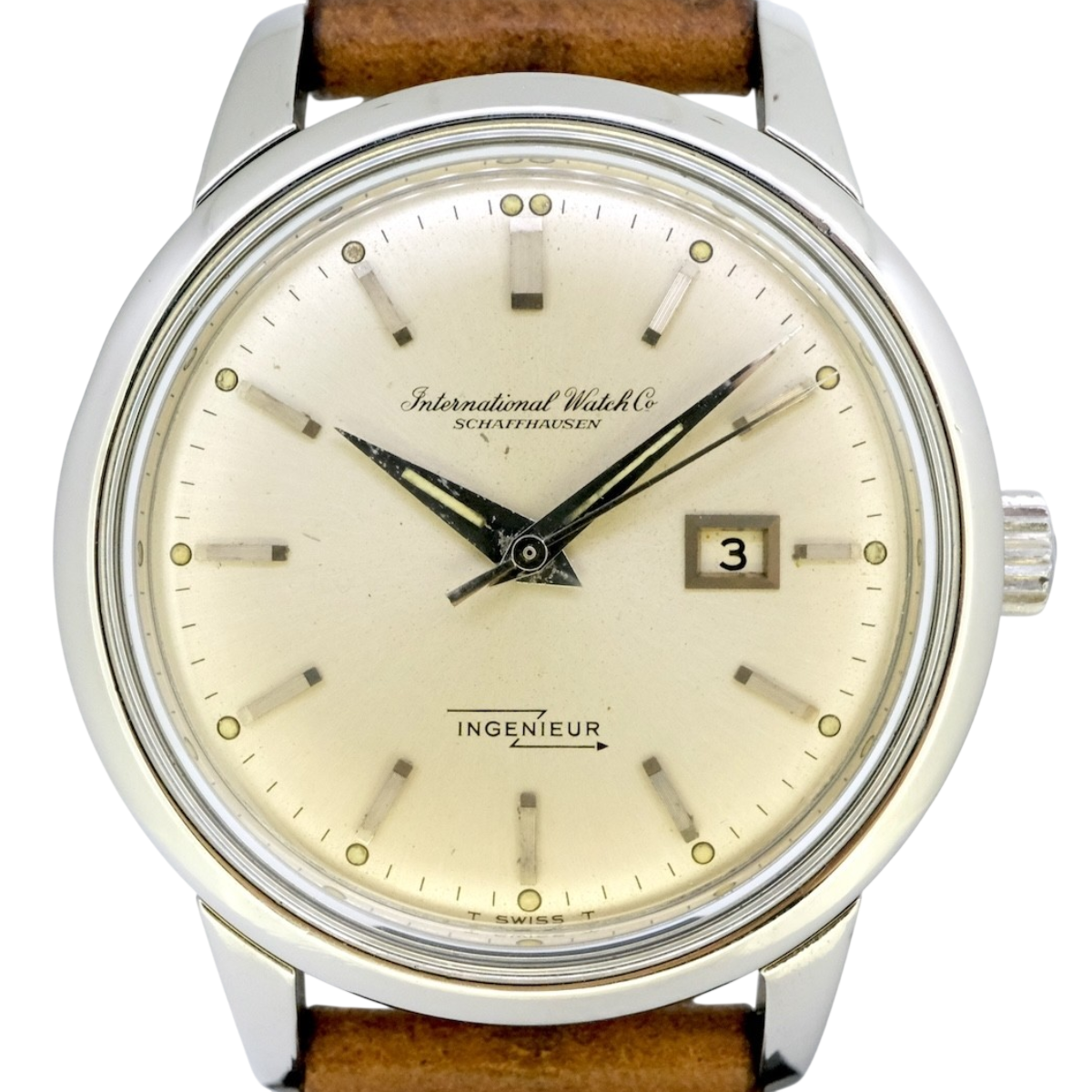 666
666Ingenieur Ref. 666
A discreet automatic tool watch combining Pellaton winding, anti-magnetic protection and restrained mid-century design.
 812
812Aquatimer Ref. 812
IWC’s first-generation diver pairs an internal timing bezel with a clean, functional dial and strong late-1960s character.
 YC
YCYacht Club
A robust automatic watch with refined styling, often offering strong vintage IWC character without the prices of the headline references.
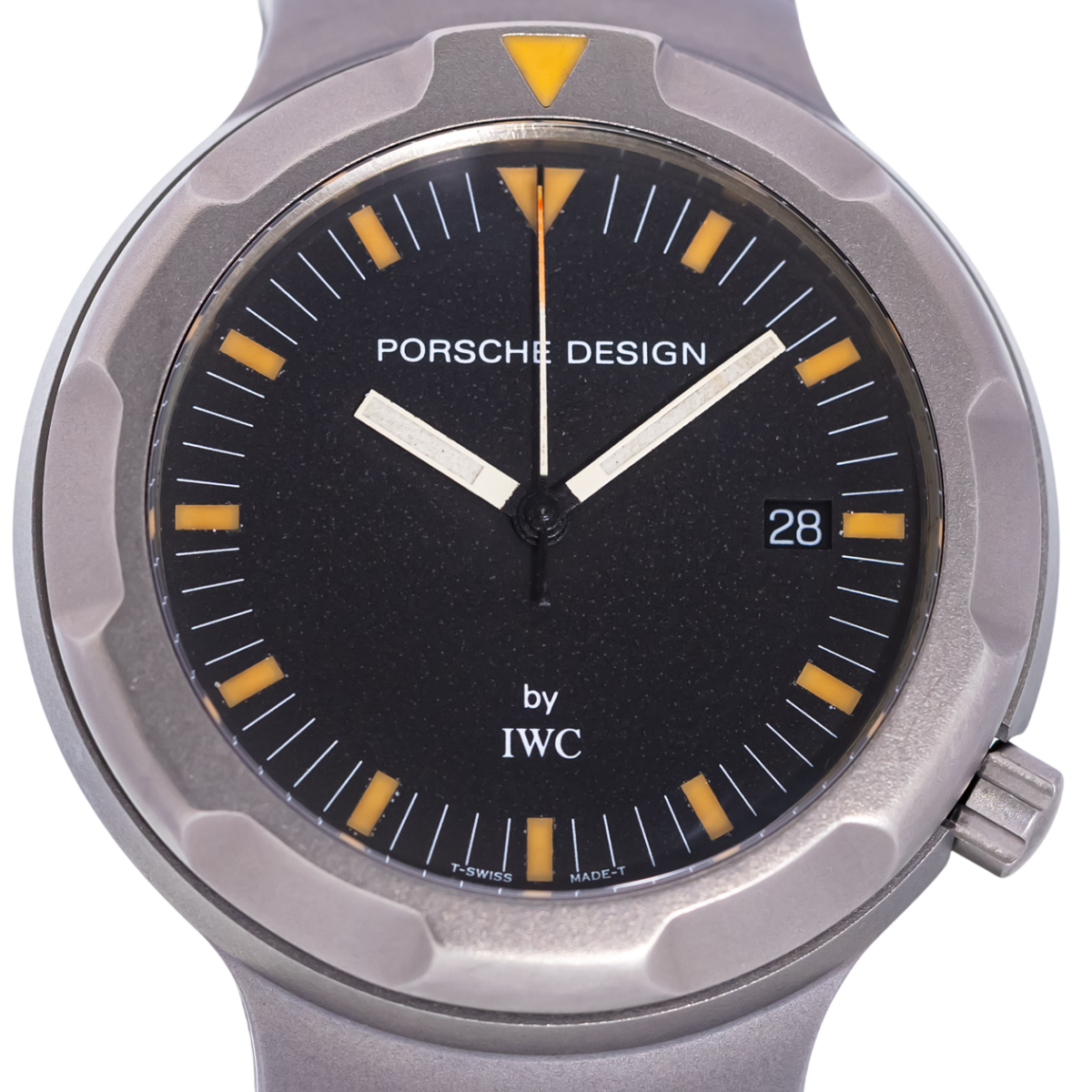 PD
PDPorsche Design Ocean 2000
A technically progressive titanium sports watch whose material, bracelet and integrated form capture IWC’s 1980s engineering confidence.
Reading the catalogue.
Old catalogues, movement charts and military documentation can clarify reference numbers, calibre families, dial layouts and the intended role of specialist IWC watches.

What makes a vintage IWC look like an IWC?
The recurring details are rooted in function: balanced typography, strong hand contrast, purposeful case dimensions and movements engineered for reliable service. Even IWC’s dress watches usually retain a degree of technical sobriety.
Learning that vocabulary helps distinguish original restraint from later restoration. The strongest vintage examples feel calm because every detail performs a clear role.
 89
89
Engineering beneath restraint.
IWC’s identity is often clearest inside the case. Clean bridges, robust construction, calibre-specific finishing and serviceable architecture matter as much as the dial.
Instrument typography
Arabic numerals, baton markers and carefully weighted hands create immediate legibility without unnecessary decoration.
Purposeful proportions
Cases range from restrained dress-watch sizes to unusually large military and Portugieser forms, but dimensions follow function.
Magnetic protection
Soft-iron inner cases and specialist construction are central to the Mark 11 and Ingenieur traditions.
Pellaton winding
The pawl-based automatic system became one of IWC’s most recognisable mechanical signatures and remains important to collectors.
Three things collectors learn quickly.
Vintage IWC rewards movement literacy. Watches that appear visually similar may contain very different calibres, and those mechanical distinctions often shape collectability more strongly than case metal alone.
Collectors also learn that understatement can hide rarity. A plain silver dial or modest steel case may belong to a scarce military, anti-magnetic or retailer-specific configuration requiring specialist research.
Calibre comes first.
Confirm the movement family before judging value. The same external style can conceal a major difference in historical importance.
Military markings need context.
Case-back engravings, issue numbers and dial changes should correspond to a credible service history, not be assessed individually.
Restraint magnifies restoration.
On a simple IWC dial, altered printing, replaced hands or aggressive polishing can be especially obvious and damaging.
Where the interest sits.
Collector interest is strongest where mechanical importance, professional history and distinctive design overlap. Early Portugiesers, military Mark 11s, first-generation Ingenieurs and unusual Aquatimers occupy the core of the vintage market.
These ratings are editorial indicators rather than price forecasts. Dial originality, military provenance, calibre, case condition and component completeness can matter more than the family name alone.
Very high
Historically significant, scarce and highly sensitive to dial, case and movement correctness.
High
The central military IWC, with multiple service and dial generations requiring careful study.
High
Important Pellaton-wound anti-magnetic watches with strong design and movement appeal.
Very high
Rare professional divers whose crowns, internal bezels and dials demand close authentication.
Medium
A wearable and comparatively accessible expression of robust late-1960s IWC automatic design.
Medium
Technically progressive material and industrial design increasingly appreciated by collectors.
Modern IWC alternatives.
For buyers drawn to IWC’s historical clarity but unwilling to accept the uncertainty and maintenance demands of a vintage watch, the modern catalogue retains many of the company’s strongest ideas.
These models provide contemporary reliability and servicing while preserving the instrument typography, balanced proportions and engineering focus associated with Schaffhausen.
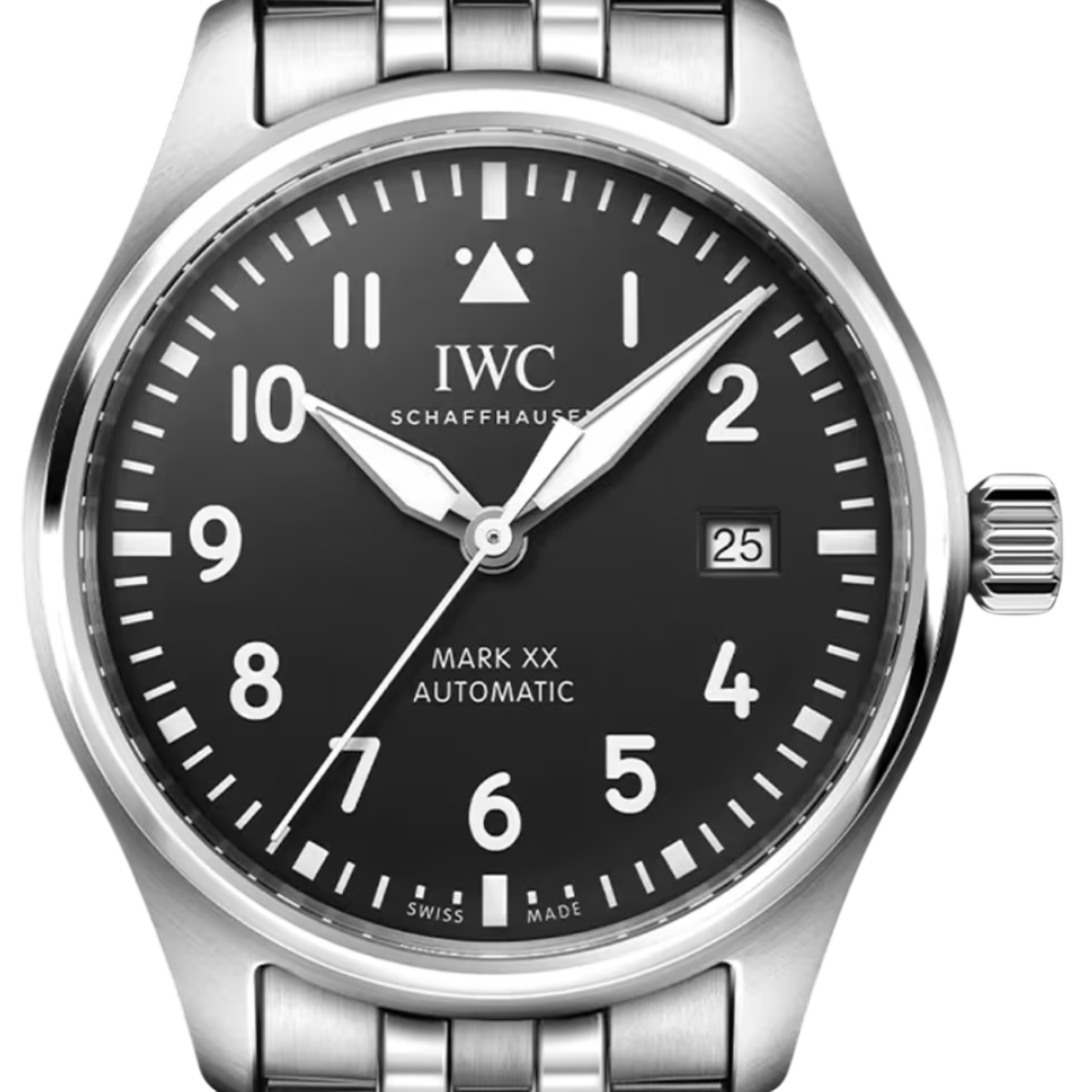
IWC Mark XX
The clearest modern continuation of the Mark 11 tradition: legible, restrained and designed for everyday use.

Modern Portugieser
Large, clean and classically proportioned, with direct visual roots in the original Ref. 325.
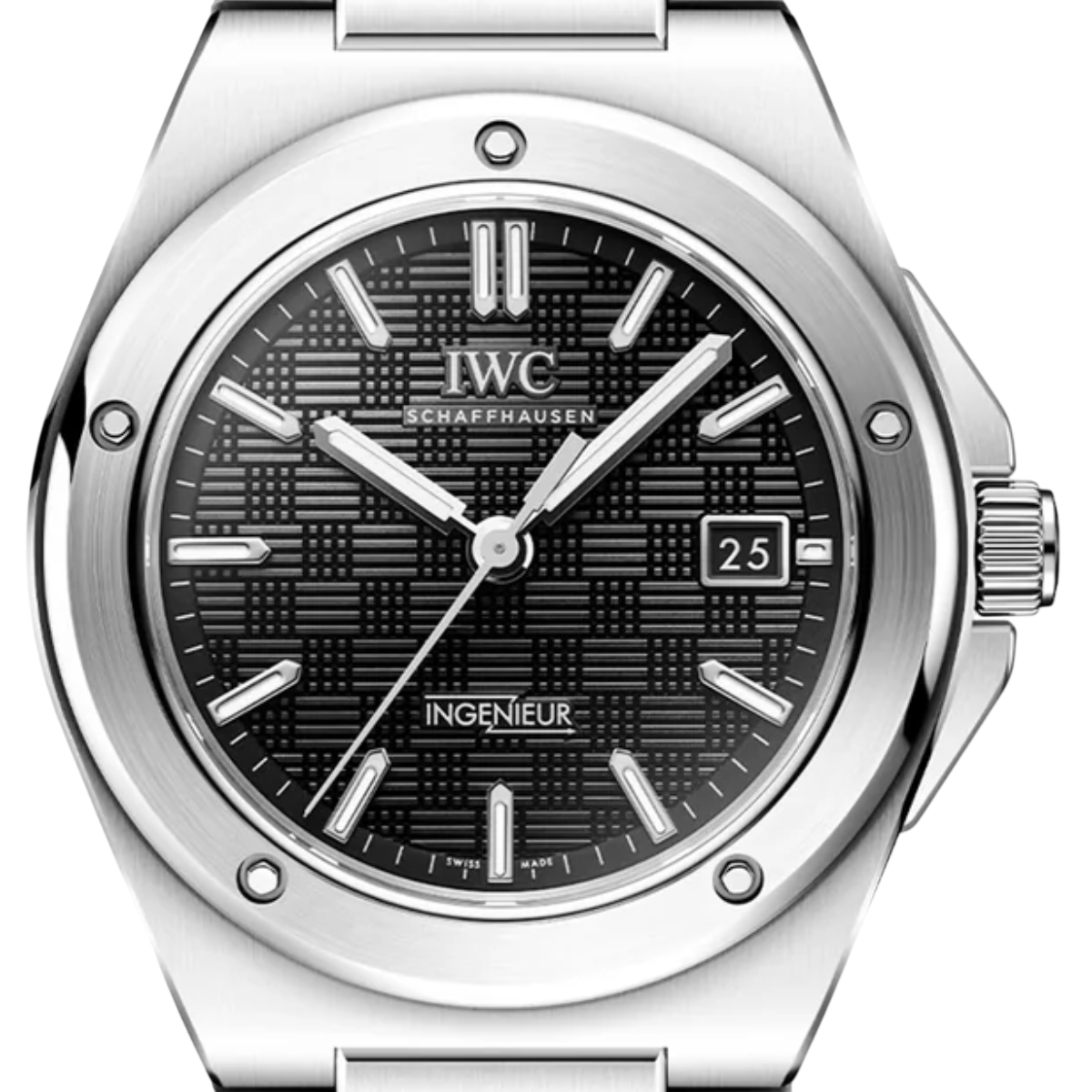
Modern Ingenieur
A contemporary integrated-bracelet interpretation of IWC’s engineering-led sports-watch tradition.
The IWC archive rewards quiet attention.
The Mark 11 may be the natural entry point, but the richest collection moves across pocket-watch calibres, early Portugiesers, understated Ingenieurs, professional Aquatimers and the technically ambitious designs of the late 20th century.