Vintage
Longines
From Saint-Imier chronographs and observatory precision to aviation navigation, Conquest, Flagship and Ultra-Chron: the collector’s guide to Longines’ defining eras.
Vintage Longines combines technical authority with remarkable range. The brand produced elegant dress watches, competition chronometers, professional pilot instruments, celebrated chronographs and robust sports watches—often with movements developed in-house.


Precision for the wider world.
Longines built its reputation by bringing precision watchmaking into international life. From Saint-Imier, the company supplied pocket watches, timing instruments and wristwatches to customers far beyond Switzerland, pairing industrial organisation with a deep command of mechanical design.
The vintage catalogue is exceptionally broad. It includes elegant sector-dial watches, military pieces, navigation instruments, flyback chronographs, waterproof sports watches and high-frequency movements. Few brands offer such variety while retaining a coherent identity based on legibility, timing and understated elegance.
For collectors, the opportunity lies in looking beyond the most obvious names. A beautifully preserved calibre 30L dress watch, early Conquest, 13ZN chronograph or unusual military reference can reveal a level of historical and mechanical importance that later market positioning sometimes obscures.
Vintage Longines is a history of precision made useful—on the wrist, in the cockpit and at the finish line.
The quick collector’s view
Most recognisable
The Lindbergh Hour Angle watch: an aviation instrument whose dial turns navigation into graphic design.
Connoisseur choice
A sharp 13ZN or 30CH chronograph, especially with an unusual dial, case or documented provenance.
Best entry point
Well-preserved calibre 30L dress watches, early Conquests and Flagships, or honest Ultra-Chron references.
From Saint-Imier workshop to international timing authority.
Longines began in 1832 when Auguste Agassiz joined a watchmaking concern in Saint-Imier. The firm initially operated through the établissage system, coordinating specialised workers before assembling and selling finished watches to an increasingly international clientele.
Ernest Francillon transformed that structure by concentrating production in a factory at Les Longines in 1867. The move created a more integrated manufacture, gave the company its enduring name and established the winged-hourglass identity that remains central to the brand.
Auguste Agassiz enters watchmaking
The Saint-Imier concern that would become Longines begins coordinating production and exporting watches to international markets.
The Longines factory opens
Ernest Francillon brings the principal stages of production together at Les Longines and introduces the first movement associated with the new factory system.
Chronograph expertise takes shape
Longines develops specialist chronograph movements and timing instruments, building a reputation that would extend into sport, science and professional measurement.
Precision, aviation and navigation
High-frequency timing equipment, pilot’s watches and collaborations with navigators place Longines at the centre of modern travel and record-setting flight.
The great chronograph calibres
The 13ZN and later 30CH establish Longines among the most important makers of in-house wrist chronograph movements.
Named collections and modern sport
Conquest and Flagship bring consistent collection identities, while Skin Diver and Super Compressor watches expand the brand’s professional range.
High frequency and changing industry
Ultra-Chron movements pursue improved accuracy through high-beat technology as quartz and industrial consolidation reshape Swiss watchmaking.
A Longines timeline.
Longines’ major milestones reveal a company repeatedly adapting precision to real-world use. Factory organisation, chronograph development, aviation instruments, sports timing and high-frequency movements all served practical demands for clearer and more accurate measurement.
The dates below identify broad historical landmarks. Individual references, movement generations, military markings and dial variations should still be researched separately.
The Saint-Imier story begins
Auguste Agassiz joins a watchmaking concern with early international reach.
Factory at Les Longines
Ernest Francillon centralises production and gives the company the name Longines.
First chronograph movement
Longines begins a major chapter in specialist elapsed-time mechanisms.
Winged hourglass protection
The brand secures legal protection for the emblem engraved on its watches.
High-frequency timing
A timing device capable of measuring tenths of a second demonstrates growing sports-timing expertise.
Weems navigation system
Longines works with Philip Van Horn Weems on a watch that allows precise synchronisation to a time signal.
Lindbergh Hour Angle
Charles Lindbergh’s navigation concept is translated into a specialist wristwatch.
Calibre 13ZN
The flyback chronograph calibre becomes one of the most admired movements in vintage watchmaking.
Calibre 30CH
A new in-house flyback chronograph continues Longines’ technical leadership.
Conquest
Longines launches its first named watch family and protects the collection name.
Flagship
A refined collection with a ship medallion reinforces Longines’ post-war elegance.
Ultra-Chron Diver
A high-frequency movement is placed inside a professional diving watch.
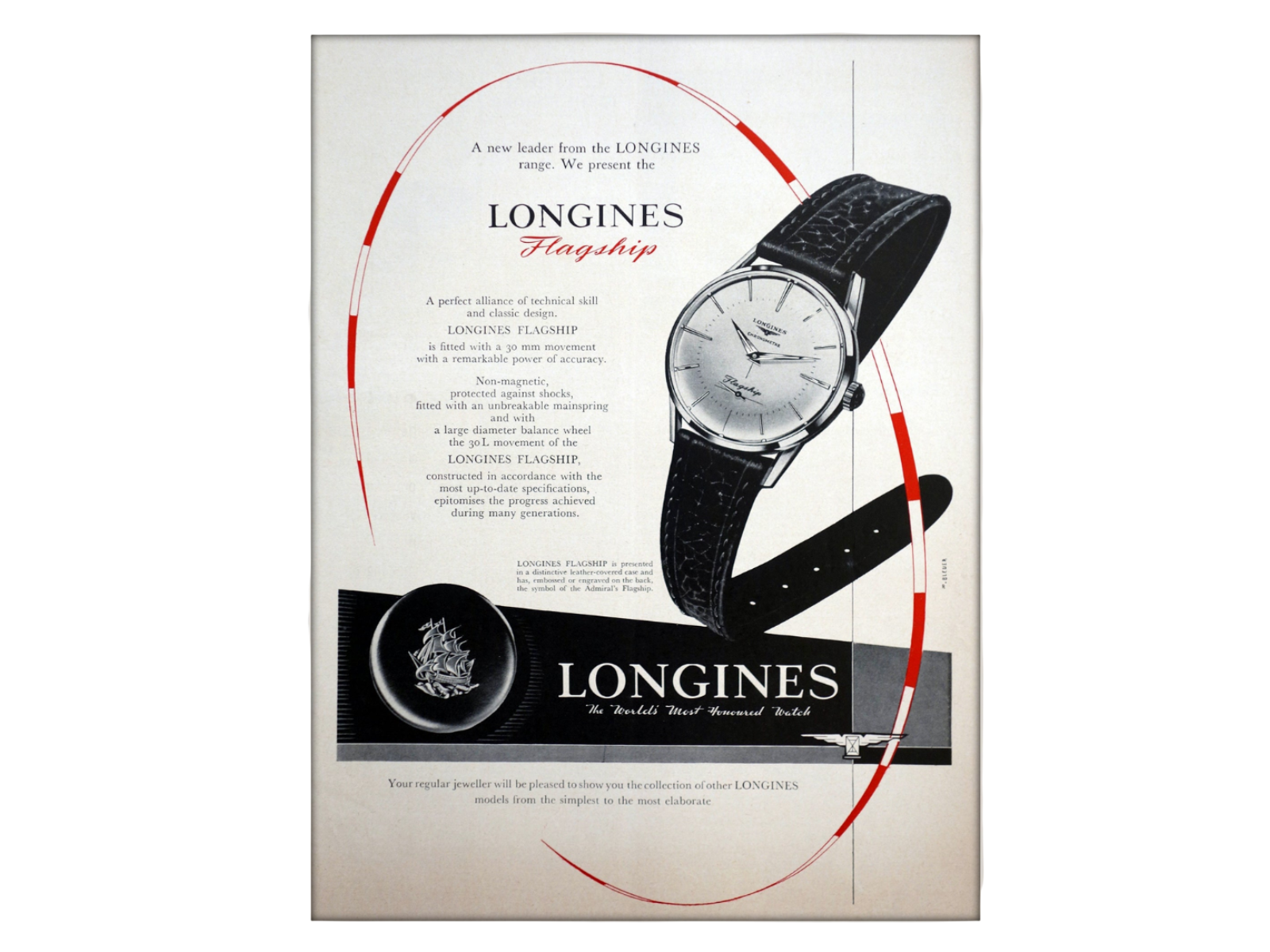
Saint-Imier in print.
Period advertising reveals how Longines presented precision, aviation, sport and elegance before vintage watches became collector commodities.
The four vintage eras.
Vintage Longines is easier to understand when divided by changes in production, movement technology and market role. The catalogue evolves from pocket-watch manufacture to chronograph leadership, post-war collection building and high-frequency experimentation.
Each era brings different signatures, calibre families, case constructions and collecting risks. Establishing the period first makes it easier to judge whether a watch is coherent and fairly valued.
Factory and precision
International distribution, centralised production and early chronograph movements establish Longines as a major manufacture.
Aviation and chronographs
Military watches, navigation instruments, sector dials and the 13ZN and 30CH define the core of serious collecting.
Post-war confidence
Conquest, Flagship, automatic calibres, elegant dress watches and early diving references broaden the catalogue.
High frequency and transition
Ultra-Chron, colourful sports watches, quartz technology and industrial change shape later vintage Longines.
Six important vintage Longines.
This is not a complete reference catalogue. It is a map of the families that best explain vintage Longines: 13ZN chronographs, Lindbergh navigation watches, early Conquests, Flagships, professional divers and Ultra-Chron high-frequency models.
Each family demands different knowledge. Dial originality, movement correctness, case reference, crowns, bezels, medallions and archive information can all determine whether an example is compelling.
 13ZN
13ZN Chronograph
The defining high-end vintage Longines, built around an exceptional in-house flyback chronograph movement.
 HA
Lindbergh Hour Angle
A large navigation instrument whose rotating elements and complex scales helped pilots calculate longitude.
 C
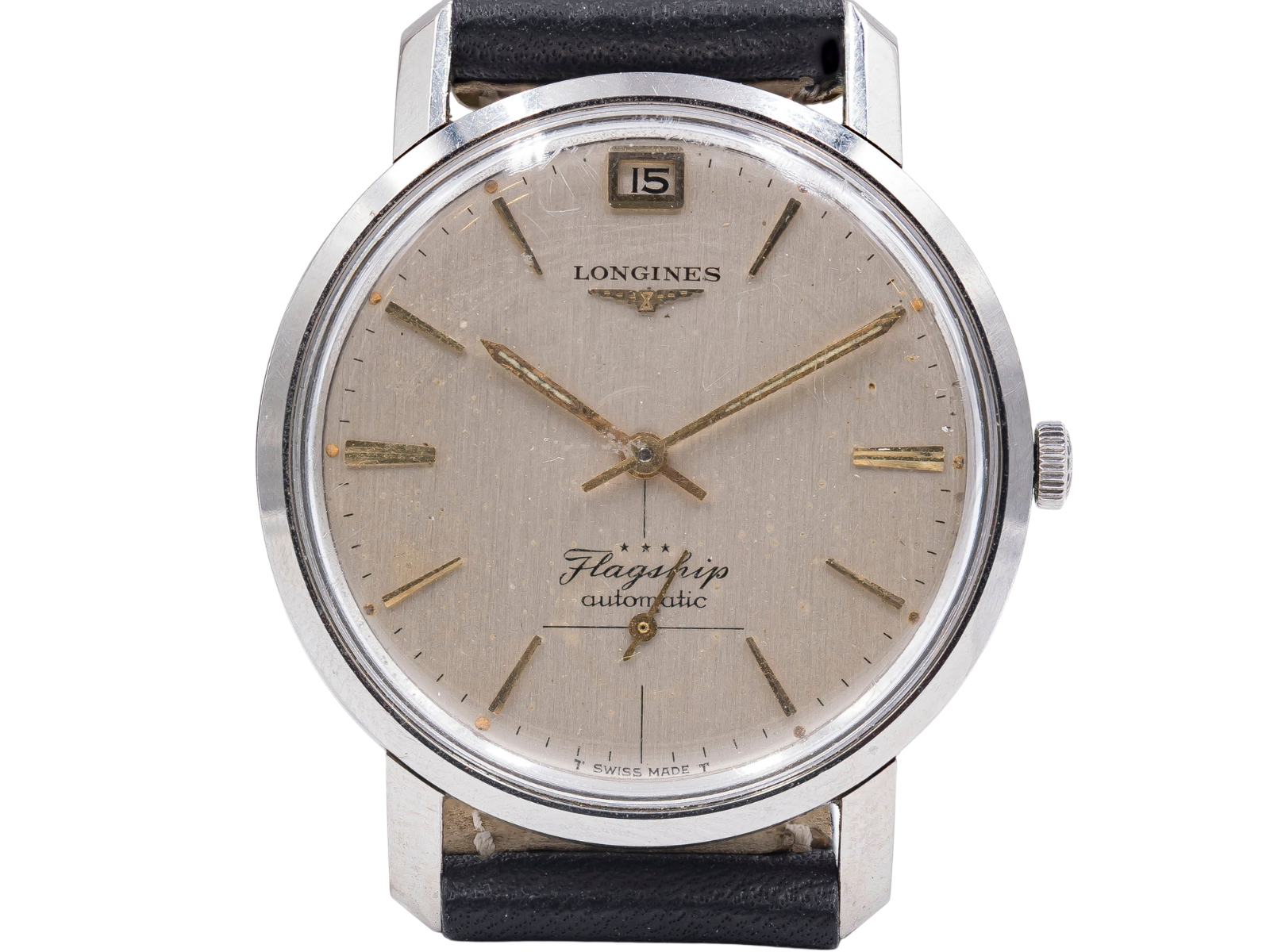
Early Conquest
A refined automatic sports watch combining waterproof construction, elegant dials and distinctive enamel case-back medallions.
 F
Flagship
A broad family of elegant post-war watches whose understated dials and ship medallions capture classic Longines style.
 SD
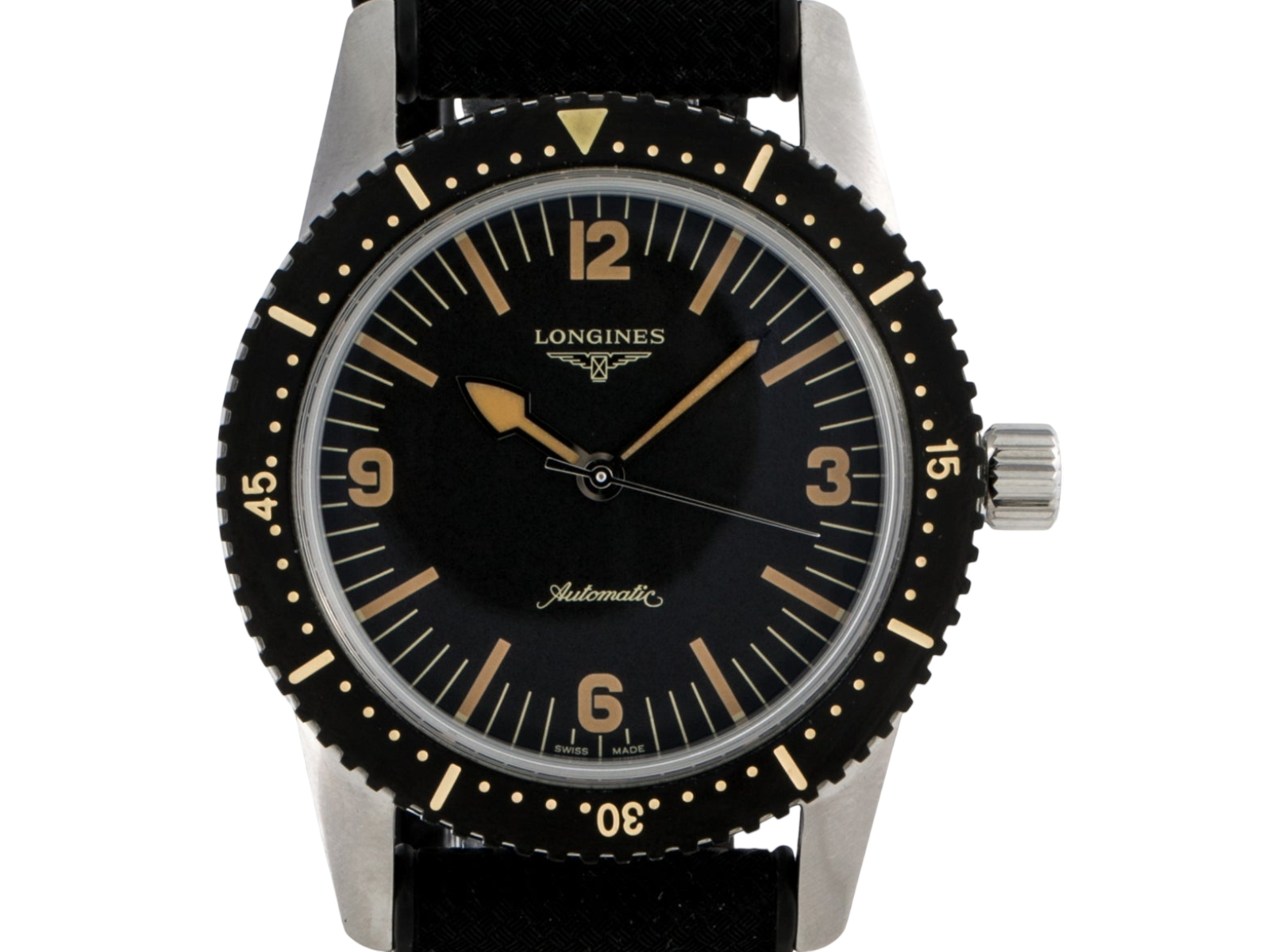
Skin Diver
An early professional diving watch with strong mid-century design and high sensitivity to bezel, crown and dial condition.
 UC
Ultra-Chron
A high-frequency automatic family created to improve everyday accuracy and expressed through distinctive late-1960s styling.
Reading the catalogue.
Old catalogues, serial records and archive extracts can clarify reference numbers, calibre families, dial layouts and original market delivery.

What makes a vintage Longines look like a Longines?
The recurring details are rooted in precision and clarity: balanced dials, fine hands, purposeful scales and cases proportioned around the movement. Even highly technical references usually retain an elegant visual order.
Learning that vocabulary helps distinguish original restraint from later restoration. The strongest examples feel coherent because every element supports timing, readability or proportion.
 13ZN
Timing as a speciality.
Longines’ identity is often clearest in its chronograph movements, where refined engineering supports intuitive elapsed-time use.
Winged hourglass
The historic emblem appears on dials, movements and case backs, connecting diverse watches to the Saint-Imier manufacture.
Sector and scientific dials
Railway tracks, crosshairs, telemeter scales and carefully divided sectors give many watches graphic precision.
Elegant proportions
Long lugs, slim bezels and restrained case profiles allow even technical watches to retain visual refinement.
Purpose-built scales
Aviation, timing and navigation watches use rotating discs, bezels and calibrated tracks as working instruments rather than decoration.
Three things collectors learn quickly.
Vintage Longines rewards reference and movement research. Watches with similar dials may contain very different calibres, and apparently modest pieces can be mechanically or historically important.
Collectors also learn that Longines’ surviving archives are unusually valuable. Serial-based information can help establish production date and original delivery, but an archive extract does not replace physical authentication.
Calibre hierarchy matters.
A 13ZN, 30CH, 30L or high-frequency automatic carries a different collecting story from a visually similar standard movement.
Redials are common.
Longines’ clean dial designs are frequently refinished. Printing, scales and signature placement deserve close comparison.
Archives support, not certify.
An extract can document original production and delivery information without proving that every surviving component is authentic.
Where the interest sits.
Collector interest is strongest where movement importance, professional history and originality overlap. 13ZN chronographs, rare aviation watches and early divers occupy the top of the market, while post-war collections offer substantial depth below them.
These ratings are editorial indicators rather than price forecasts. Dial originality, calibre, case condition, rare configurations and archive information can matter more than the family name alone.
Very high
Mechanically important, scarce and highly sensitive to dial, case and movement originality.
High
The later great in-house flyback family, available in several desirable configurations.
Very high
Historically distinctive watches whose scales, bezels and large cases require specialist study.
Very high
Rare professional references with vulnerable bezels, crowns and moisture-sensitive dials.
Medium
Wearable post-war classics offering attractive design and meaningful collection history.
Medium
Historically interesting high-frequency watches with distinctive design and servicing considerations.
Modern Longines alternatives.
For buyers drawn to Longines’ historical designs but unwilling to accept the uncertainty and maintenance demands of a vintage watch, the modern catalogue revisits several important families.
These models provide contemporary reliability while preserving the aviation scales, post-war proportions and high-frequency identity associated with the brand’s archive.

Spirit Zulu Time
A modern travel watch drawing on Longines’ long aviation and navigation history.

Conquest
A contemporary continuation of the named collection first introduced in 1954.
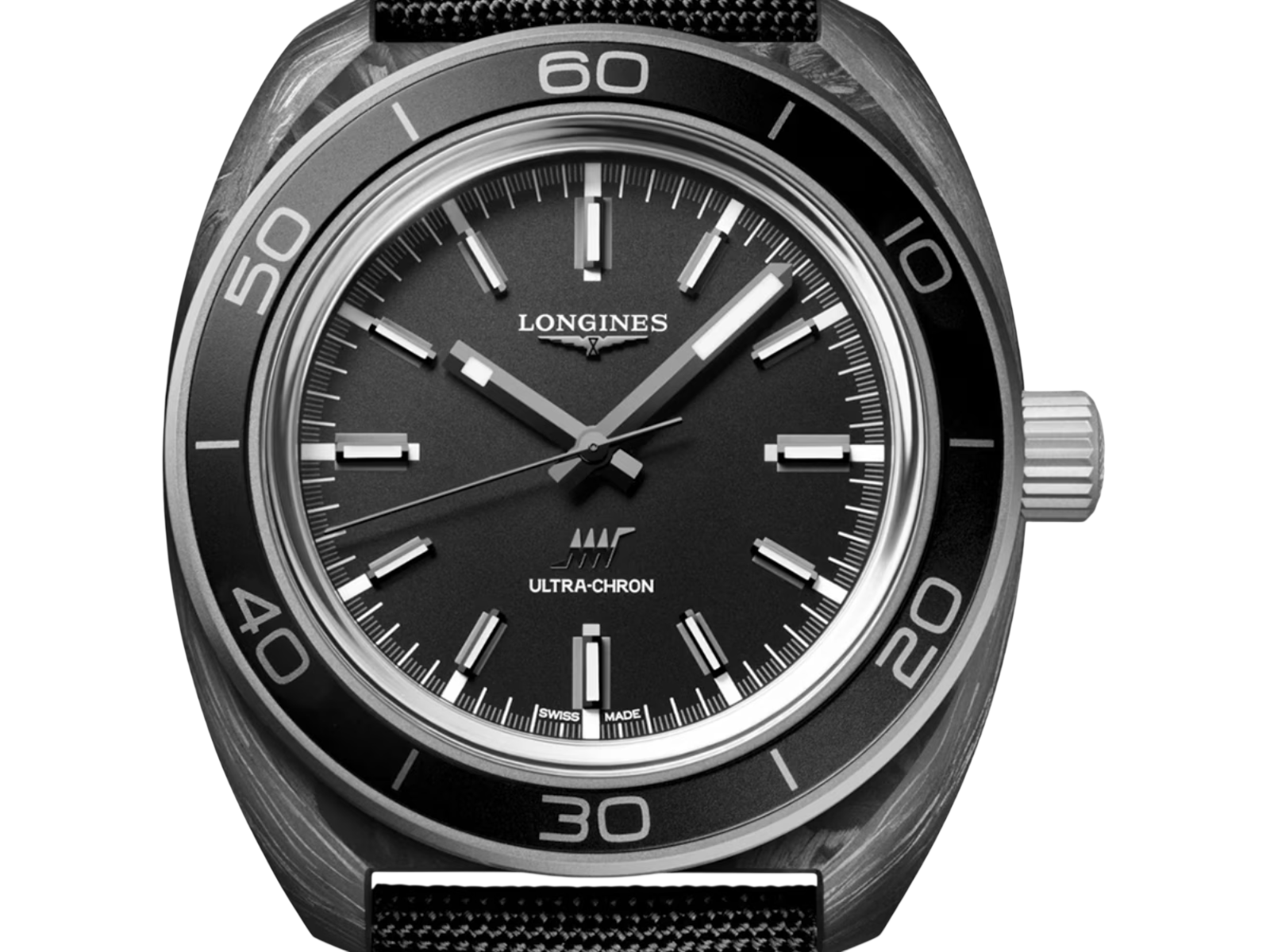
Ultra-Chron
A modern high-frequency watch directly inspired by the professional models of the late 1960s.
The Longines archive is deeper than its modern reputation suggests.
The winged hourglass opens onto great chronograph calibres, aviation instruments, observatory precision, elegant post-war collections, professional divers and high-frequency experiments spanning almost two centuries.