Patek Philippe versus Rolex
Patek Philippe and Rolex occupy the highest levels of public recognition in Swiss watchmaking, but they represent different forms of excellence. Patek Philippe is defined by high horology, hand finishing, complicated movements and collector prestige. Rolex is built around durability, consistency, professional-watch capability and an ownership proposition unmatched for recognisability and secondary-market liquidity.
Choose Patek Philippe for finishing, complications, rarity and traditional haute horlogerie. Choose Rolex for robustness, versatility, easier daily wear and the stronger all-round ownership proposition.


Which brand wins where?
Patek Philippe wins when traditional watchmaking depth and rarity are the priorities. Rolex wins when the question becomes how easily, confidently and flexibly the watch can be owned.
Patek Philippe and Rolex at a glance.
Patek Philippe sits within traditional high horology. Rolex defines the modern high-end professional and everyday luxury watch.
Patek Philippe
High horologyRolex
Ownership benchmarkHorological artistry versus industrial perfection.
Patek Philippe treats the watch as a finely finished mechanical object capable of carrying complex information and cultural meaning. Rolex focuses on producing highly consistent watches that withstand real use while retaining a stable identity across generations.
The wristwatch as inherited mechanical art.
Patek Philippe builds prestige through movement architecture, finishing, complication and continuity. Its best watches reward close inspection and often reveal their value through details that are not obvious from across a room.
- Exceptional expertise in calendars, chronographs and world time
- High levels of movement and case finishing
- Strong emphasis on rarity, continuity and collector stewardship
- Prestige communicated through horology rather than overt branding
The luxury watch engineered for continuous use.
Rolex improves rather than reinvents. Cases, bracelets, movements and materials evolve gradually while familiar designs remain coherent, legible and dependable.
- Exceptional consistency across cases, bracelets and movements
- Strong emphasis on water resistance and durability
- Highly controlled design evolution across generations
- Unmatched recognition and secondary-market liquidity
The closest head-to-head comparisons.
The brands rarely create direct equivalents. These pairings compare watches that compete for similar roles: elite sports icons, luxury divers, classical dress watches and practical complications.
Patek Philippe Nautilus
The Nautilus is the more refined and horologically elevated sports watch. Its integrated case and bracelet, slim profile and detailed finishing place it closer to high horology than a conventional professional watch.
Rolex Cosmograph Daytona
The Daytona is more robust, more functionally explicit and easier to wear without caution. Its compact proportions, automatic chronograph movement and market status make it one of the defining modern sports watches.
Choose the Nautilus for finishing, elegance, rarity and high-horology prestige. Choose the Daytona for robustness, chronograph functionality and stronger everyday confidence. Patek Philippe is more refined; Rolex is more practical.

Patek Philippe Aquanaut
The Aquanaut is lighter, more discreet and more exclusive. Its rounded octagonal case and textured dial offer a relaxed route into Patek Philippe without abandoning fine finishing or collector status.

Rolex Submariner
The Submariner is the more capable and durable tool watch. Its rotating bezel, bracelet, water resistance and serviceable design make it much better suited to heavy daily use.
Choose the Aquanaut for exclusivity, finishing and understated high-horology character. Choose the Submariner for genuine diving capability, durability and one-watch versatility. Patek Philippe offers rarity; Rolex offers utility.
Patek Philippe Calatrava
The Calatrava is one of the purest expressions of traditional Swiss dress-watch design. Its appeal lies in proportion, restraint, movement finishing and the absence of unnecessary visual drama.
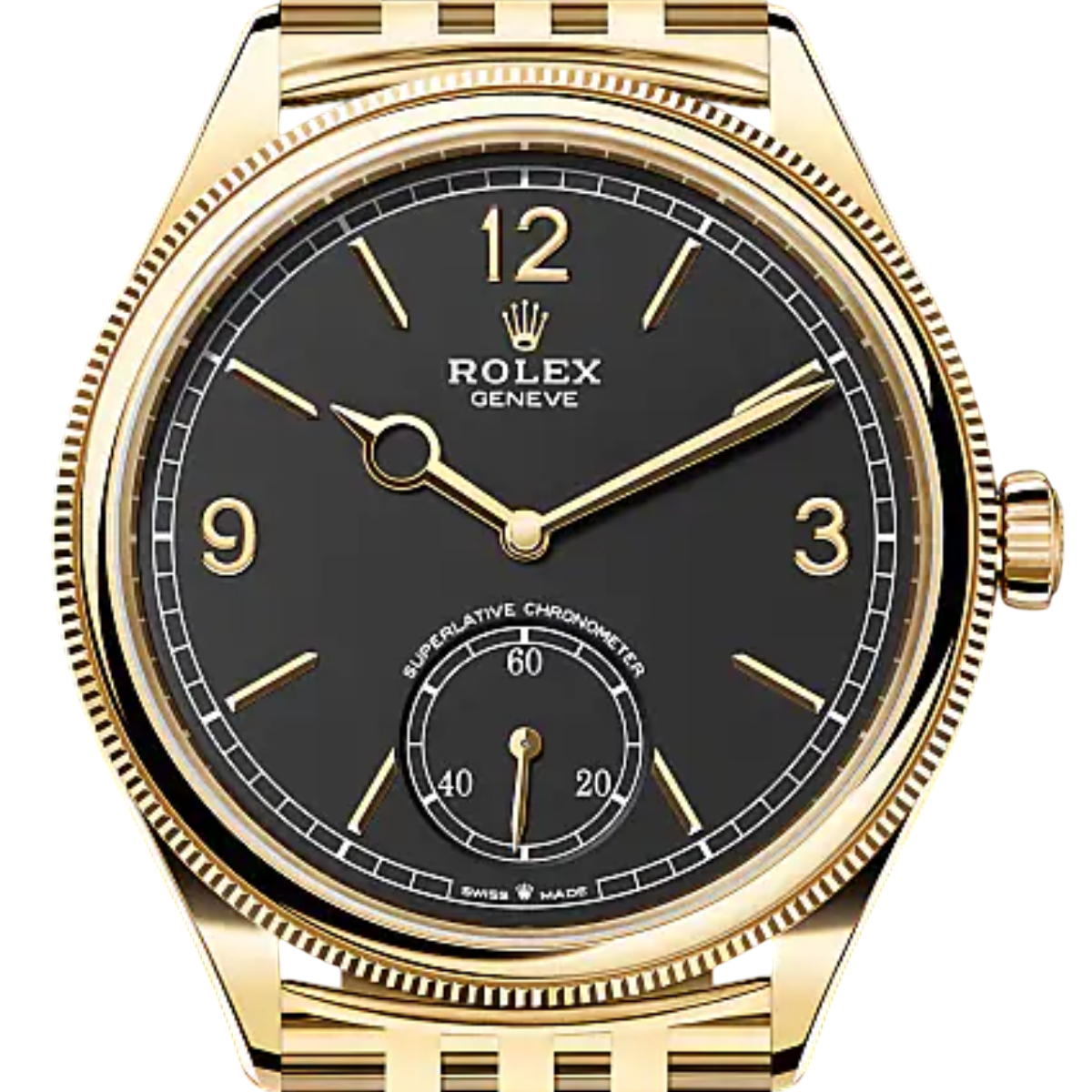
Rolex Perpetual 1908
The 1908 is Rolex’s more contemporary and robust interpretation of the classical dress watch. It combines formal proportions with the practical confidence and recognition associated with the brand.
Choose the Calatrava for refinement, finishing and traditional high-horology legitimacy. Choose the 1908 for stronger daily practicality and a more familiar ownership experience. Patek Philippe remains the dress-watch benchmark.

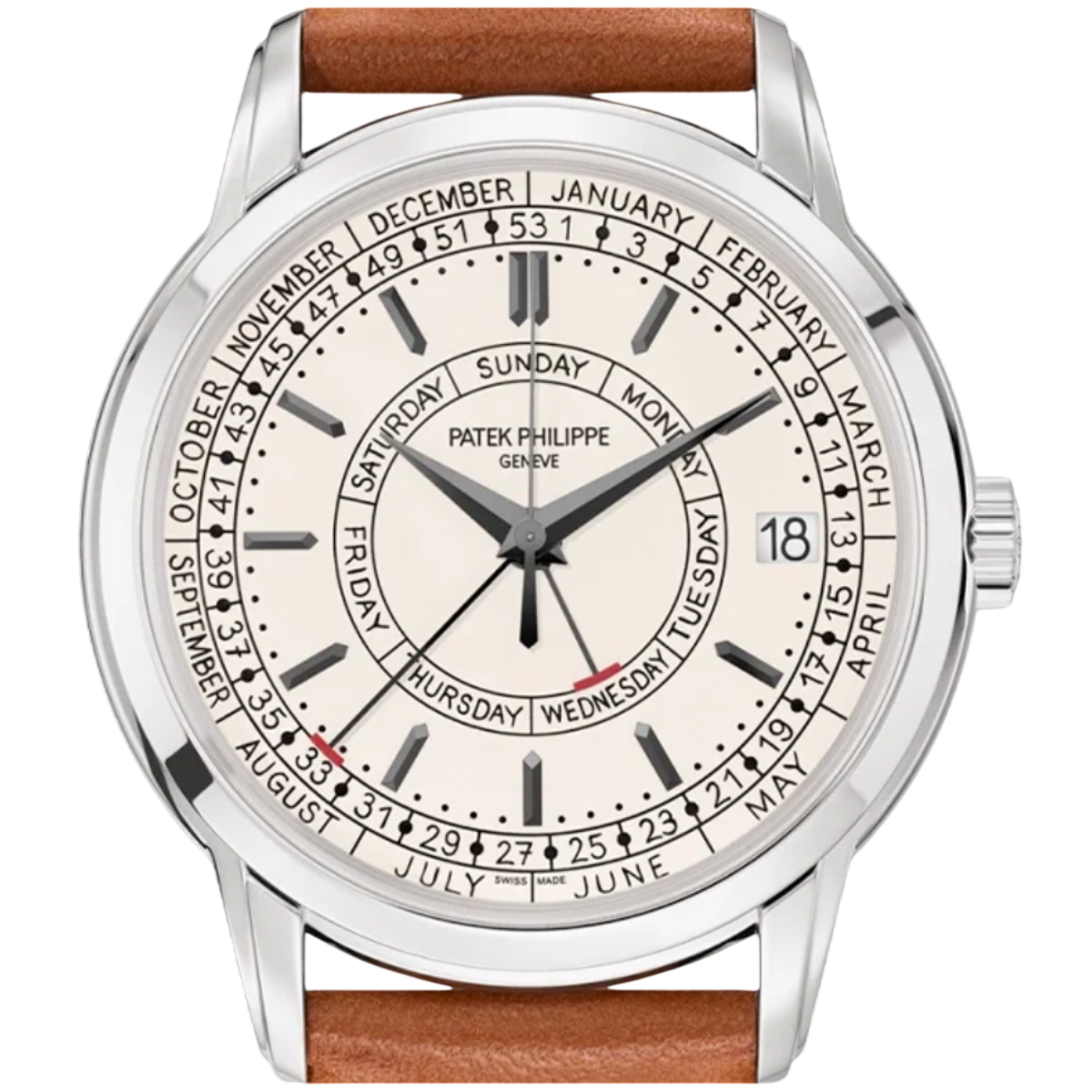
Patek Philippe Annual Calendar
The Patek Philippe Annual Calendar is the more traditional and finely finished complication. Its calendar architecture and dial layouts are designed for collectors who value mechanical ingenuity as much as practical information.

Rolex Sky-Dweller
The Sky-Dweller combines an annual calendar with a second time zone inside a robust, highly recognisable Rolex case. It is the more practical complication for frequent travel and sustained daily use.
Choose Patek Philippe for finishing, horological depth and collector significance. Choose the Sky-Dweller for travel utility, durability and intuitive daily ownership. Patek offers the finer complication; Rolex offers the more usable one.
How the brands compare by category.
These scores assess each brand as a complete modern luxury-watch proposition. Individual references may perform differently.
Which brand is right for you?
The central choice is between traditional high horology and the most complete practical luxury-watch proposition.
You want the watch judged from the inside out.
Patek Philippe is for buyers who value movement architecture, finishing, complication and rarity above maximum daily utility.
- You care deeply about hand finishing and movement construction
- You want annual calendars, world time or grand complications
- You value collector prestige over broad public recognition
- You are building a long-term, high-level watch collection
You want luxury without sacrificing practicality.
Rolex offers an exceptional combination of durability, recognition, resale and confidence under sustained daily use.
- You want one watch for work, travel and leisure
- You prioritise water resistance and bracelet security
- You care about long-term demand and ease of resale
- You prefer a watch whose identity is universally understood
The winner for six common buyers.
Rolex
More practical ownershipPatek Philippe
Clear mechanical advantageRolex
Greater versatilityPatek Philippe
Far greater depthRolex
Stronger durabilityPatek Philippe
Greater horological significanceDurability, servicing and resale.
Both brands support long-term ownership, but they demand different attitudes. Patek Philippe rewards care and specialist stewardship; Rolex is designed for more continuous and less cautious use.
Daily durability
Rolex has the clear advantage across most of its collection. Patek Philippe sports watches can be practical, but delicate finishing and rarity encourage more careful use.
Servicing
Both brands maintain specialist service capability. Patek Philippe complications can require substantially greater expertise, time and cost than a standard Rolex movement.
Resale
Both brands can command exceptional secondary-market demand. Rolex offers broader liquidity across more references, while Patek Philippe performance is concentrated more heavily in particular sports watches, complications and rare configurations.
Patek Philippe vs Rolex: common questions.
Patek Philippe is generally stronger for movement finishing, complications, rarity and traditional high horology. Rolex is stronger for durability, versatility, recognition and everyday ownership.
Patek Philippe usually carries greater specialist prestige within high horology and serious collecting. Rolex has broader global recognition and stronger public status.
The Nautilus offers finer finishing, greater rarity and stronger high-horology credentials. The Daytona is more robust, more functionally explicit and easier to wear regularly.
Patek Philippe offers more elaborate finishing and far greater complication depth. Rolex movements prioritise consistency, durability, accuracy and efficient long-term ownership.
Both brands can perform strongly. Rolex offers more consistent liquidity across a broader range, while Patek Philippe values are more dependent on reference, rarity, complication and allocation.
Rolex is generally the better first luxury watch because it is more durable, versatile and straightforward to own. Patek Philippe is better suited to buyers already committed to high horology and specialist collecting.
Patek Philippe wins as watchmaking. Rolex wins as ownership.
Patek Philippe is the stronger horological proposition. Its movement finishing, complication expertise, rarity and collector prestige place it above Rolex when the watch is assessed as an expression of traditional high horology.
Rolex is the stronger practical luxury proposition. Its watches are more robust, more versatile, easier to wear continuously and easier to sell across a broad global market. For a first or only luxury watch, Rolex is the safer recommendation; for an advanced collection, Patek Philippe offers the greater mechanical ceiling.