Vintage
Patek Philippe
From Geneva pocket watches and perpetual calendars to the Calatrava, world time, Golden Ellipse and Nautilus: the collector’s guide to Patek Philippe’s defining vintage eras.
Vintage Patek Philippe represents one of the deepest and most exacting areas of watch collecting. The strongest examples unite movement quality, case proportion, dial originality and provenance in a way few other manufactures can match.

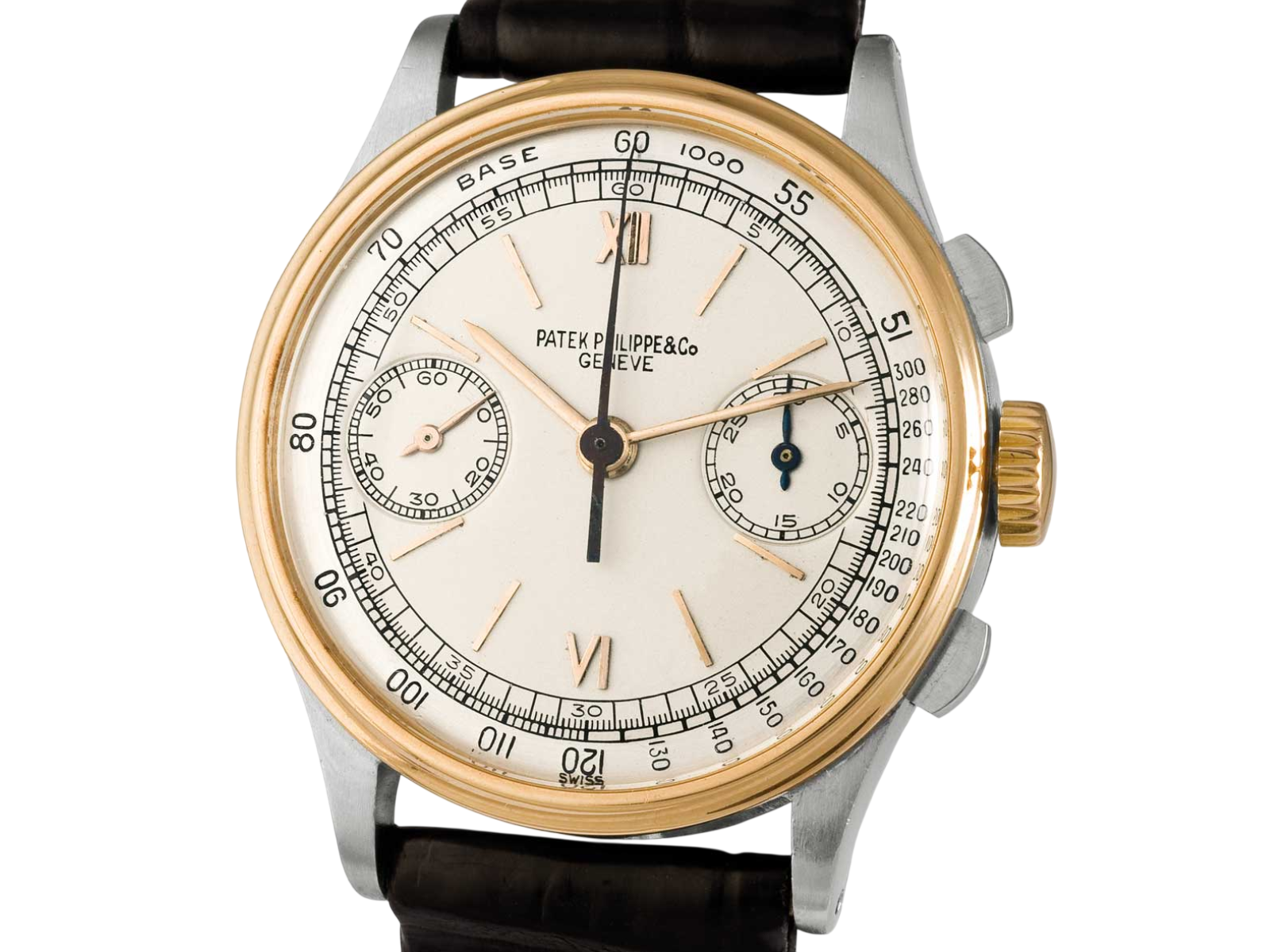
The benchmark for private watchmaking.
Patek Philippe’s vintage reputation rests on continuity. The manufacture combined Geneva finishing, discreet case design and advanced complications with a long-term culture of private ownership and careful documentation.
The catalogue spans several collecting disciplines. Calatravas reward proportion and dial purity; perpetual calendars and chronographs demand movement and reference expertise; world timers unite complication with graphic design; Nautilus and Golden Ellipse models show how the company adapted to changing ideas of modern luxury.
For collectors, condition alone is never enough. A compelling vintage Patek Philippe must also be coherent: case, dial, movement, hands, crown, hallmarks and extract information should form a plausible historical whole.
The finest vintage Patek Philippe watches feel less like products than complete historical objects.
The quick collector’s view
Most recognisable
The Calatrava Ref. 96: the archetype of restrained round dress-watch design.
Connoisseur choice
A correctly preserved perpetual calendar chronograph, world timer or early steel reference with strong provenance.
Best entry point
Selected Calatravas, Golden Ellipse models and later vintage automatic dress watches in honest condition.
From Geneva partnership to family-owned manufacture.
Patek Philippe began in 1839 and developed through the partnership between Antoine Norbert de Patek and Adrien Philippe. From the outset, technical invention and international clientele shaped the company’s identity.
The acquisition by the Stern family in 1932 gave the manufacture long-term continuity at a critical moment. The Calatrava, complicated wristwatches and later sports-luxury designs all emerged from a culture that valued technical permanence over short-term fashion.
Patek, Czapek & Cie is established
Antoine Norbert de Patek and François Czapek begin producing high-quality watches in Geneva.
Adrien Philippe joins the firm
Jean Adrien Philippe brings keyless winding expertise and becomes central to the company’s technical and commercial development.
An early Swiss wristwatch
Patek Philippe creates a bracelet watch for Countess Koscowicz, an important early example of wrist-worn watchmaking.
Complications and private commissions
Minute repeaters, split-seconds chronographs, perpetual calendars and highly complicated pocket watches strengthen the firm’s reputation.
The Stern family and the Calatrava
Charles and Jean Stern acquire the company. The Ref. 96 Calatrava establishes a modern design identity based on proportion and restraint.
The golden age of complicated wristwatches
Perpetual calendars, chronographs, perpetual calendar chronographs and world timers define Patek Philippe’s most celebrated vintage period.
Modern form and sports luxury
The Golden Ellipse introduces a new geometric elegance, followed by Gérald Genta’s Nautilus and a radically different expression of luxury.
A Patek Philippe timeline.
Patek Philippe’s major milestones are defined by continuity between technical invention and restrained design. Keyless winding, perpetual calendars, world time and sports luxury each entered the catalogue without displacing the company’s classical core.
The dates below identify broad historical landmarks. Individual references, movement series, case makers and dial variants should still be researched separately.
The company is founded
Antoine Norbert de Patek and François Czapek establish their Geneva firm.
Adrien Philippe arrives
The inventor and watchmaker joins the enterprise that will become Patek Philippe.
Patek Philippe & Cie
The partnership adopts the name by which the manufacture is known today.
Early wristwatch
A bracelet watch is made for Countess Koscowicz.
Perpetual calendar wristwatch
Patek Philippe completes one of the earliest known perpetual calendar wristwatches.
Stern family ownership
Charles and Jean Stern acquire the company.
Calatrava Ref. 96
A restrained round watch establishes one of the clearest codes in dress-watch design.
References 1518 and 1526
Serially produced perpetual calendar and perpetual calendar chronograph wristwatches enter the catalogue.
World Time Ref. 2523
The Louis Cottier system reaches one of its most celebrated Patek Philippe expressions.
Golden Ellipse
An ultra-thin elliptical case introduces a modern geometric language.
Nautilus Ref. 3700
Gérald Genta designs a steel luxury sports watch inspired by a ship’s porthole.
Calibre 89
A monumental pocket watch marks the manufacture’s 150th anniversary.
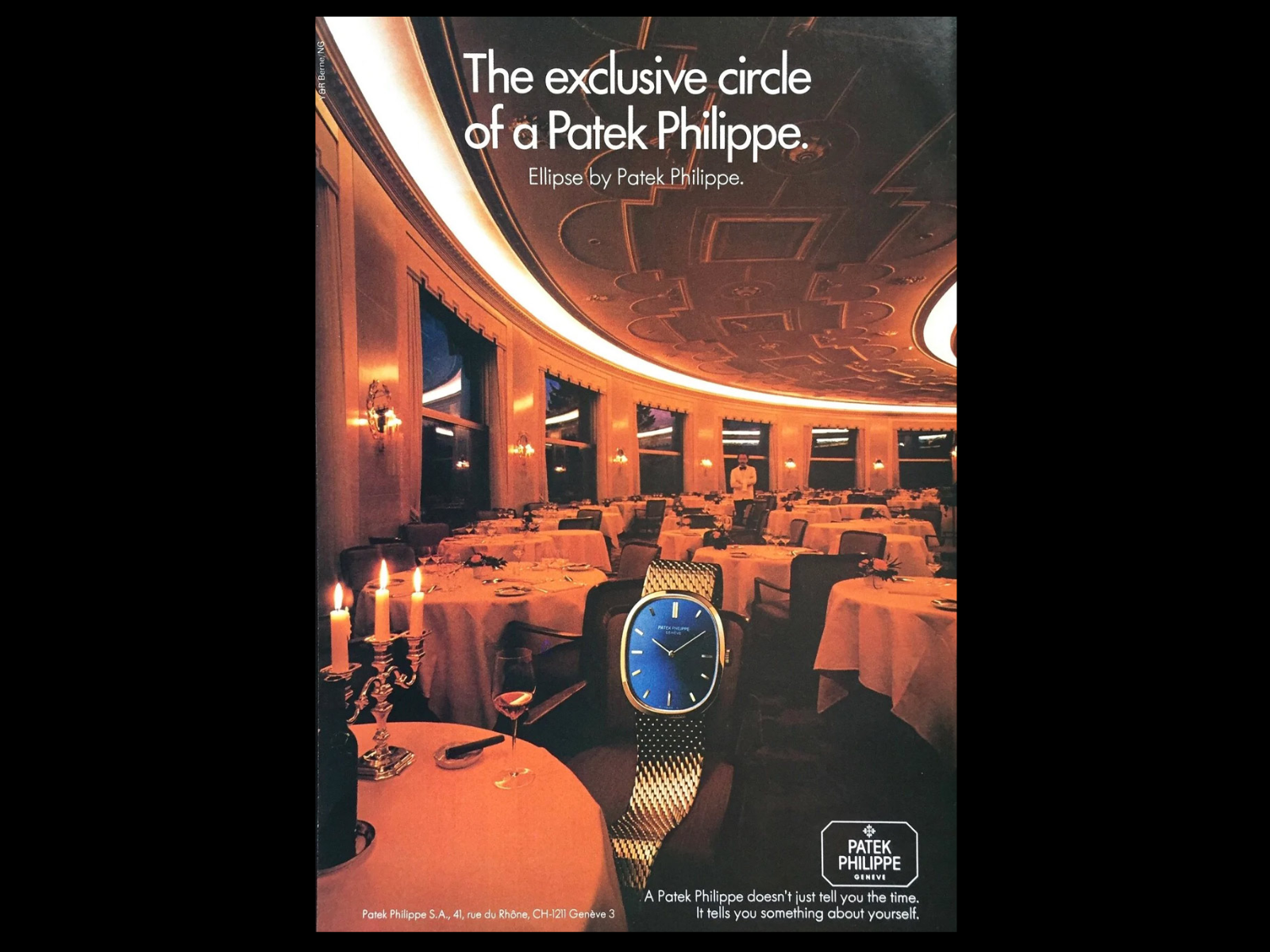
Geneva in print.
Period advertising reveals how Patek Philippe presented discretion, inheritance and technical mastery before vintage watches became global investment assets.
The four vintage eras.
Vintage Patek Philippe is easier to understand when divided by changes in movement scale, case design and complication strategy. The catalogue evolves from pocket-watch excellence to interwar wristwatch experimentation, post-war complication leadership and modern sports luxury.
Each era brings different signatures, case makers, dial conventions and collecting risks. Establishing the period first makes it easier to judge whether a watch is coherent and fairly valued.
Geneva foundations
Pocket watches, keyless winding and private commissions establish technical and international credibility.
The wristwatch emerges
Early shaped watches, chronographs and the Calatrava define the transition from pocket to wrist.
The complication golden age
Perpetual calendars, chronographs, world timers and refined automatics establish the core of vintage collecting.
Modern design and continuity
Golden Ellipse, Nautilus, quartz experimentation and renewed grand complications broaden the manufacture’s language.
Six important vintage Patek Philippes.
This is not a complete reference catalogue. It is a map of the families that best explain vintage Patek Philippe: Calatrava, perpetual calendar chronograph, world time, automatic perpetual calendar, Golden Ellipse and Nautilus.
Each family demands different knowledge. Case makers, dial makers, hallmarks, movement numbers, extracts, bracelets and provenance can all determine whether an example is compelling.
 96
Calatrava Ref. 96
The archetypal Patek Philippe dress watch, defined by compact proportions, clean dials and Bauhaus-influenced restraint.
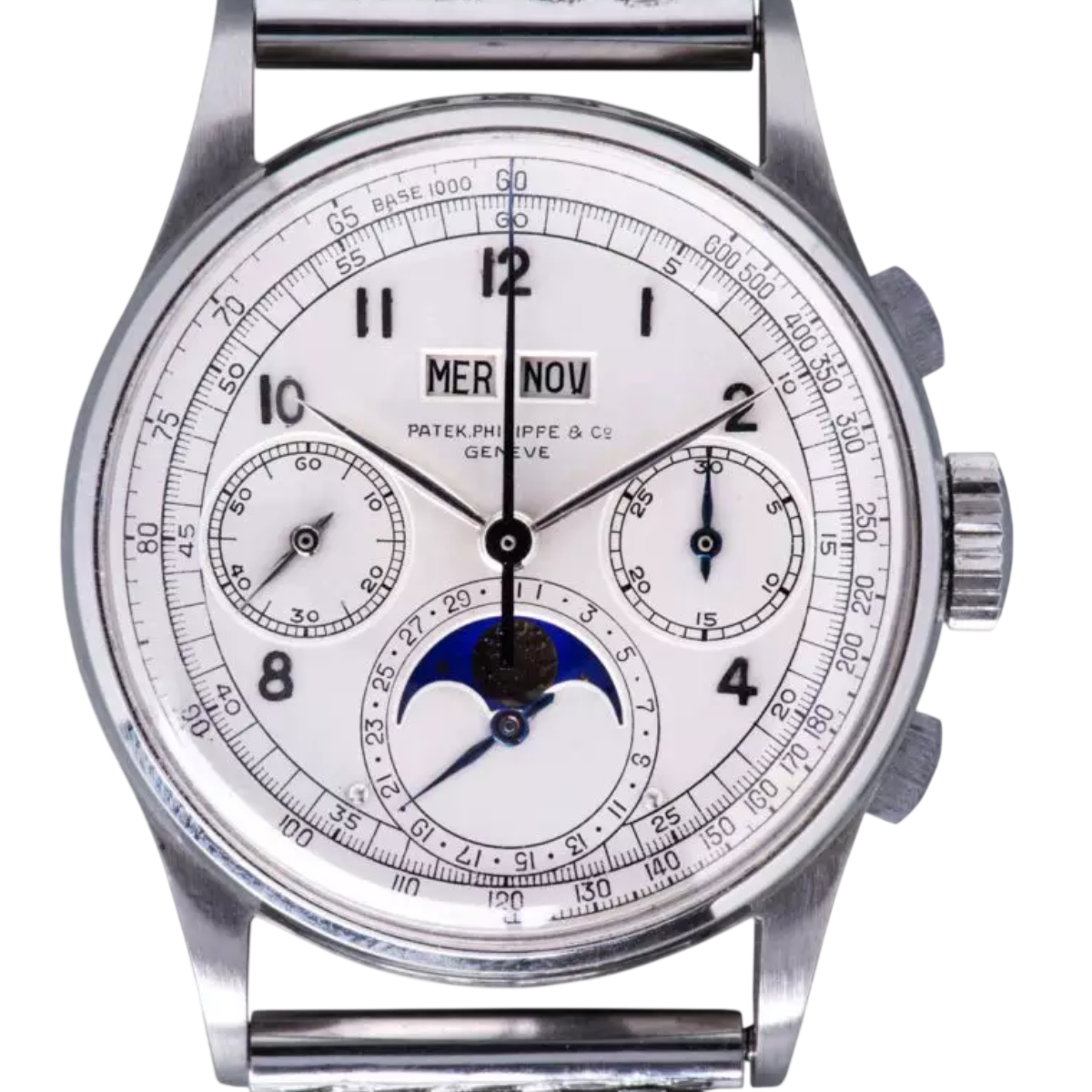 1518
Ref. 1518
The first serially produced perpetual calendar chronograph wristwatch and one of the most important references in watch collecting.
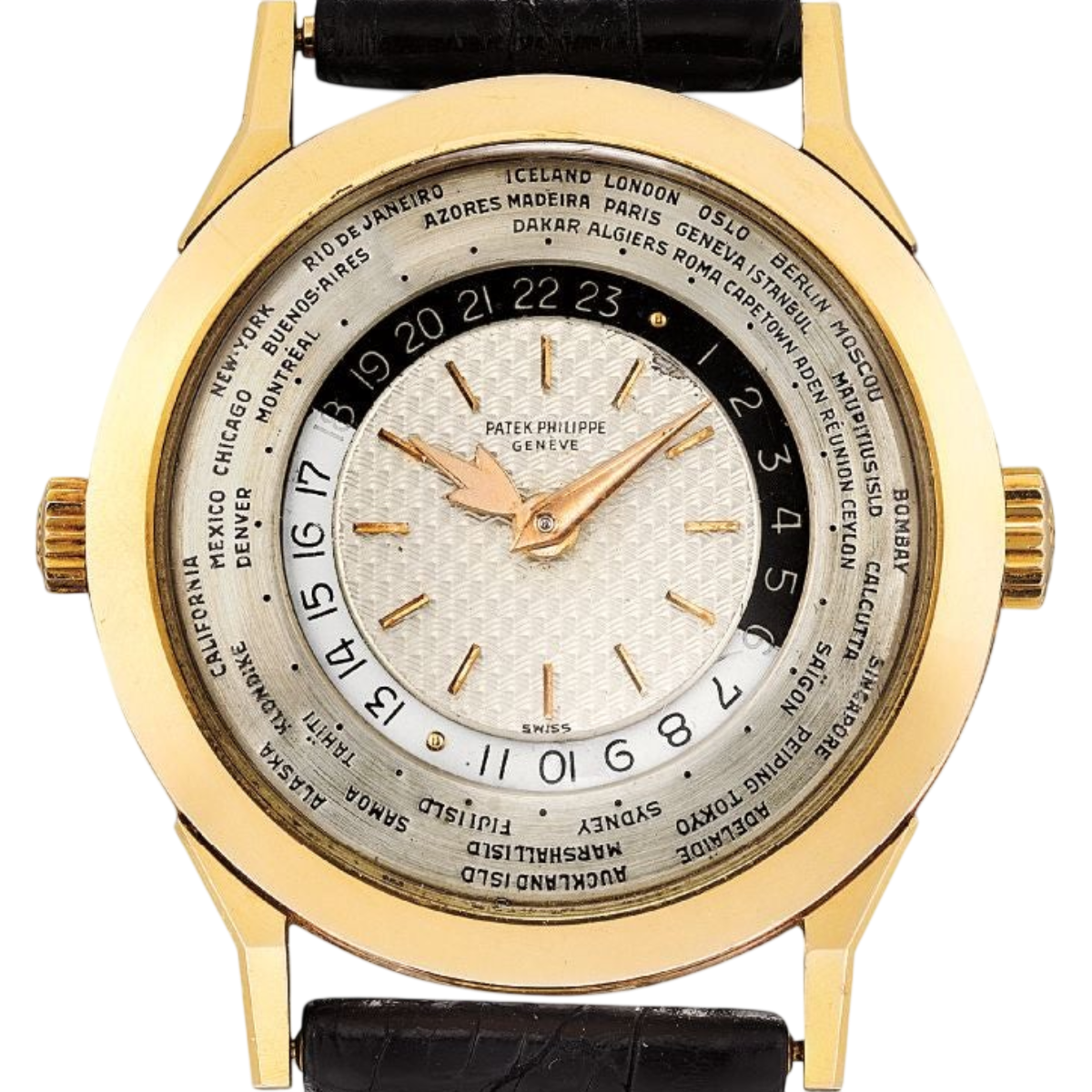 2523
World Time Ref. 2523
A celebrated Louis Cottier world timer combining complication, colour and rare dial artistry.
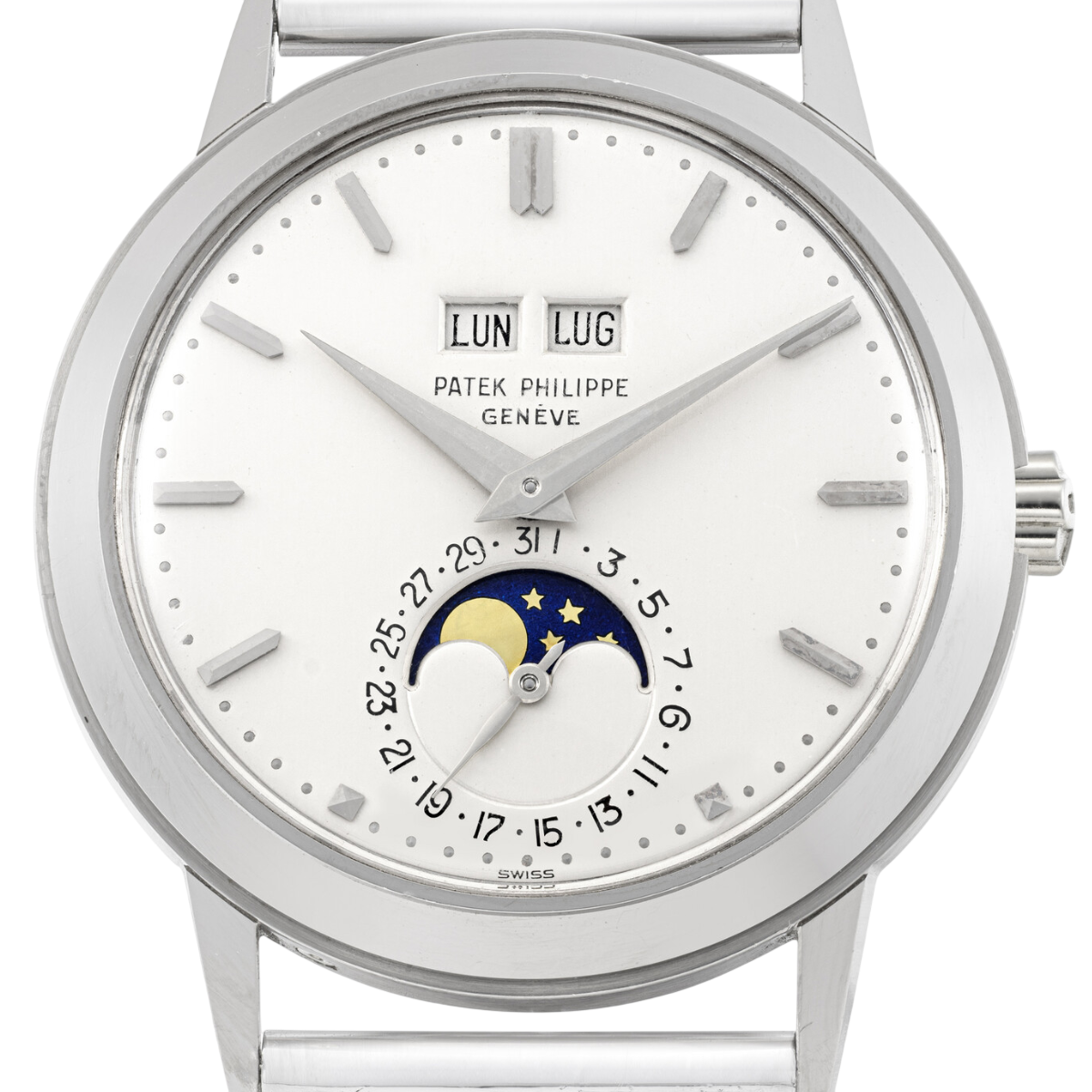 3448
Ref. 3448
A clean automatic perpetual calendar whose modernist case and balanced display make it a post-war masterpiece.
 GE
Golden Ellipse
An ultra-thin elliptical watch that introduced a distinctly modern design language without abandoning refinement.
 3700
Nautilus Ref. 3700
The original steel Nautilus, combining Gérald Genta’s porthole case with an ultra-thin automatic movement.
Reading the catalogue.
Old catalogues, extracts, movement records and auction scholarship can clarify reference numbers, case makers, dial layouts and original delivery.

What makes a vintage Patek Philippe look like a Patek Philippe?
The recurring details are quiet but exacting: slim bezels, balanced typography, hand-finished movements, carefully proportioned lugs and dials organised around legibility rather than display.
Learning that vocabulary helps distinguish true refinement from superficial polish. The strongest examples feel resolved because case, dial and movement were conceived as one object.
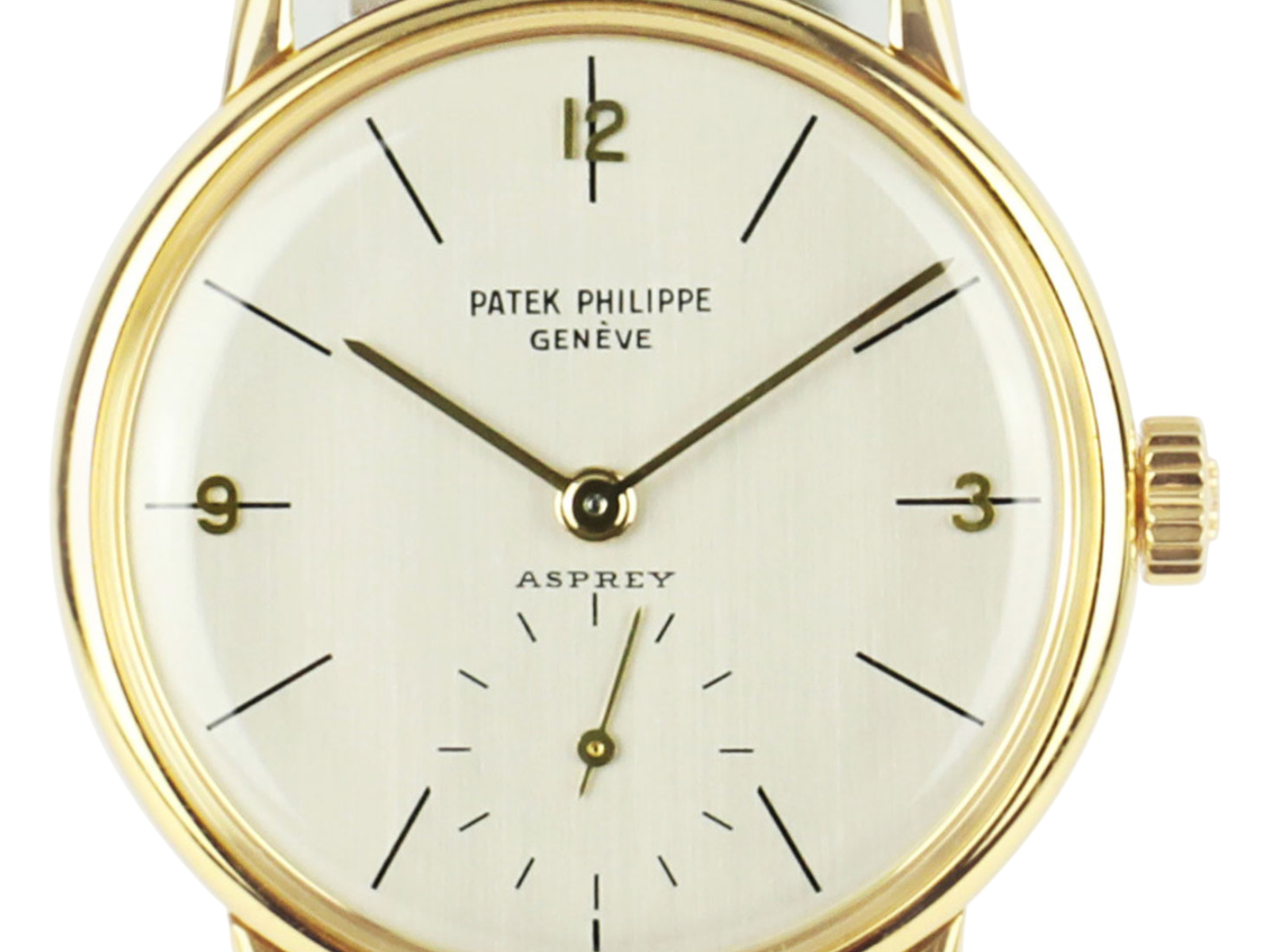 PP
Quality beneath discretion.
Bridge shape, anglage, polished components and careful regulation are central to the manufacture’s identity, even when hidden behind a solid case back.
Restrained typography
Applied markers, dauphine hands and finely printed scales create visual order without excess.
Case-maker signatures
Historic Geneva case makers and their marks are important to understanding originality, quality and production context.
Complication balance
Calendar and chronograph displays are arranged with exceptional clarity, even when mechanically dense.
Proportion before size
Many vintage references are compact by modern standards but wear with authority because every dimension is controlled.
Three things collectors learn quickly.
Vintage Patek Philippe rewards documentation and patience. Small differences in dial printing, hallmarks, case construction or movement number can materially change the interpretation of a watch.
Collectors also learn that restoration must be judged carefully. A sympathetic service can preserve function; an over-polished case or refinished dial can permanently alter the watch’s historical and aesthetic value.
Extracts are context, not proof.
An extract can confirm production and sale information without guaranteeing that every surviving component is original.
Case condition is decisive.
Polishing can erase hallmarks, lug geometry and the architecture that makes a vintage Patek Philippe compelling.
Dial originality dominates.
Refinished or altered dials can dramatically reduce collectability, even when the movement and case are genuine.
Where the interest sits.
Collector interest is strongest where complication, scarcity, design importance and provenance overlap. Perpetual calendar chronographs and world timers sit at the top of the market, while Calatravas, Golden Ellipses and early Nautilus references offer different forms of depth.
These ratings are editorial indicators rather than price forecasts. Dial originality, metal, case condition, archive information and ownership history can matter more than the family name alone.
Very high
A foundational perpetual calendar chronograph with extreme rarity and major historical importance.
Very high
Rare, visually distinctive and highly dependent on dial originality and provenance.
High
A landmark automatic perpetual calendar combining modernist design with mechanical importance.
High
The archetypal dress reference, with substantial variation in dial, metal and condition.
High
The original steel Nautilus, combining design significance with strong market demand.
Medium
An important modern design family offering relative accessibility in selected configurations.
Modern Patek Philippe alternatives.
For buyers drawn to Patek Philippe’s historic design language but unwilling to accept the uncertainty and maintenance demands of a vintage watch, the modern catalogue preserves several of its strongest traditions.
These models provide contemporary reliability while retaining the restrained round case, travel complication and sports-luxury identity associated with the archive.

Modern Calatrava
The clearest continuation of the Ref. 96 tradition: restrained, formal and proportion-led.
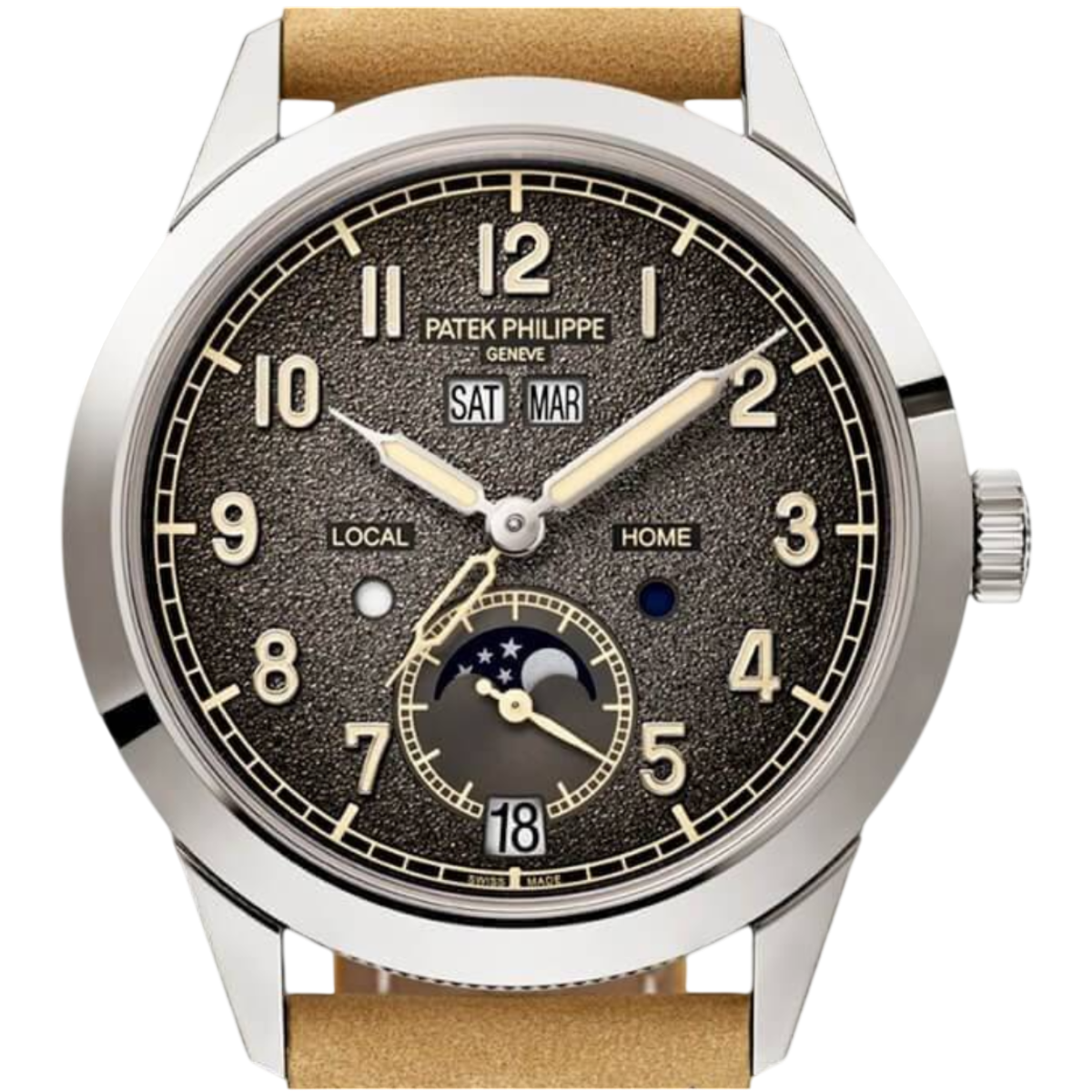
World Time
A modern expression of the Louis Cottier complication and one of Patek Philippe’s most distinctive travel watches.

Nautilus
The contemporary continuation of the 1976 sports-luxury icon.
The Patek Philippe archive is a study in continuity.
The Calatrava is the natural entry point, but the richest collection moves across perpetual calendars, chronographs, world timers, shaped watches, Golden Ellipses and the early Nautilus references through which the manufacture repeatedly redefined private luxury.