Rolex Day-Date Review
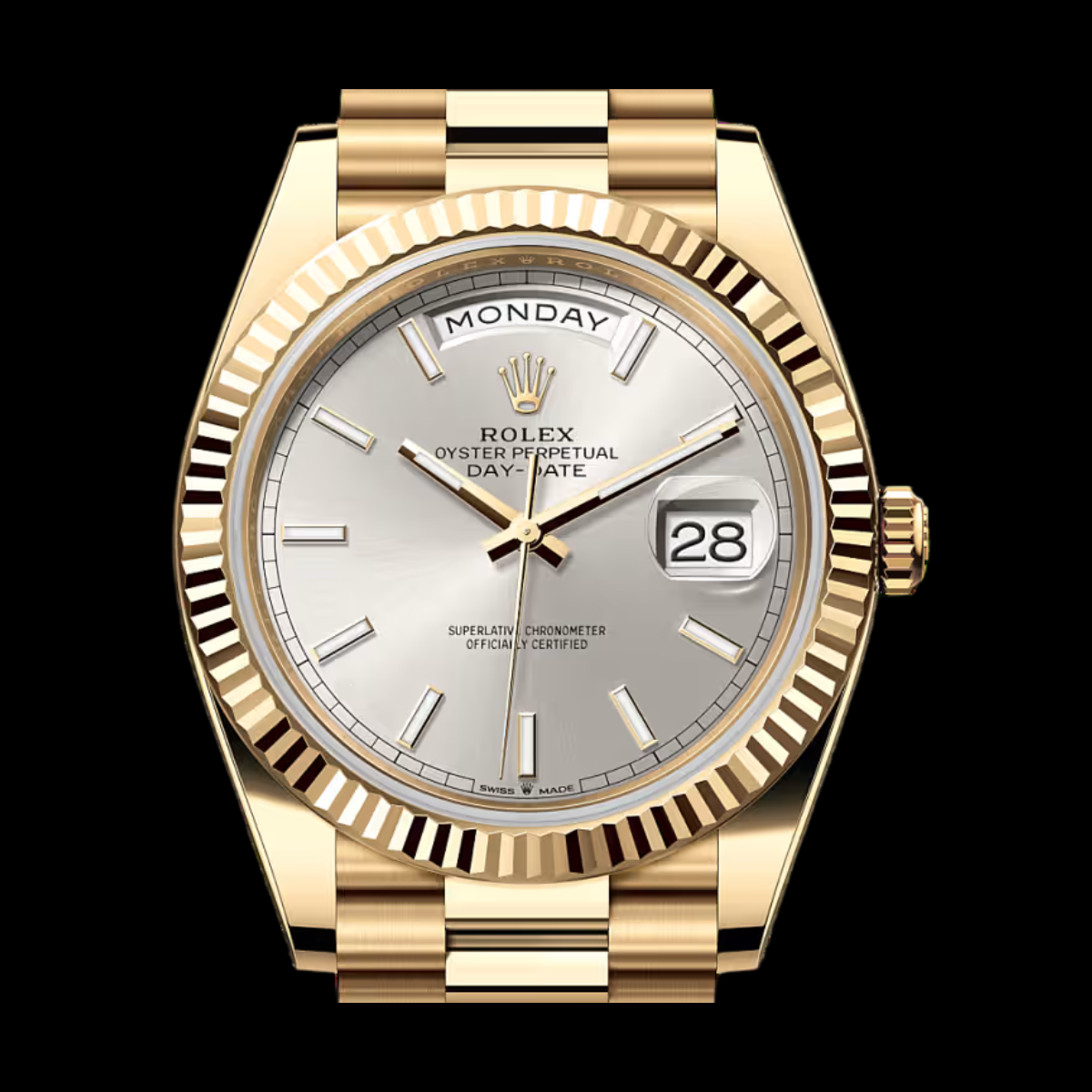
The Rolex Day-Date is the prestige Rolex: precious metal, President bracelet, full day display and a level of symbolic status few watches can match.


Quick verdict.
The Rolex Day-Date is not trying to be discreet. It is Rolex at its most formal, most luxurious and most status-laden. The full day window, precious-metal case and President bracelet give it a presence that is instantly recognisable.
It is less versatile than a Datejust and less sporty than a Submariner, but as a prestige watch it is exceptional. If you want a Rolex that feels important, ceremonial and unmistakably high-end, the Day-Date is the reference point.
Key versions to consider.

Day-Date 36
The classic size: elegant, historically grounded and arguably the most refined expression of the President watch.
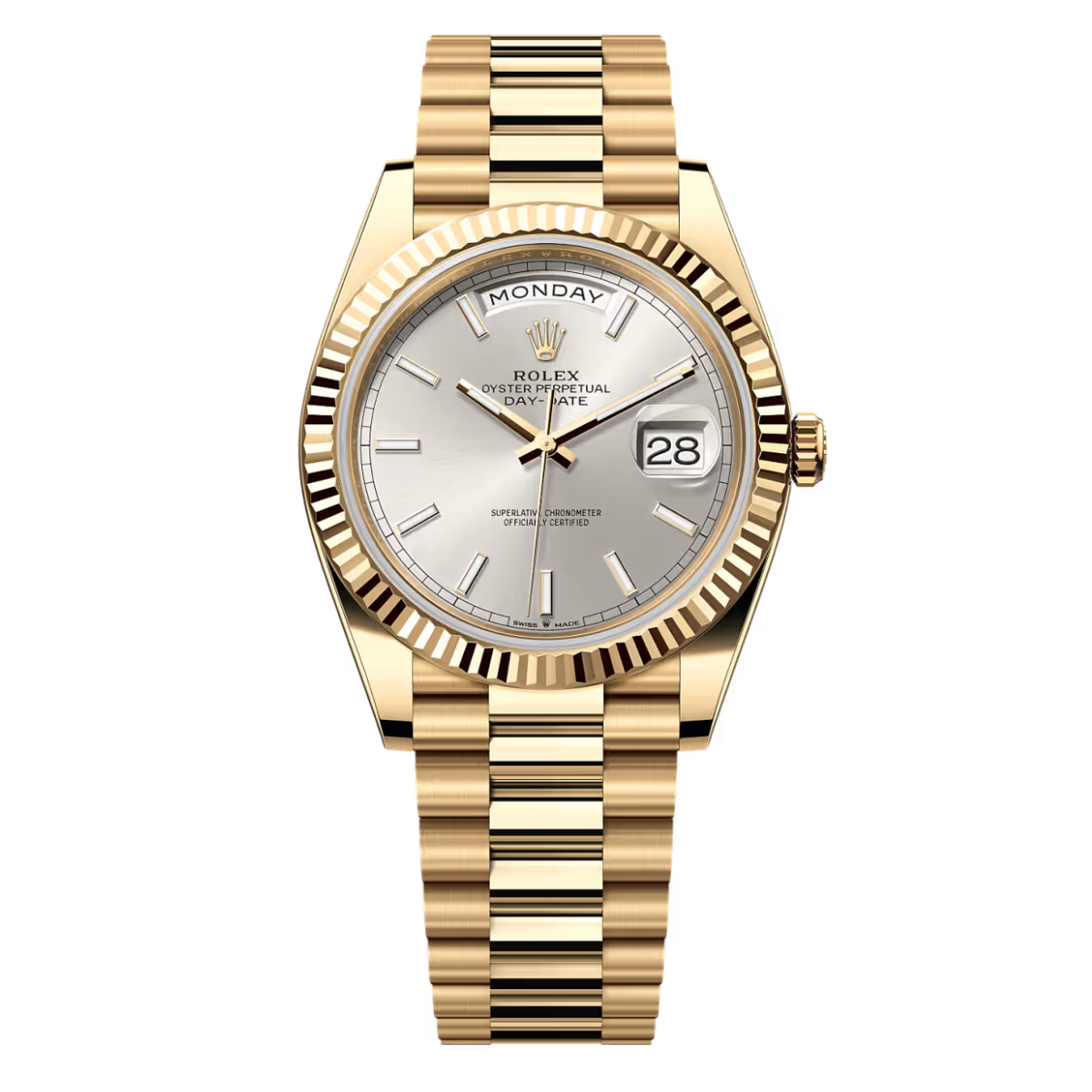
Day-Date 40
The modern choice, offering stronger wrist presence while keeping the essential Day-Date proportions intact.

Day-Date Platinum
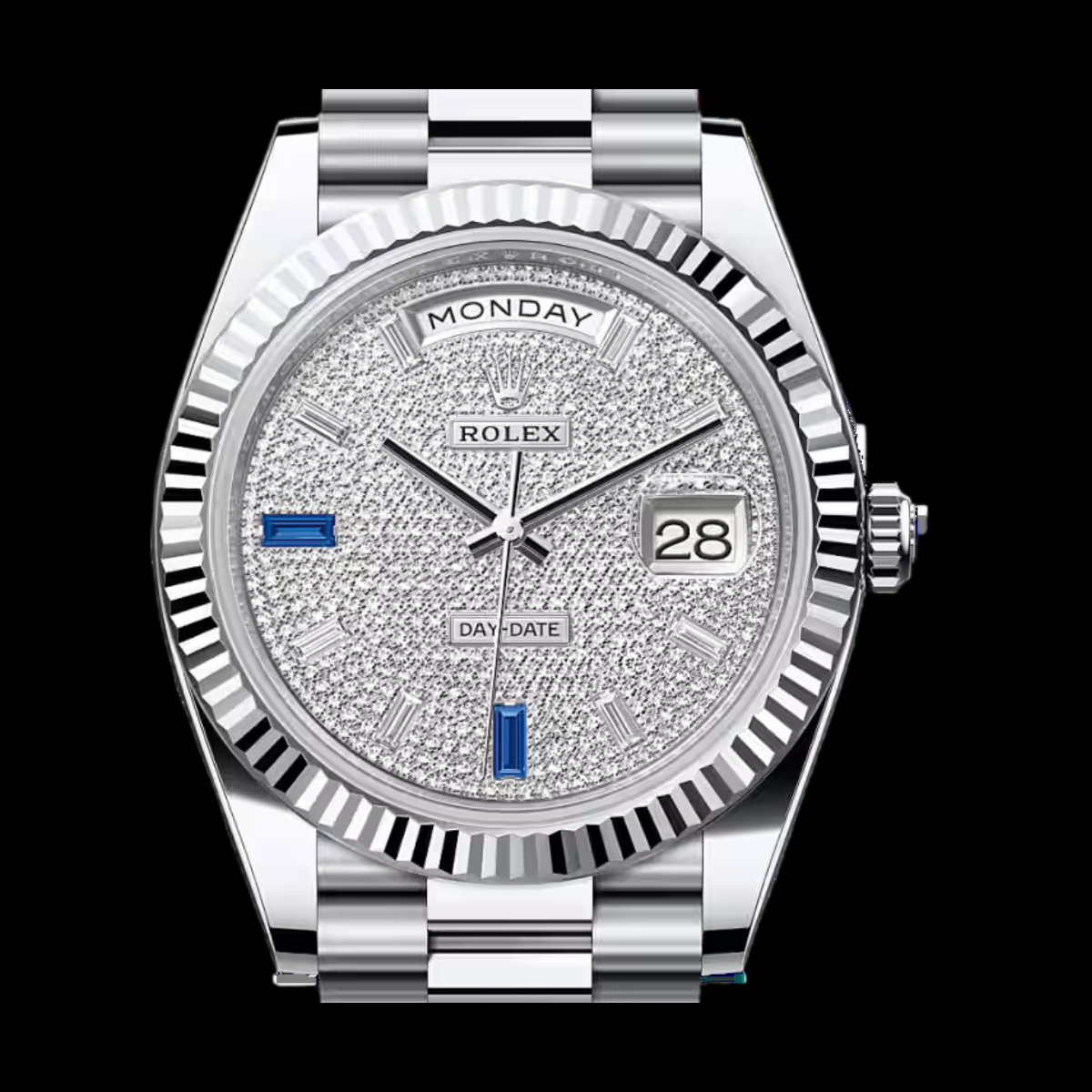
The discreet heavyweight: more understated than yellow gold, but with serious collector and connoisseur appeal.
Design and wearability.
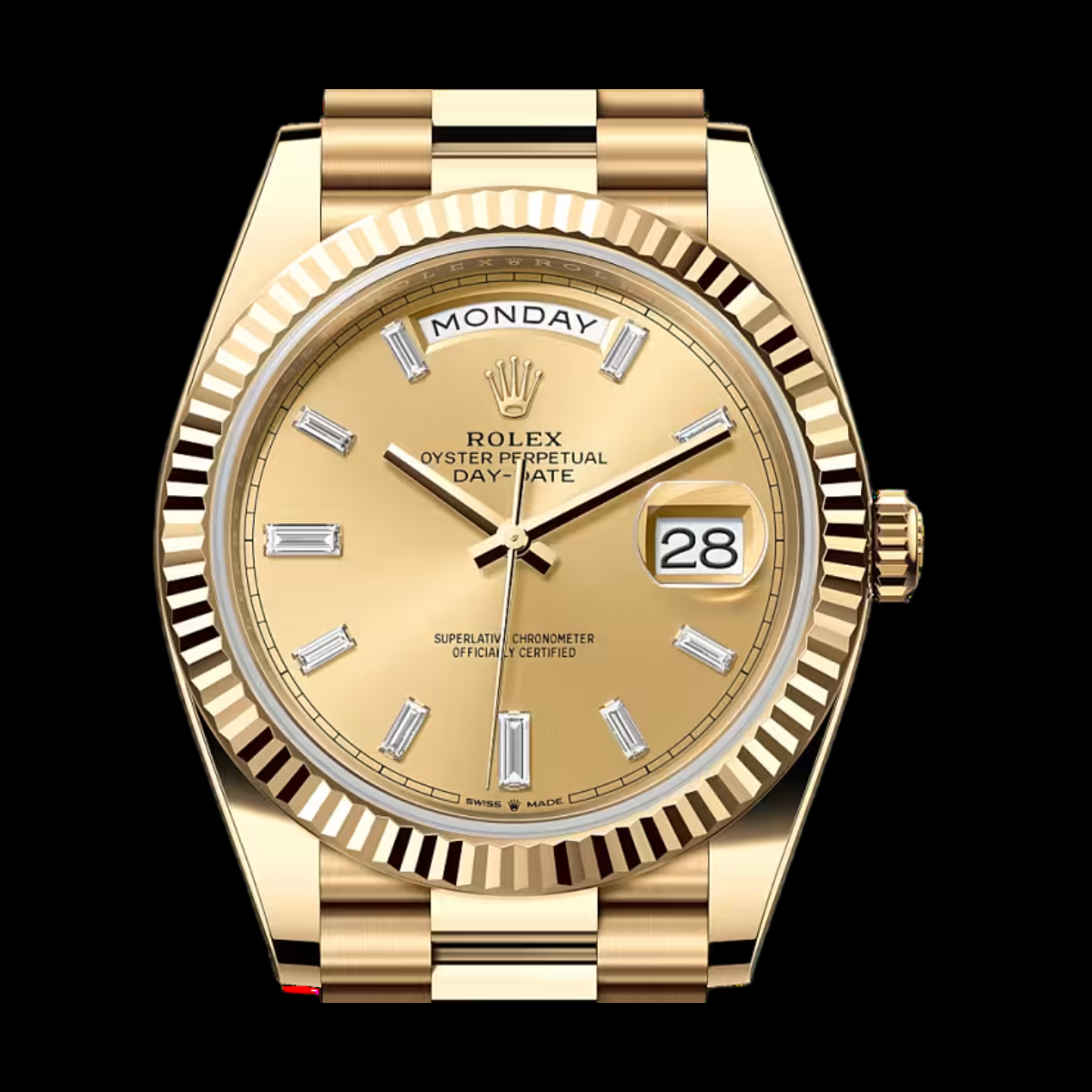
The Day-Date is defined by its President bracelet, fluted or smooth precious-metal bezel, day aperture at 12 o’clock and date window at 3 o’clock. It is formal, balanced and instantly readable.
The 36mm version has the strongest vintage elegance and works beautifully as a dressier everyday watch. The 40mm version feels more contemporary and assertive, especially in yellow or Everose gold.
Unlike the Datejust, the Day-Date is always precious metal. That gives it weight, warmth and visual authority, but it also makes it less casual. It can be worn daily, but it always feels like a watch with presence.
Movement and performance.
The Day-Date combines a date display with a fully spelled-out day of the week, creating one of Rolex’s most distinctive complications. It is useful, simple to understand and central to the model’s identity.
Modern Day-Date movements are built around Rolex’s usual priorities: accuracy, durability and everyday reliability. The watch is luxurious, but it remains fundamentally practical.
Which Day-Date should you buy?
For the most classic look, choose a yellow-gold Day-Date 36 on President bracelet. It is the traditional “President” configuration and carries the strongest historical identity.
For modern wearability, the Day-Date 40 is easier for many contemporary buyers. It has more presence without becoming oversized.
Platinum is the connoisseur’s route. It is expensive, heavy and more discreet than yellow gold, but that quietness is part of the appeal. Dial choice matters enormously on the Day-Date, so avoid buying purely on metal alone.


Key specifications.
Pros and cons.
Pros
- The ultimate prestige Rolex.
- Precious-metal case and President bracelet.
- Strong historical and cultural status.
- Excellent range of dial and metal options.
Cons
- Far less discreet than most Rolex models.
- Precious-metal pricing is substantial.
- Not as casual or sporty as a Submariner.
- Dial choice can strongly affect desirability.
Alternatives to consider.

Rolex Datejust
A more accessible and versatile Rolex with similar everyday elegance but less precious-metal weight and status.
see alternative →
Patek Philippe Calatrava
A quieter, more classical dress-watch alternative for buyers who want refinement rather than Rolex visibility.
see alternative →
Omega De Ville Prestige
A more affordable dress-led alternative with classic styling and less overt status signalling.
see alternative →Final verdict.
The Rolex Day-Date is the brand’s great symbol of success. It is not the most subtle or the most practical Rolex, but it delivers prestige, presence and heritage in a way few watches can rival.