Vintage
TAG Heuer
From the oscillating pinion and dashboard timers to the Autavia, Carrera, Monaco and Calibre 11: the collector’s guide to Heuer’s defining vintage eras.
Most of the watches collectors call “vintage TAG Heuer” were made before the TAG name appeared on the dial. They are Heuers: racing chronographs, aviation timers and boldly designed instruments shaped by a company obsessed with measuring speed.

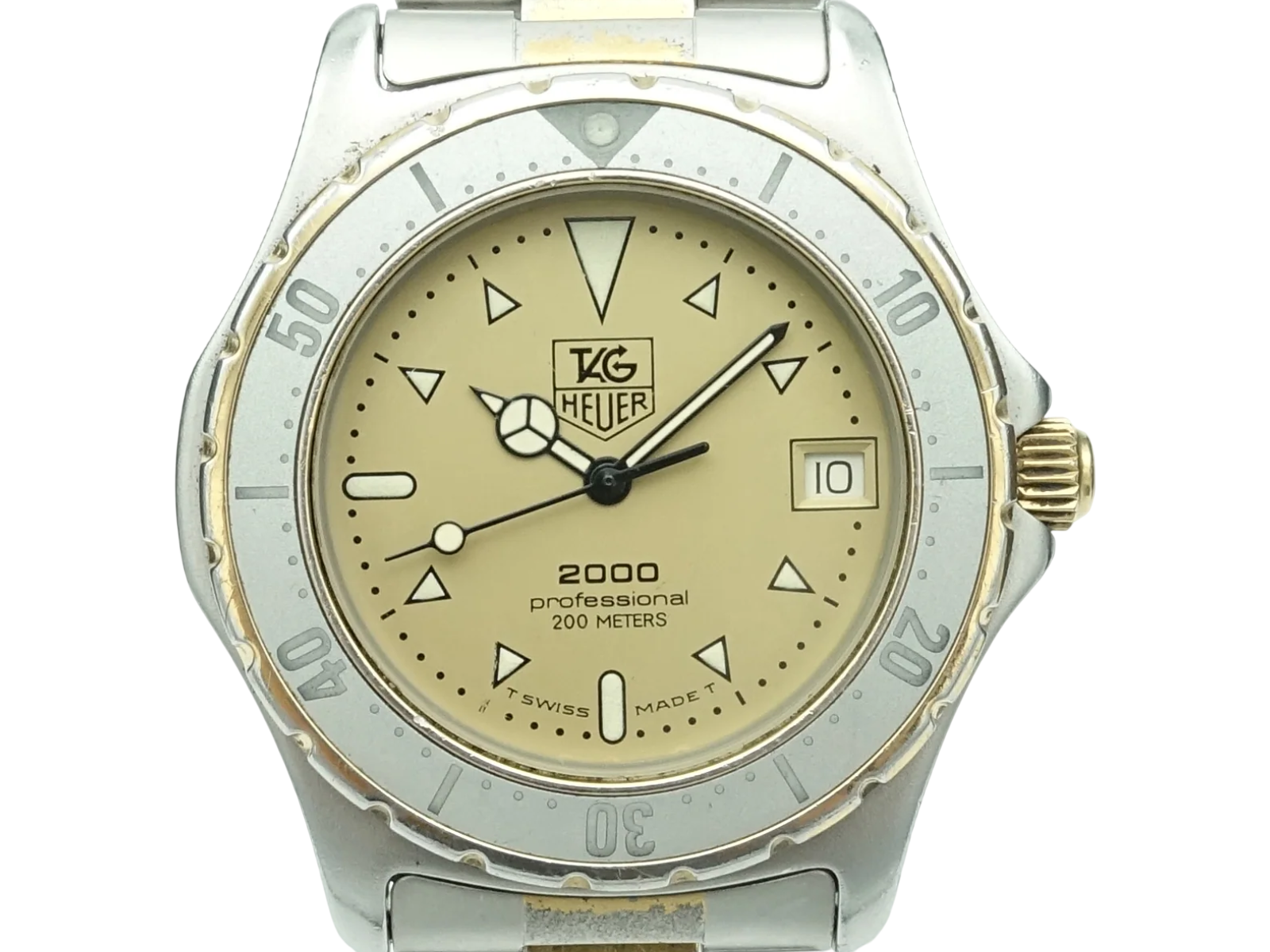
Chronographs built around speed.
Heuer’s vintage importance begins with timing rather than luxury. From Édouard Heuer’s 19th-century chronograph work to dashboard instruments, high-frequency stopwatches and wrist chronographs, the company repeatedly designed around the problem of measuring elapsed time clearly and quickly.
That functional heritage became visually distinctive under Jack Heuer. The Autavia, Carrera and Monaco each approached the chronograph differently: rugged rotating-bezel instrument, stripped-back racing watch and avant-garde square automatic chronograph. Together they define one of the strongest design periods in post-war Swiss watchmaking.
For collectors, the appeal lies in the intersection of motorsport history, graphic design and mechanical variety. Valjoux-powered hand-wound watches, Chronomatic Calibre 11 models and colourful 1970s references all require slightly different knowledge.
Vintage Heuer is where the stopwatch left the timing desk and became part of racing culture.
The quick collector’s view
Most recognisable
The Monaco: square, left-crowned and inseparable from the visual mythology of 1970s motorsport.
Connoisseur choice
An early screw-back Autavia Ref. 2446 or first-generation Carrera Ref. 2447 with a strong original dial.
Best entry point
Later manual-wind Carreras, selected 1970s chronographs and early TAG-era Formula 1 or 2000-series watches.
From precision workshop to racing chronograph authority.
Édouard Heuer founded his workshop in Saint-Imier in 1860. The company’s early identity was already technical: chronographs, improved winding systems and mechanisms designed to make elapsed-time measurement more dependable.
By the 20th century, Heuer had moved beyond pocket watches into dashboard instruments, sports timing and wrist chronographs. Under Jack Heuer in the 1960s and 1970s, that technical background was fused with modern industrial design and an unusually close relationship with motor racing.
Édouard Heuer opens his workshop
The company begins in Saint-Imier, establishing the foundation for a long specialism in chronographs and precision timing.
The oscillating pinion
Heuer patents an improved oscillating-pinion system for engaging and disengaging a chronograph—an elegant mechanism that remains influential in chronograph construction.
Dashboard timing and the Mikrograph
The Time of Trip takes Heuer timing into cars and aircraft, while the Mikrograph pushes stopwatch precision to one hundredth of a second.
Autavia begins on the dashboard
The name—combining automobile and aviation—is first used for an on-board timer intended for cars and aircraft.
Autavia and Carrera reach the wrist
Jack Heuer launches the Autavia wrist chronograph in 1962 and the Carrera in 1963, establishing two enduring but very different chronograph identities.
Calibre 11 and the Monaco
Heuer participates in the race to commercialise the automatic chronograph. The resulting Chronomatic Calibre 11 powers new Autavias and Carreras as well as the radical square Monaco.
TAG Heuer and the return of heritage
Techniques d’Avant-Garde acquires Heuer, creating TAG Heuer. Formula 1 and modern sports watches define the new era before the Carrera is deliberately revived in 1996.
A Heuer timeline.
The key moments in Heuer history follow the changing places where accurate timing mattered: the workshop, dashboard, athletics track, racing circuit and finally the wrist.
The dates below provide a historical framework rather than a complete reference chart. Vintage Heuer collecting becomes much more granular once individual cases, dials, movements and production executions are considered.
Heuer is founded
Édouard Heuer establishes his watchmaking workshop in Saint-Imier.
Oscillating pinion
A patented chronograph coupling system becomes one of Heuer’s most important mechanical contributions.
Time of Trip
An on-board chronograph brings Heuer timing to automobile and aviation dashboards.
Mikrograph
A stopwatch capable of measuring one hundredth of a second demonstrates exceptional high-frequency timing.
Autavia dashboard timer
The Autavia name first appears on an instrument for automobiles and aviation.
Autavia wrist chronograph
Jack Heuer turns the dashboard name into a rotating-bezel wrist chronograph.
Carrera Ref. 2447
A clean racing chronograph inspired by the Carrera Panamericana is introduced.
Calibre 11
Heuer launches Chronomatic automatic chronographs as part of the industry-wide race to bring the automatic chronograph to market.
Monaco
The square automatic chronograph introduces one of the most radical designs in the company’s history.
Ferrari timing partnership
Heuer supplies sophisticated timing equipment to Scuderia Ferrari and deepens its association with Formula One.
The TAG Heuer era
Heuer comes under Techniques d’Avant-Garde ownership and the TAG Heuer name is created.
Carrera returns
A faithful re-edition marks the beginning of TAG Heuer’s modern engagement with its own chronograph archive.
Timing speed in print.
Period advertising reveals a brand selling legibility, accuracy and motorsport credibility rather than traditional luxury codes.

The four vintage eras.
Vintage Heuer is easiest to understand as a progression from specialist timing equipment to named wrist chronographs, automatic racing watches and finally the newly branded TAG Heuer sports-watch era.
Each period brings its own movement suppliers, case styles, dial conventions and collecting risks. The shift from hand-wound Valjoux calibres to Chronomatic movements is especially important.
Precision and timing
Chronographs, dashboard instruments and high-frequency stopwatches establish the technical foundations of the brand.
Dashboard to wrist
Autavia instruments, sports timers and increasingly modern wrist chronographs prepare the ground for Jack Heuer’s named collections.
The racing golden age
Autavia, Carrera, Monaco, Calibre 11 and Ferrari timing define the core period of serious vintage Heuer collecting.
TAG and modern sport
Formula 1, 2000 Series, S/el and heritage re-editions transform Heuer into TAG Heuer while retaining its sporting identity.
Six important vintage Heuers.
This is not a complete catalogue. It is a map of the references that best explain vintage Heuer: early Autavia and Carrera, the Monaco, automatic Chronomatic models and the colourful design language of the 1970s.
Reference numbers matter, but so do executions within references. Dial colours, tachymeter scales, bezels, hand sets and movement generations can produce substantial differences in collectability.
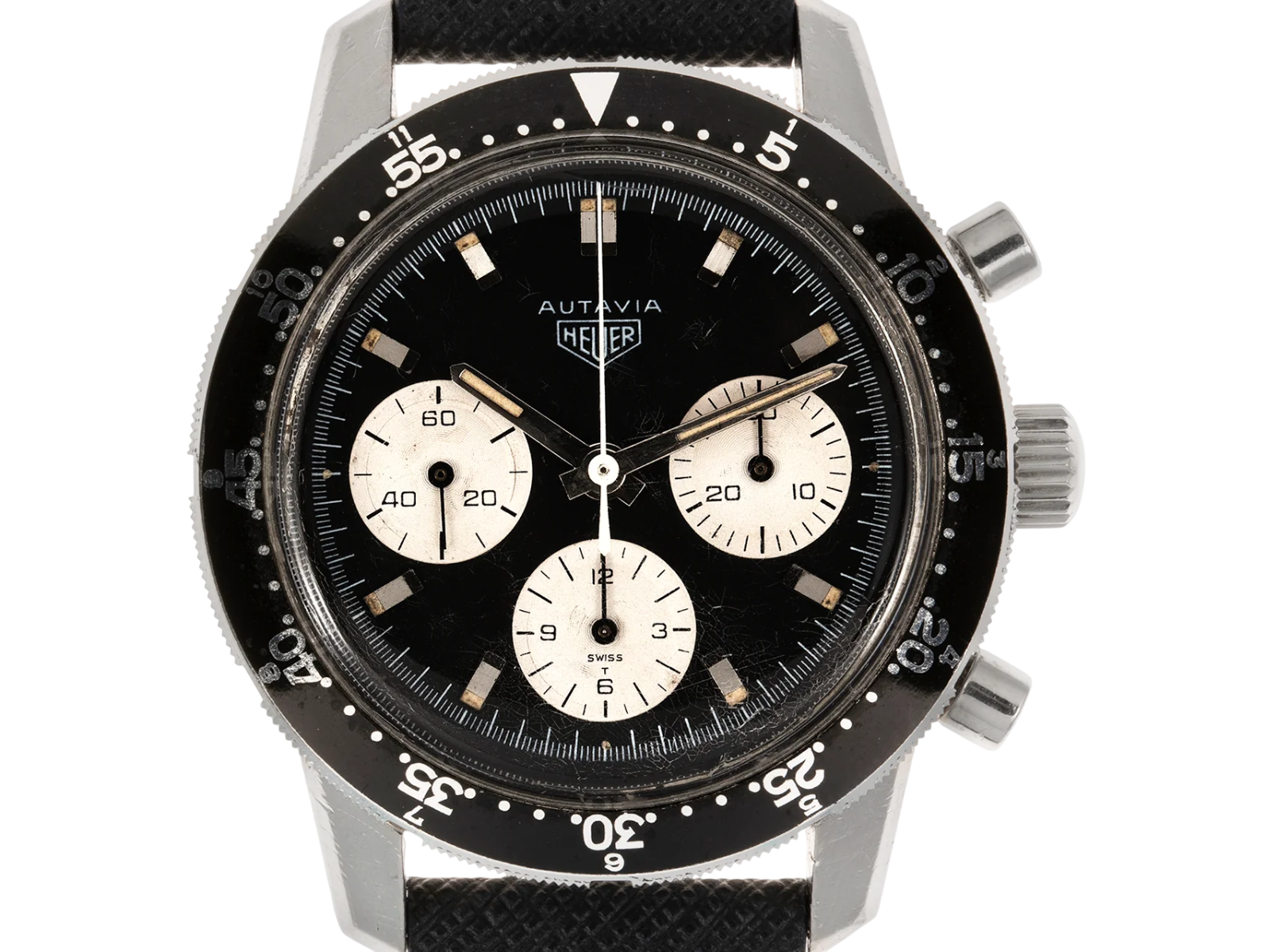 2446
2446Autavia Ref. 2446
The archetypal hand-wound Autavia: robust Valjoux 72 chronograph, rotating bezel and a direct connection to automobile and aviation timing.
 2447
2447Carrera Ref. 2447
Jack Heuer’s pure racing chronograph, admired for its clean dial, tension-ring scale and exceptionally disciplined proportions.
 1133B
1133BMonaco Ref. 1133B
The blue-dial square automatic chronograph made culturally immortal through its association with Steve McQueen and the film Le Mans.
 1153
1153Carrera Ref. 1153
The Carrera redesigned around the automatic Chronomatic movement, combining a larger case with the model’s characteristic clarity.
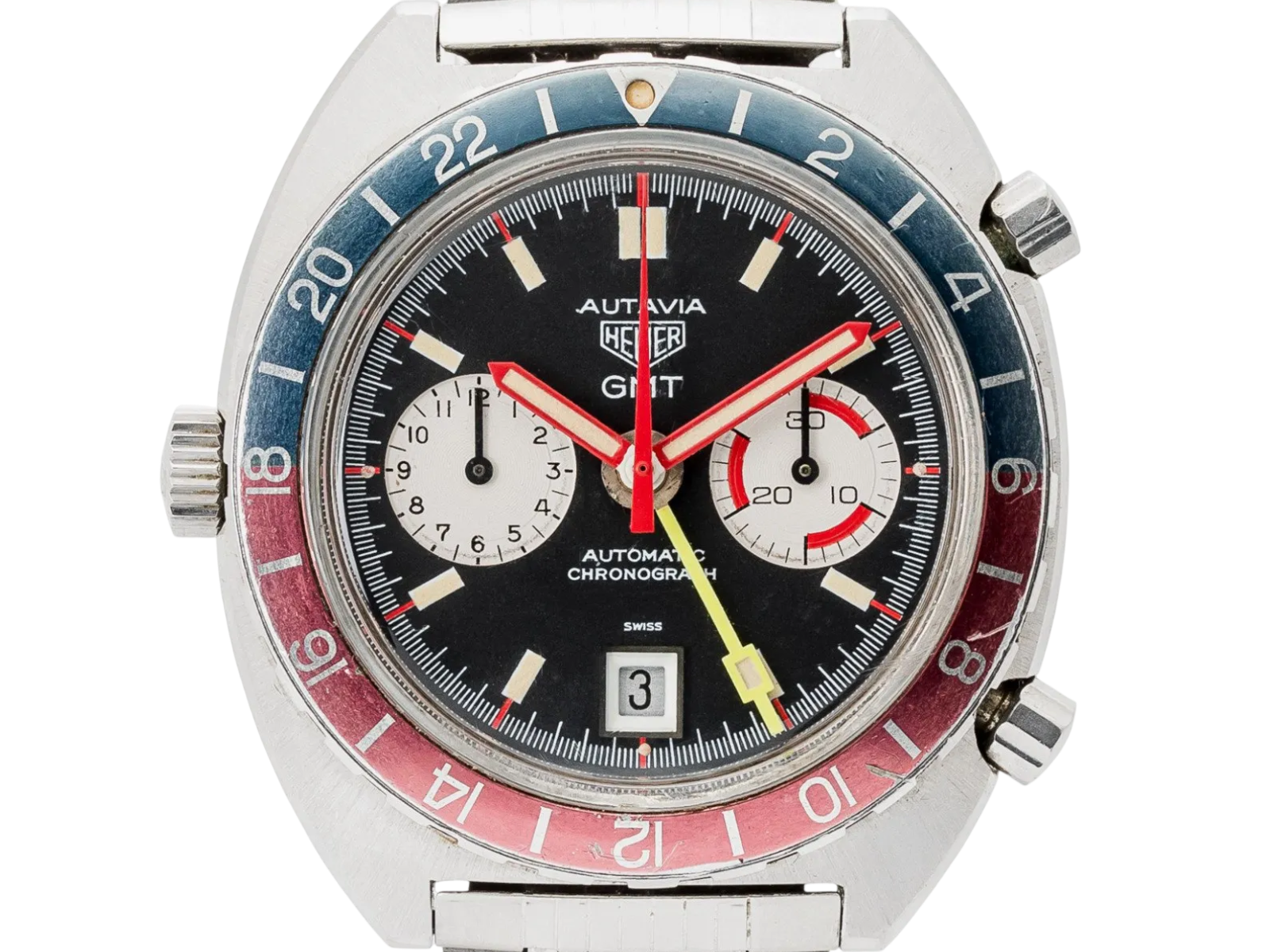 1163
1163Autavia Ref. 1163
A bold automatic Autavia that translated the original tool-watch idea into the larger, more colourful language of the 1970s.
 S
SSilverstone
A late-1970s cushion-cased chronograph whose rich dial colours show how far Heuer moved from the monochrome racing watches of the previous decade.
Reading the catalogue.
Old catalogues, dealer sheets and motorsport photographs help identify dial executions, bezel options, reference numbers and the rapid changes between hand-wound and automatic generations.

What makes a vintage Heuer look like a Heuer?
The recurring details come from timing: high-contrast sub-dials, clean scales, strong hand shapes, rotating bezels and case forms designed to make elapsed time easy to read at speed.
Under Jack Heuer, typography and negative space became just as important as mechanics. That disciplined graphic thinking is one reason the best Carreras and Autavias still look modern.
 11
11Information at racing speed.
Sub-dials, scales, hands and bezels are organised around instant recognition. Even the most colourful Heuers remain instruments before they become decoration.
Heuer shield
The simple shield logo becomes a powerful visual anchor on dials, dashboards and racing equipment.
Rotating bezels
Autavia bezels can measure elapsed minutes, hours or a second time zone, making bezel type part of reference identity.
Left-hand Chronomatic crown
Early Calibre 11 watches place the crown on the left while retaining chronograph pushers on the right—an unmistakable period signature.
Colour as function
Orange, red, blue and contrasting registers are used to separate timing information and give 1970s Heuer its graphic energy.
Three things collectors learn quickly.
Vintage Heuer rewards detailed visual comparison. A watch may have the correct reference number yet the wrong dial execution, bezel, handset or movement for its production period.
Collectors also learn that motorsport associations vary in strength. A model used by a driver or team is historically interesting; a specific watch with documented racing provenance is something entirely different.
Reference is only the start.
Early Autavias and Carreras evolved quickly. Execution, not simply the number between the lugs, often determines desirability.
Dials carry the value.
Refinishing, moisture damage and incorrect luminous material can materially change the appeal of an otherwise sound watch.
Chronomatic servicing matters.
Calibre 11-family watches require knowledgeable servicing and careful checking of their modular chronograph architecture.
Where the interest sits.
Collector interest is strongest in the 1960s and early 1970s, particularly where early production, distinctive dial executions and motorsport significance overlap. Autavia, Carrera and Monaco dominate the high end of the market.
These ratings are editorial indicators rather than price forecasts. Original dials, rare bezels, strong cases, correct movements and documented provenance can transform the desirability of two apparently similar watches.
Very high
Foundational rotating-bezel chronographs with multiple scarce executions and major motorsport appeal.
High
Jack Heuer’s purest chronograph design, with numerous desirable dial and scale variations.
High
Radical square design, automatic-chronograph history and unusually strong cultural recognition.
High
A deep family combining Chronomatic technology, motorsport history and colourful 1970s executions.
Medium
The clean Carrera idea translated into the larger automatic-chronograph era.
Medium
An accessible piece of the 1980s transition whose colours and cultural nostalgia are attracting greater interest.
Modern TAG Heuer alternatives.
TAG Heuer’s modern catalogue openly draws on its archive, making it unusually easy to buy the visual character of a vintage racing chronograph with contemporary reliability.
The Carrera and Monaco remain the clearest continuations, while the Aquaracer expresses the brand’s later professional sports-watch tradition in a modern form.

Carrera Glassbox
A sophisticated modern reinterpretation of the clean 1960s Carrera chronograph.
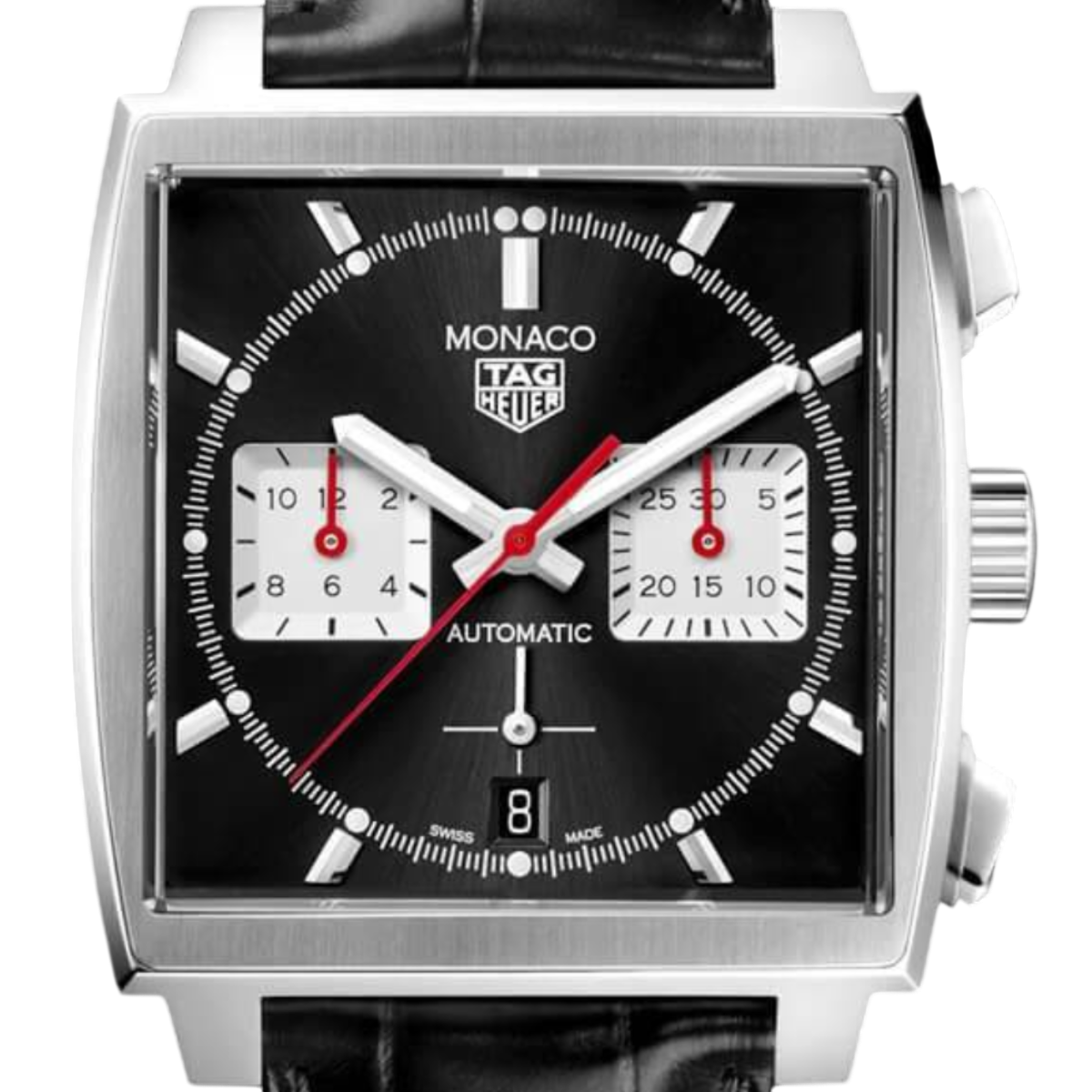
Monaco
The square icon remains visually connected to the automatic chronographs introduced in 1969.
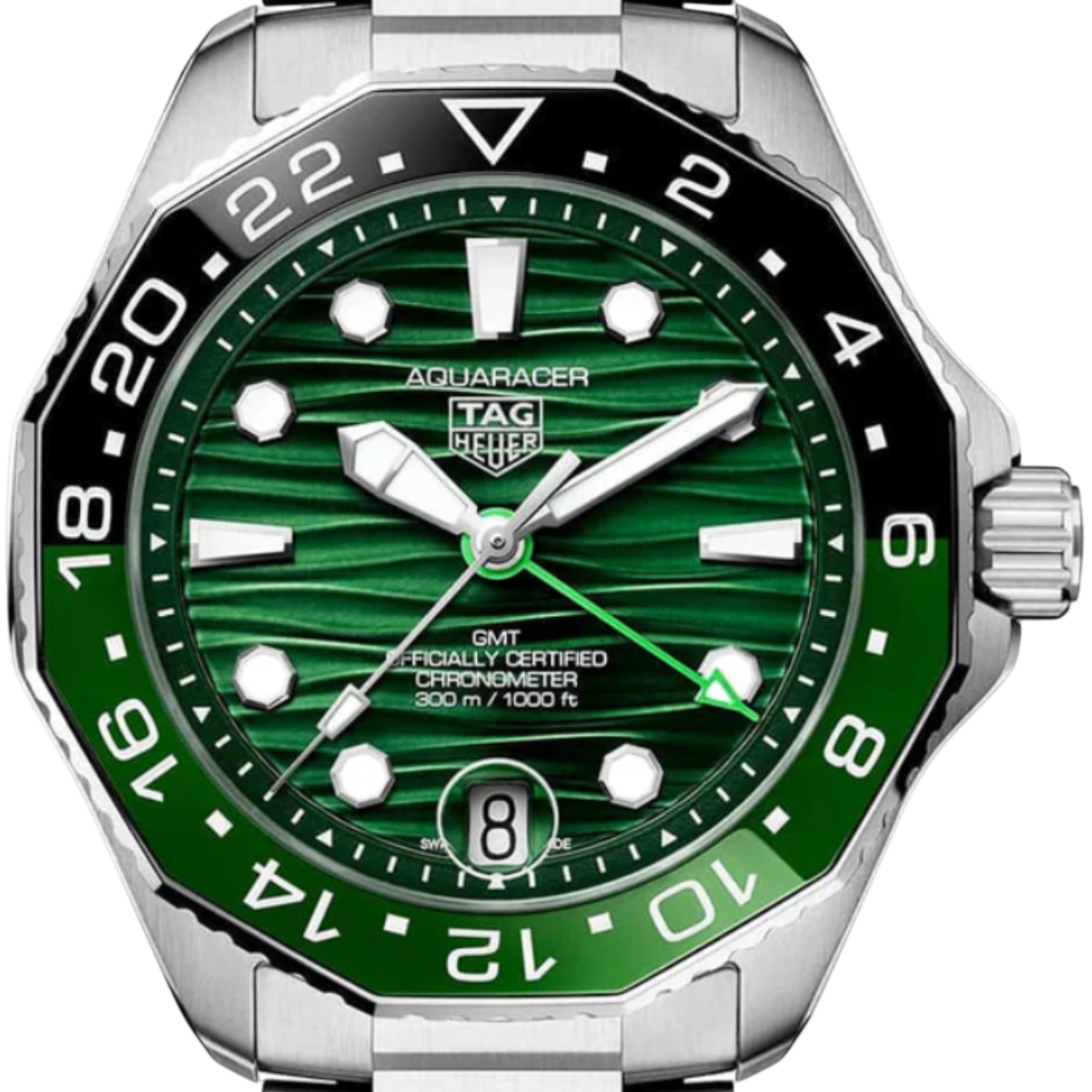
Aquaracer
A modern professional sports watch descended from TAG Heuer’s long-running diving-watch lineage.
The TAG Heuer archive begins with Heuer.
The modern shield is only the latest chapter. The richest collection moves through dashboard timers, Autavias, Carreras, Monacos, Chronomatic movements and the colourful racing chronographs that made Heuer one of the defining names of 20th-century sports timing.