Vintage
Tissot
From Le Locle and the Antimagnétique to the Navigator, Visodate, Seastar, PR 516 and RockWatch: the collector’s guide to Tissot’s most inventive vintage eras.
Vintage Tissot offers one of the broadest windows into mainstream Swiss watchmaking. Across more than a century, the company combined industrial scale with technical experimentation, producing everything from elegant dress watches and world timers to racing watches, fibreglass cases and mechanical watches made from plastic.


Swiss watchmaking for the wider world.
Tissot’s historical importance lies partly in scale. Founded in Le Locle in 1853, the company learned to turn Swiss mechanical watchmaking into a genuinely international product while continuing to experiment with accuracy, water resistance, materials and industrial production.
The vintage catalogue is unusually diverse. There are restrained mid-century dress watches, early antimagnetic wristwatches, world timers, Seastars, racing-inspired PR models and some of the most unconventional material experiments undertaken by a major Swiss maker.
For collectors, that diversity is the opportunity. Vintage Tissot rarely carries the market inflation associated with Rolex or Omega, yet many references have genuine historical significance, strong design and good mechanical substance.
Vintage Tissot is where Swiss watchmaking becomes democratic without becoming ordinary.
The quick collector’s view
Most recognisable
The PR 516: a perforated-bracelet racing watch whose practical robustness became one of Tissot’s signature 1960s designs.
Connoisseur choice
An early Navigator world timer, sharp Antimagnétique, or unusual Sidéral in original condition.
Best entry point
Mid-century Visodate and Seastar models, where clean design and mechanical quality remain comparatively affordable.
From Le Locle family workshop to global Swiss manufacturer.
Charles-Félicien Tissot and his son Charles-Émile founded the company in Le Locle in 1853. The business quickly looked outward, building international distribution while developing a reputation for accessible but technically serious Swiss watches.
Through the 20th century, Tissot repeatedly pursued practical innovation. Antimagnetism, water resistance, integrated date displays, racing watches and unconventional materials all became part of a catalogue that was far more experimental than its mainstream positioning might suggest.
Tissot is founded in Le Locle
Charles-Félicien Tissot and Charles-Émile Tissot establish the family business in the Jura Mountains and begin building an international customer base.
The Antimagnétique
Tissot introduces the first commercially produced antimagnetic wristwatch, addressing a growing problem as electrical equipment becomes more common.
Water resistance becomes a priority
Models such as Camping and Aquasport combine antimagnetic construction with dust, shock and moisture resistance, anticipating the later Seastar identity.
Seastar and Visodate
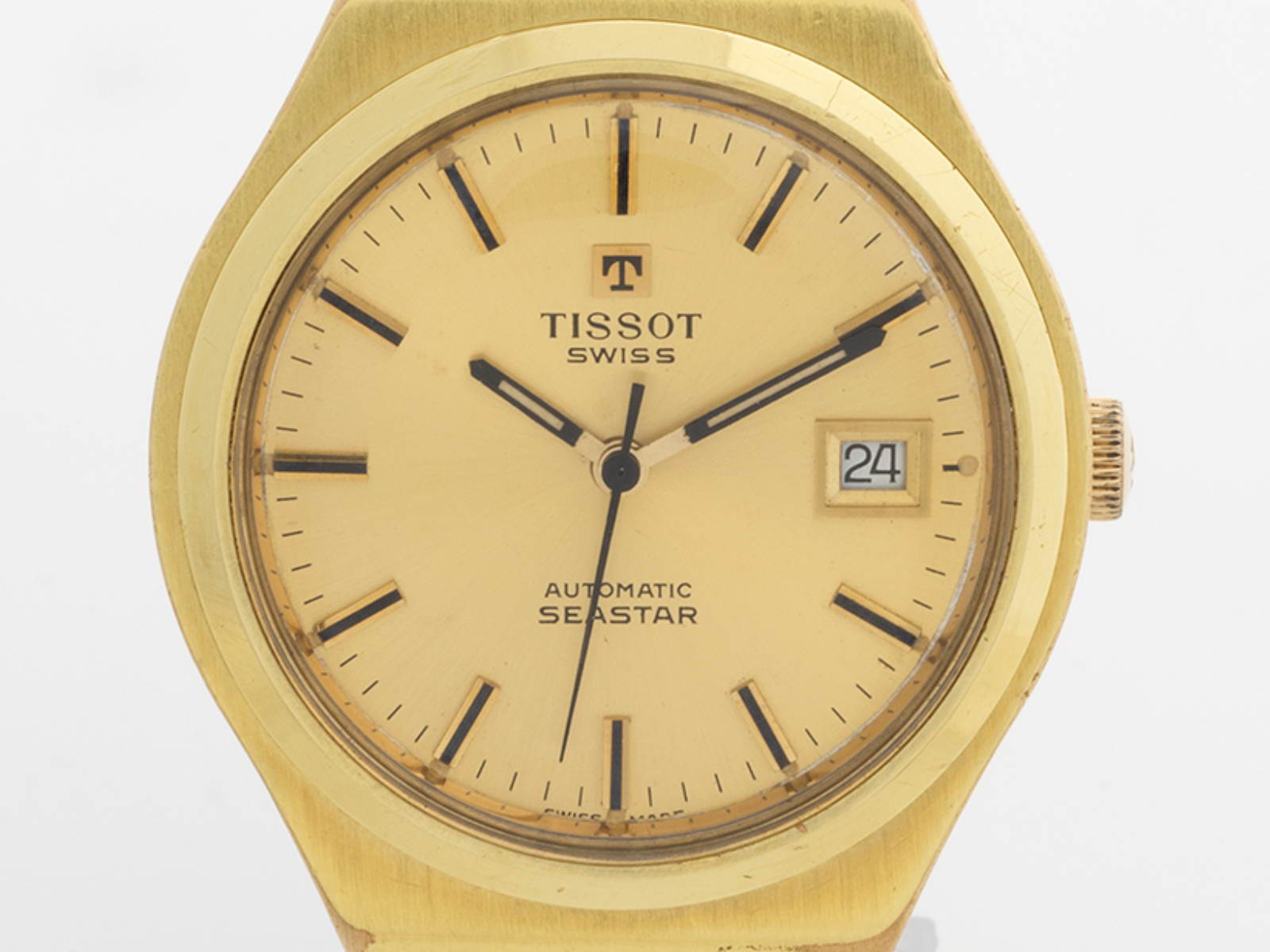
The Seastar name is registered for a new generation of water-resistant watches, while the Visodate develops Tissot’s practical date-display philosophy.
Navigator world time
Tissot brings international travel to the dial with a sophisticated world-time watch capable of displaying multiple time zones.
The PR 516
The Particularly Robust—or Precision and Resistance—concept is expressed through a motorsport-inspired watch designed for demanding use.
Materials become the experiment
Fibreglass Sidéral watches, the plastic mechanical Idea 2001 and the granite RockWatch show Tissot treating the watch case itself as a field for innovation.
A Tissot timeline.
Tissot’s milestones reveal a brand repeatedly asking how Swiss watches could become more useful, more resilient and more accessible. Its history is therefore as much about industrial problem-solving as luxury.
The dates below provide a framework rather than a complete reference chart. The vintage catalogue is broad, and individual case, dial and movement combinations should still be researched separately.
Le Locle beginnings
Charles-Félicien and Charles-Émile Tissot establish the company.
Antimagnétique
Tissot commercialises a wristwatch designed to resist the effects of magnetic fields.
Camping
A water-resistant, antimagnetic and shock-resistant watch demonstrates Tissot’s growing focus on practical durability.
Aquasport
Further water-resistant development anticipates the post-war Seastar family.
Seastar trademark
Tissot registers the Seastar name for a new generation of hermetically sealed watches.
Centenary and world travel
Tissot celebrates 100 years while the Navigator world-time concept reflects the increasingly international post-war world.
Visodate
An integrated date aperture combines everyday practicality with restrained mid-century design.
PR 516
The robust racing-inspired family establishes a sporting identity that Tissot continues to revisit.
Sidéral
Fibreglass enters the watch case as Tissot experiments with lighter and more unconventional materials.
Idea 2001 / Astrolon
Tissot launches a mechanical watch with a plastic movement architecture, challenging assumptions about how a watch should be made.
The watch that inspires the PRX
A slim integrated-bracelet Seastar design appears, later becoming the historical basis for the modern PRX.
RockWatch
A quartz watch carved from Swiss Alpine granite turns material innovation into one of Tissot’s most distinctive designs.
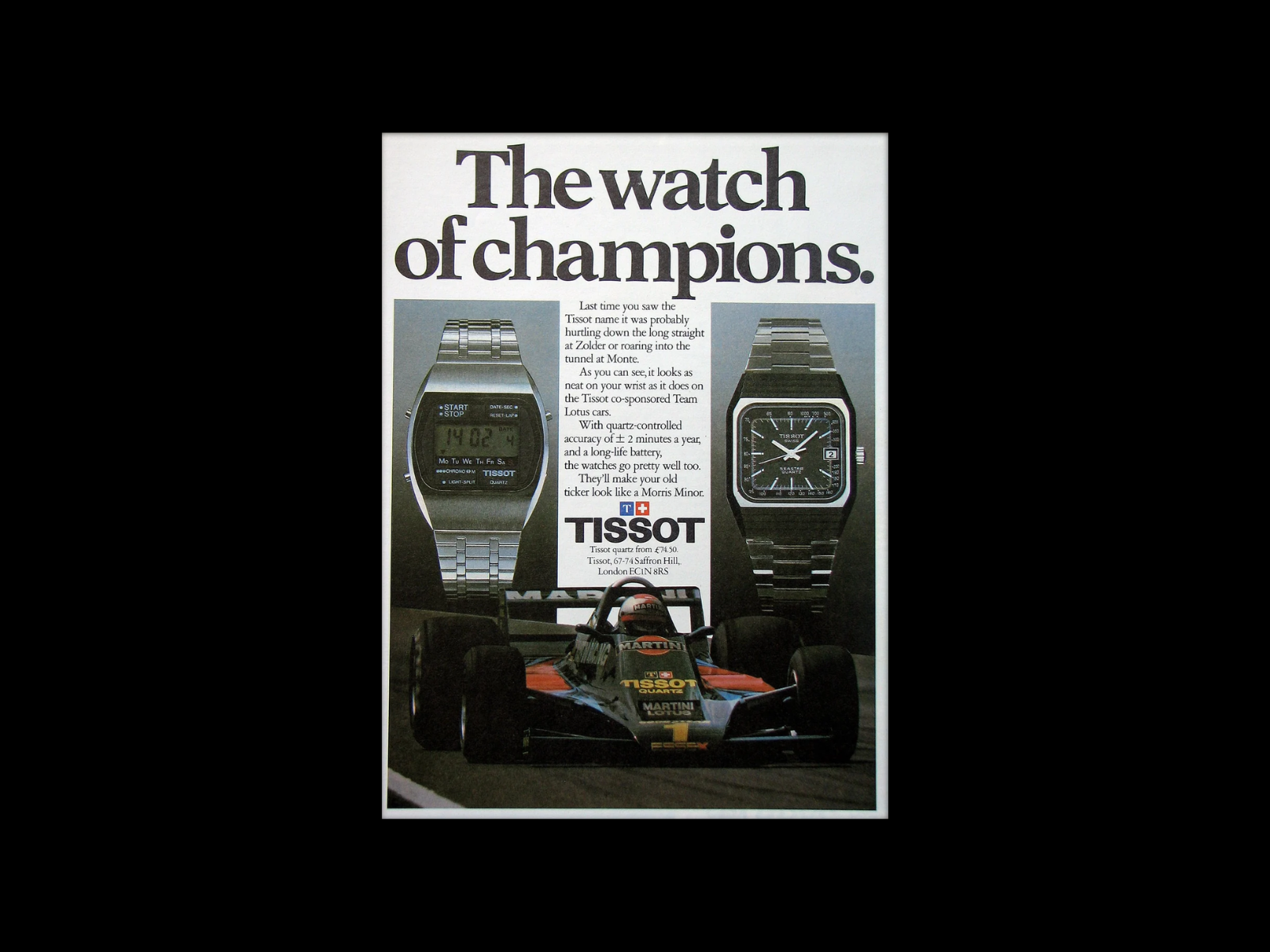
Le Locle in print.
Period advertising reveals a company selling resilience, modernity and attainable Swiss precision rather than exclusivity alone.
The four vintage eras.
Vintage Tissot becomes easier to understand when divided by what the company was trying to solve: reliable mass production, magnetism and water resistance, modern post-war lifestyles, then the material and design challenges of the quartz era.
Each period has its own collecting appeal. The best examples are often not the most expensive, but the watches that capture one of these shifts particularly clearly.
Le Locle foundations
Pocket watches, international distribution and industrial production establish Tissot as a major Swiss maker.
Resistance and reliability
Antimagnetic and water-resistant watches respond directly to the technological environment of modern life.
Post-war modernity
Seastar, Visodate, Navigator and PR 516 combine international travel, sport and everyday practicality.
Materials and reinvention
Sidéral, Idea 2001, integrated-bracelet design, quartz and RockWatch make experimentation central to Tissot’s survival.
Six important vintage Tissots.
This is not a complete reference catalogue. It is a map of the watches that best explain vintage Tissot: Antimagnétique, Navigator, Visodate, Seastar, PR 516 and RockWatch.
Tissot produced at scale and model names can cover many executions. Dial originality, movement calibre, case condition and period-correct components therefore matter more than the name alone.
 AM
AMAntimagnétique
A foundational 1930s Tissot whose resistance to magnetic fields made it genuinely modern for the electrical age.
 N
NNavigator
An ambitious mid-century world-time watch that brought international travel and multiple time zones into a single dial.
 VD
VDVisodate
A clean mid-century automatic that turned the date window into part of an elegant everyday design rather than a technical novelty.
 SS
SSSeastar
A broad family of water-resistant watches ranging from restrained dress models to increasingly sporty configurations.
 516
516PR 516
The racing-era Tissot: robust construction, motorsport styling and an immediately recognisable perforated-bracelet aesthetic.
 RW
RWRockWatch
A quartz watch carved from natural stone that turned Swiss landscape, industrial ingenuity and 1980s design into a single object.
Reading the catalogue.
Old catalogues and advertisements reveal just how broad Tissot’s historical production was, from conventional dress watches to world timers and experimental materials.

What makes a vintage Tissot look like a Tissot?
There is no single vintage Tissot silhouette. The recurring identity lies instead in practical modernity: clean typography, useful complications, robust cases and a willingness to adopt unfamiliar materials when they solved a problem or created something new.
That breadth makes Tissot more difficult to reduce to one icon, but it also makes the archive unusually rewarding to explore.
 T
TTechnology made wearable.
Antimagnetism, water resistance, calendar displays, racing construction and experimental materials were consistently translated into watches intended for ordinary use.
Clean mid-century dials
Applied markers, dauphine hands and restrained typography give many 1950s and 1960s Tissots classic proportions.
PR robustness
The Particularly Robust / Precision and Resistance idea turns shock protection and durability into a design philosophy.
Material experimentation
Fibreglass, plastic and natural stone make Tissot one of the most adventurous mainstream Swiss brands of the late 20th century.
Accessible complexity
World time, chronographs and useful calendar complications appear without pushing Tissot into traditional haute-horlogerie territory.
Three things collectors learn quickly.
Vintage Tissot rewards curiosity more than status seeking. Many genuinely interesting watches remain overlooked because the brand produced in large numbers and does not command the prestige premium of more famous collector marques.
Collectors also learn that production breadth demands careful identification. Similar-looking watches may use different calibres, and model names such as Seastar can encompass a surprisingly wide range of designs.
Condition can matter more than rarity.
A sharp, original Visodate or Seastar is often more compelling than a supposedly scarce watch with a refinished dial.
The oddities are historically important.
Sidéral, Idea 2001 and RockWatch are not side notes—they show how seriously Tissot experimented with industrial design and materials.
Value remains part of the appeal.
Tissot is still one of the places where historically interesting Swiss watches can be collected without chasing headline auction prices.
Where the interest sits.
Collector interest is strongest where historical innovation or distinctive design overlap with good preservation. Navigator, early Antimagnétique and PR 516 watches tend to attract the most traditional vintage-watch attention, while RockWatch and Sidéral appeal to design collectors.
These ratings are editorial indicators rather than price forecasts. Originality, dial quality, uncommon executions and complete period fittings can transform the appeal of an otherwise inexpensive watch.
High
A genuinely sophisticated world-time watch and one of the most distinctive vintage Tissot complications.
High
An important technical milestone tied directly to the electrical modernity of the 1930s.
Medium
Strong racing-era design and one of Tissot’s clearest historical sports-watch identities.
Medium
A classic, wearable route into mid-century Tissot with good availability and design quality.
High
Important material experiments that appeal beyond conventional mechanical-watch collecting.
Medium
An instantly recognisable 1980s design object with genuine material and industrial significance.
Modern Tissot alternatives.
Tissot’s modern catalogue has become increasingly comfortable revisiting its archive. Heritage 1938, PR 516 and PRX each connect directly to different historical strands of the brand.
For buyers who like vintage proportions and ideas but want modern movements, sapphire crystals and straightforward servicing, these models offer the clearest routes into Tissot heritage.
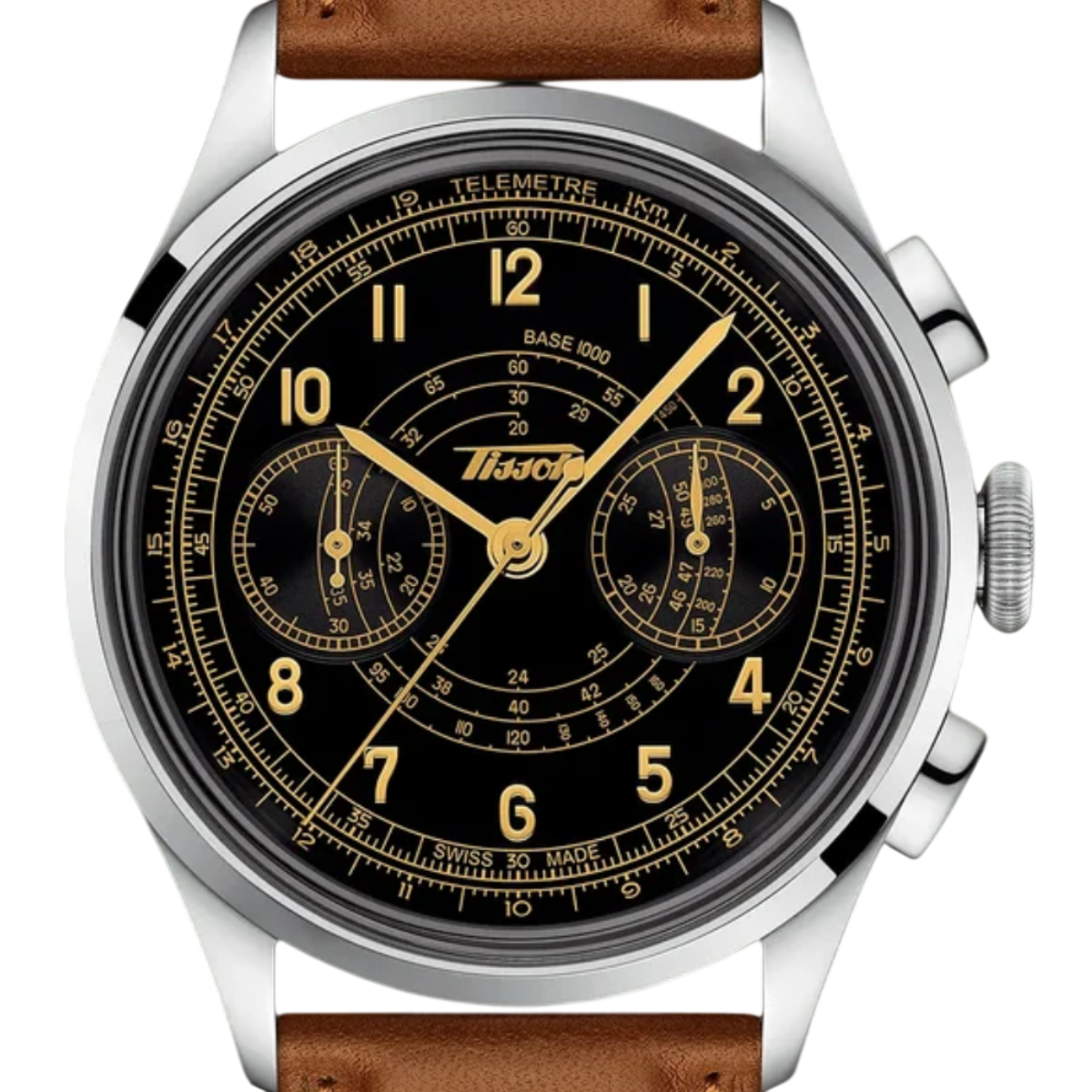
Heritage 1938
A modern interpretation of Tissot’s pre-war precision-watch aesthetic.
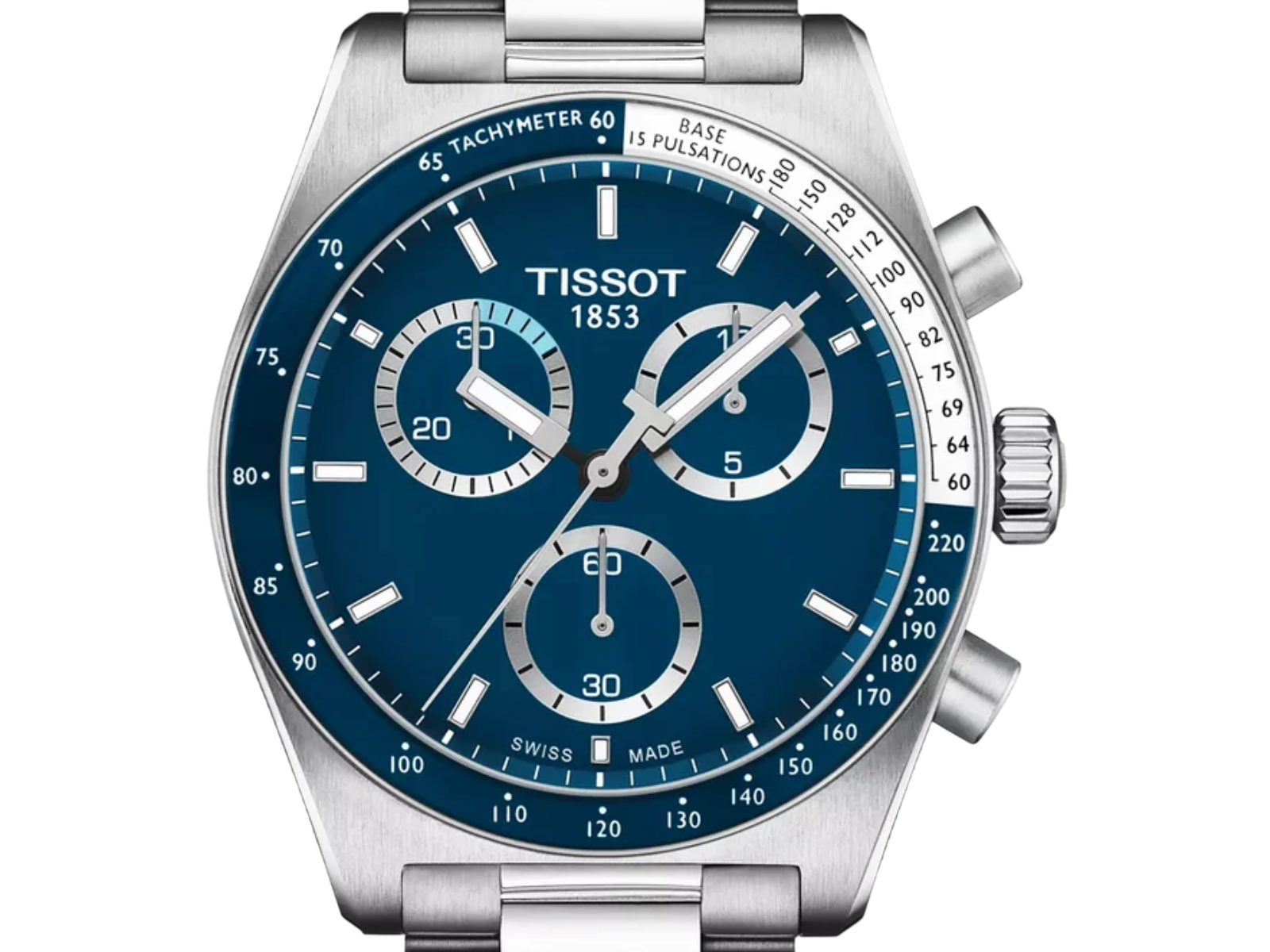
PR 516
The modern continuation of the racing-inspired Particularly Robust family introduced in the 1960s.

PRX Powermatic 80
A contemporary integrated-bracelet watch derived from a slim 1978 Tissot design.
The Tissot archive is much stranger—and richer—than its price point suggests.
The story moves from antimagnetic wristwatches and post-war world timers to racing watches, fibreglass, plastic mechanics, integrated bracelets and granite cases. Few mainstream Swiss brands experimented so widely while remaining so accessible.