Vintage
Zenith
From Georges Favre-Jacot’s integrated manufacture and observatory chronometry to Calibre 135, the 1969 El Primero, DEFY and Charles Vermot’s attic: the collector’s guide to Zenith’s defining vintage eras.
Vintage Zenith combines two histories that rarely sit together so neatly: classical precision watchmaking and some of the boldest chronograph design of the late 1960s and 1970s. Few brands move so naturally from observatory prizes to racing chronographs, pilot’s watches and futuristic DEFY cases.
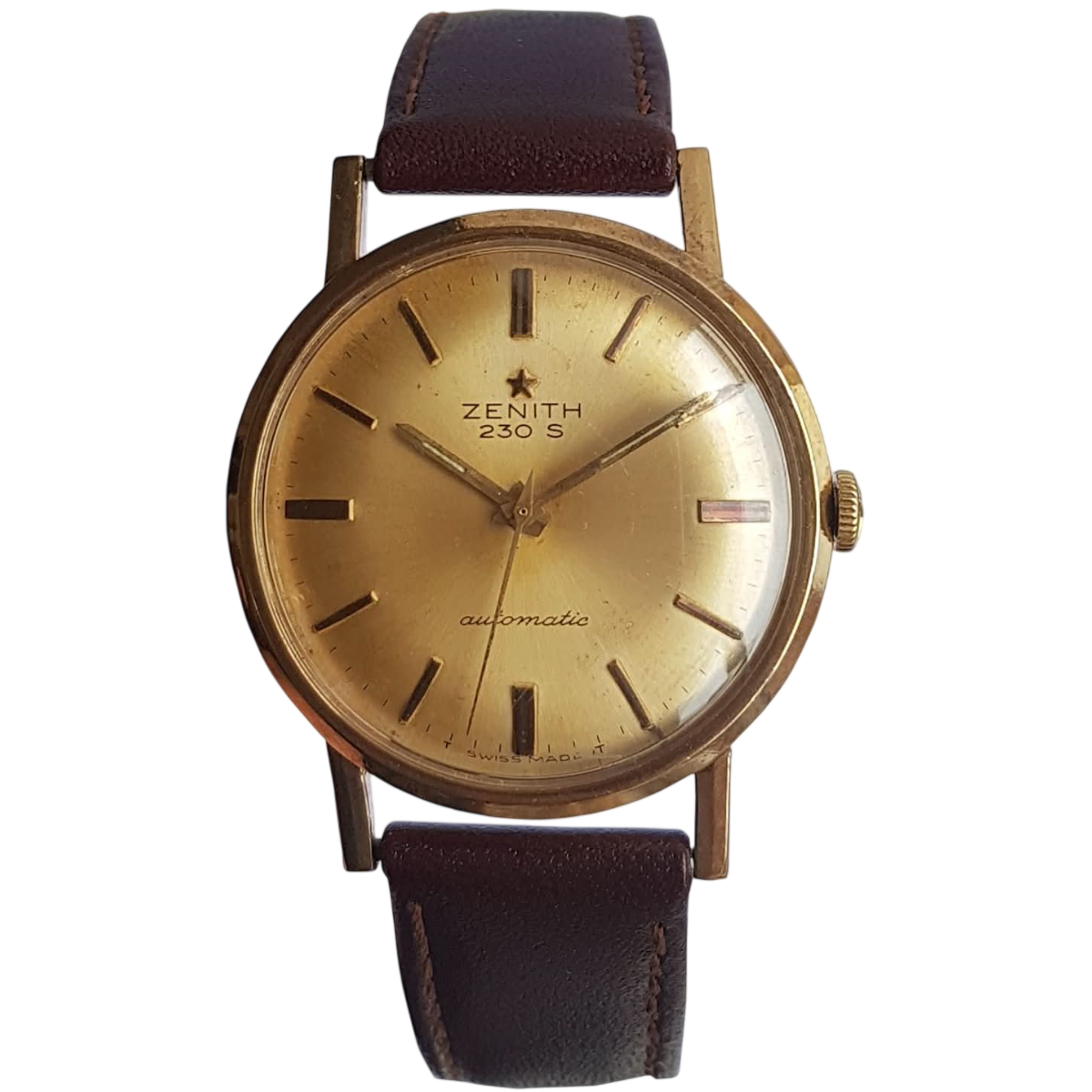
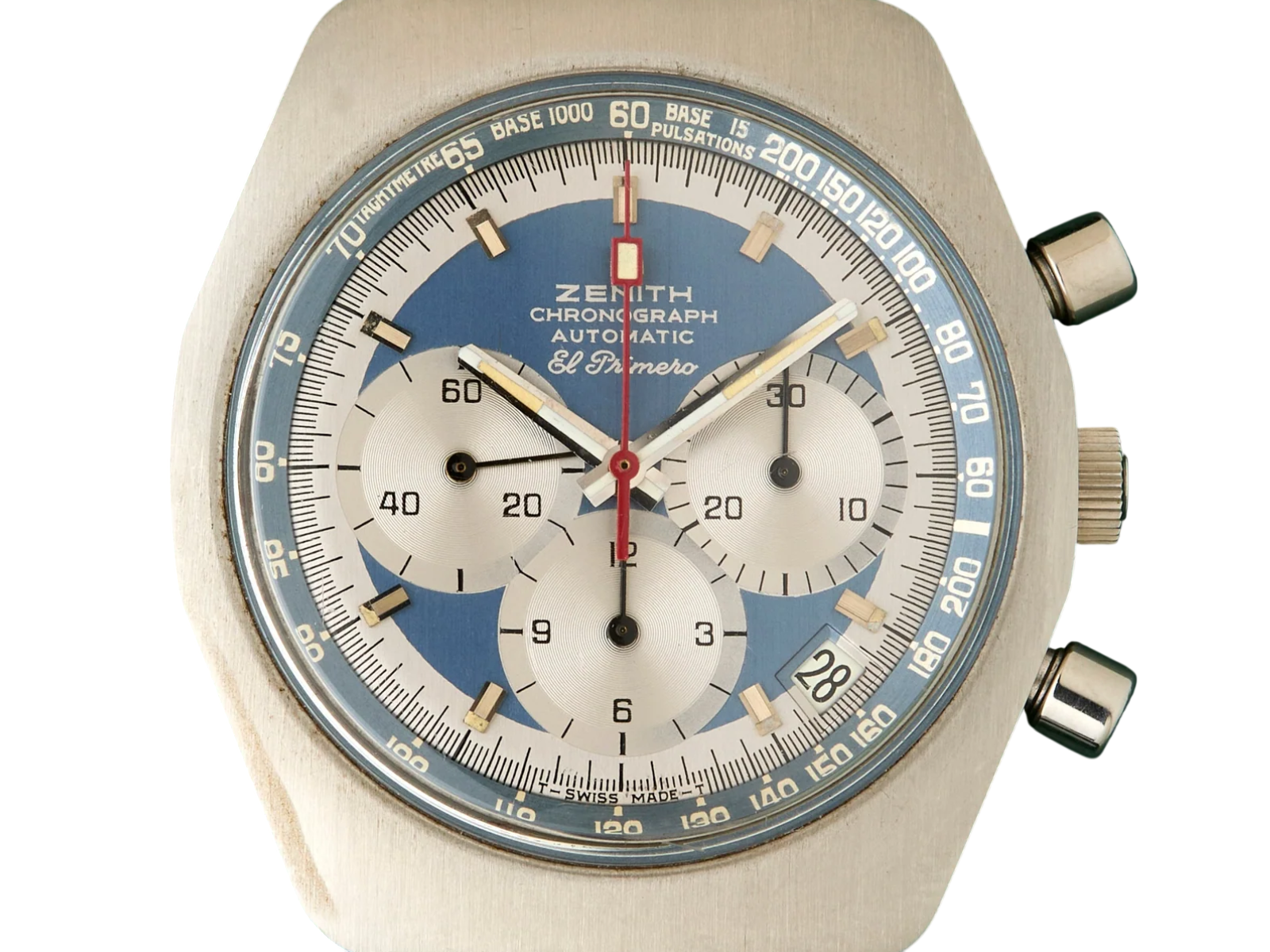
Precision before hype.
Zenith was founded in Le Locle in 1865 by Georges Favre-Jacot, who brought multiple watchmaking disciplines together under one roof. That manufacture structure gave Zenith unusual control over movement development and helped make precision a defining part of the company’s identity.
By the middle of the 20th century, Zenith had become deeply associated with chronometry. Calibre 135 stands as one of the clearest expressions of that period, while the 1969 El Primero took the same obsession with accuracy into the automatic chronograph.
For collectors, Zenith is unusually broad. There are elegant observatory-derived dress watches, pilot’s watches, high-frequency chronographs, angular DEFY models and colourful 1970s designs—often with stronger technical significance than their market prices suggest.
Vintage Zenith is where classical chronometry meets the optimism of the high-frequency age.
The quick collector’s view
Most recognisable
The El Primero A386: tri-colour registers, 36,000 vph movement and one of the defining chronographs of 1969.
Connoisseur choice
A sharp Calibre 135 chronometer, early A384 or original first-generation DEFY with correct bracelet.
Best entry point
Selected 1960s dress watches, later El Primero references and honest vintage DEFY models.
From integrated manufacture to high-frequency icon.
Georges Favre-Jacot founded Zenith in 1865 and pursued a then-unusual idea: bring the specialist crafts of watchmaking together in one manufacture. That structure supported both industrial efficiency and sustained technical development.
Zenith’s identity was reinforced by decades of chronometry success, then transformed in 1969 by the El Primero. The calibre combined automatic winding, integrated chronograph construction and a 36,000-vph frequency capable of measuring tenths of a second.
Georges Favre-Jacot founds the manufacture
The company begins in Le Locle with the ambition of concentrating watchmaking skills under one roof.
Chronometry and aviation
Zenith builds its reputation through precision competitions and becomes closely associated with early aviation and instrument watches.
Calibre 135
A high-grade hand-wound movement becomes one of Zenith’s most celebrated chronometer calibres and a symbol of its precision era.
El Primero
Zenith unveils an automatic integrated high-frequency chronograph calibre running at 36,000 vibrations per hour.
A386, A384 and DEFY
The new movement arrives inside sharply differentiated watches, while DEFY introduces a separate language of angular, highly robust case design.
Production is ordered to stop
As quartz reshapes the industry, management decides to end El Primero production.
Charles Vermot’s foresight pays off
Because Vermot secretly preserved the tools and plans required to make El Primero, Zenith is able to restart production and revive the calibre.
A Zenith timeline.
Zenith’s major milestones reveal a remarkable continuity between observatory chronometry and high-frequency chronographs. Accuracy is the thread running from Favre-Jacot’s manufacture to Calibre 135 and El Primero.
The dates below provide a framework rather than a complete reference chart. Individual cases, dials, calibre variants and bracelet combinations still deserve reference-level research.
Zenith is founded
Georges Favre-Jacot establishes the manufacture in Le Locle.
Precision reputation grows
Zenith develops a formidable record in chronometry competitions and precision timekeeping.
Louis Blériot and aviation
The brand becomes associated with early aviation and the need for highly legible, dependable watches.
Calibre 135
The celebrated hand-wound chronometer movement enters Zenith’s precision-watch story.
Chronometry dominance
Zenith secures a remarkable run of observatory competition successes.
Calibre 5011K
A large precision movement achieves exceptional chronometry performance near the end of the observatory-competition era.
El Primero is unveiled
The integrated automatic chronograph runs at 36,000 vph and measures time to one tenth of a second.
DEFY arrives
The A3642 and related models introduce an angular “bank vault” aesthetic focused on structural toughness.
El Primero family expands
A386, A384, A385 and related variants establish a visually adventurous high-frequency chronograph family.
El Primero production halted
Quartz-era management decisions threaten the future of the mechanical chronograph calibre.
Charles Vermot saves the tooling
Plans, cams and specialised production tools are hidden in the manufacture attic rather than destroyed.
El Primero returns
Preserved tooling enables production to restart and gives the calibre a second life.
Precision in print.
Period advertising reveals a brand moving from observatory credibility and elegant chronometers to high-frequency chronographs and bold 1970s design.
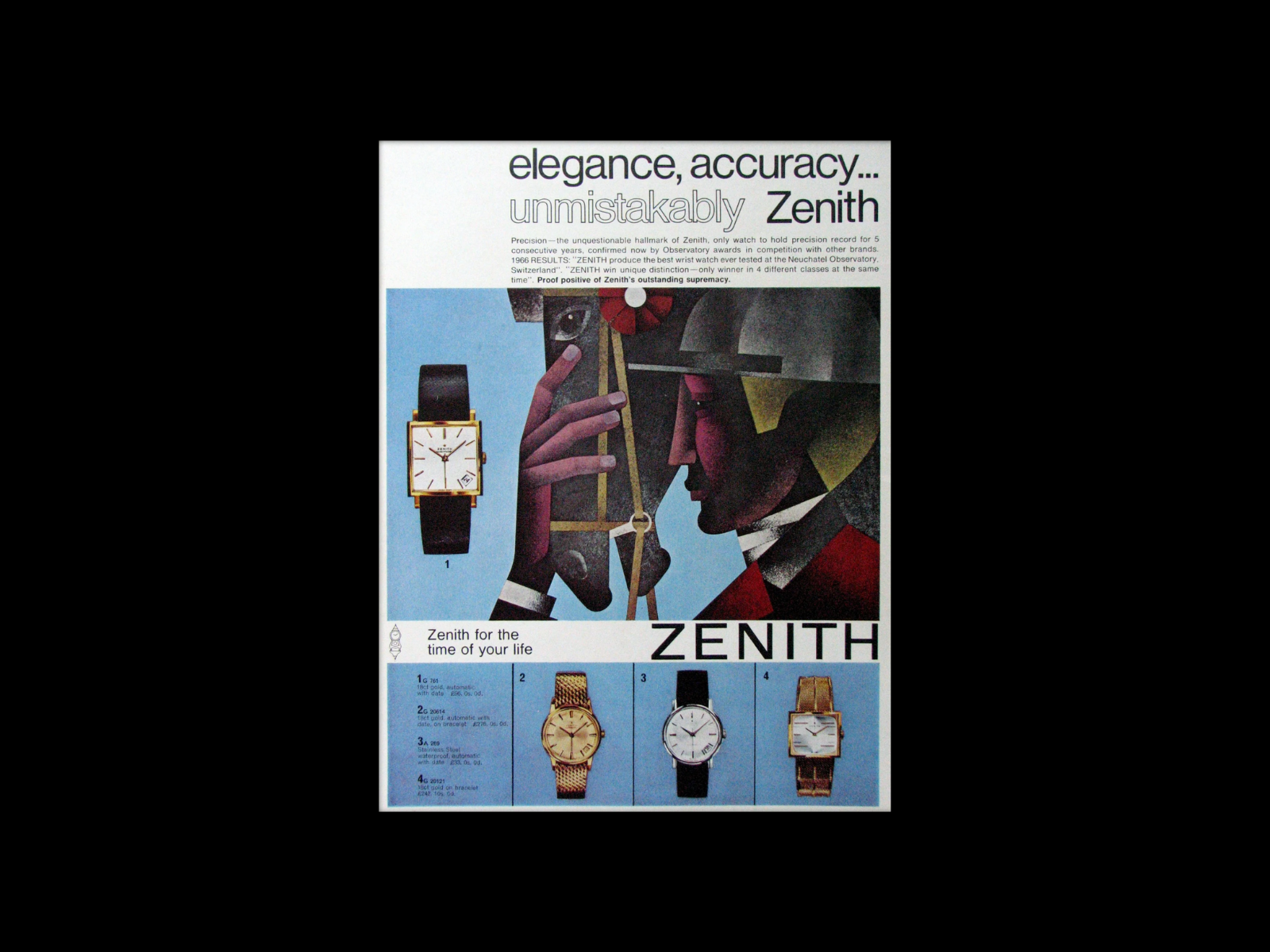
The four vintage eras.
Vintage Zenith is easiest to understand through changes in technical ambition. The company moves from integrated manufacture and observatory chronometry to post-war precision, then into the El Primero revolution and the quartz-era survival story.
Each period has different signatures, movement families and collecting priorities. The calibre inside the watch is often as important as the model name on the dial.
Manufacture and precision
Integrated production, pocket watches, chronometry and early aviation establish Zenith’s technical identity.
The chronometer golden age
Calibre 135, observatory competition and classical dress watches define Zenith’s post-war reputation.
El Primero and radical design
A386, A384, A385 and DEFY fuse high-frequency engineering with some of Zenith’s boldest case and dial design.
Survival and revival
Quartz disruption, Charles Vermot’s intervention and the return of El Primero transform a threatened movement into Zenith’s defining icon.
Six important vintage Zeniths.
This is not a complete reference catalogue. It is a map of the watches that best explain vintage Zenith: Calibre 135 chronometers, A386, A384, A385, early DEFY and military-style pilot chronographs.
Movement condition, dial originality, case geometry and bracelet correctness matter greatly. On El Primero references, even small differences in dial and case execution can materially affect collectability.
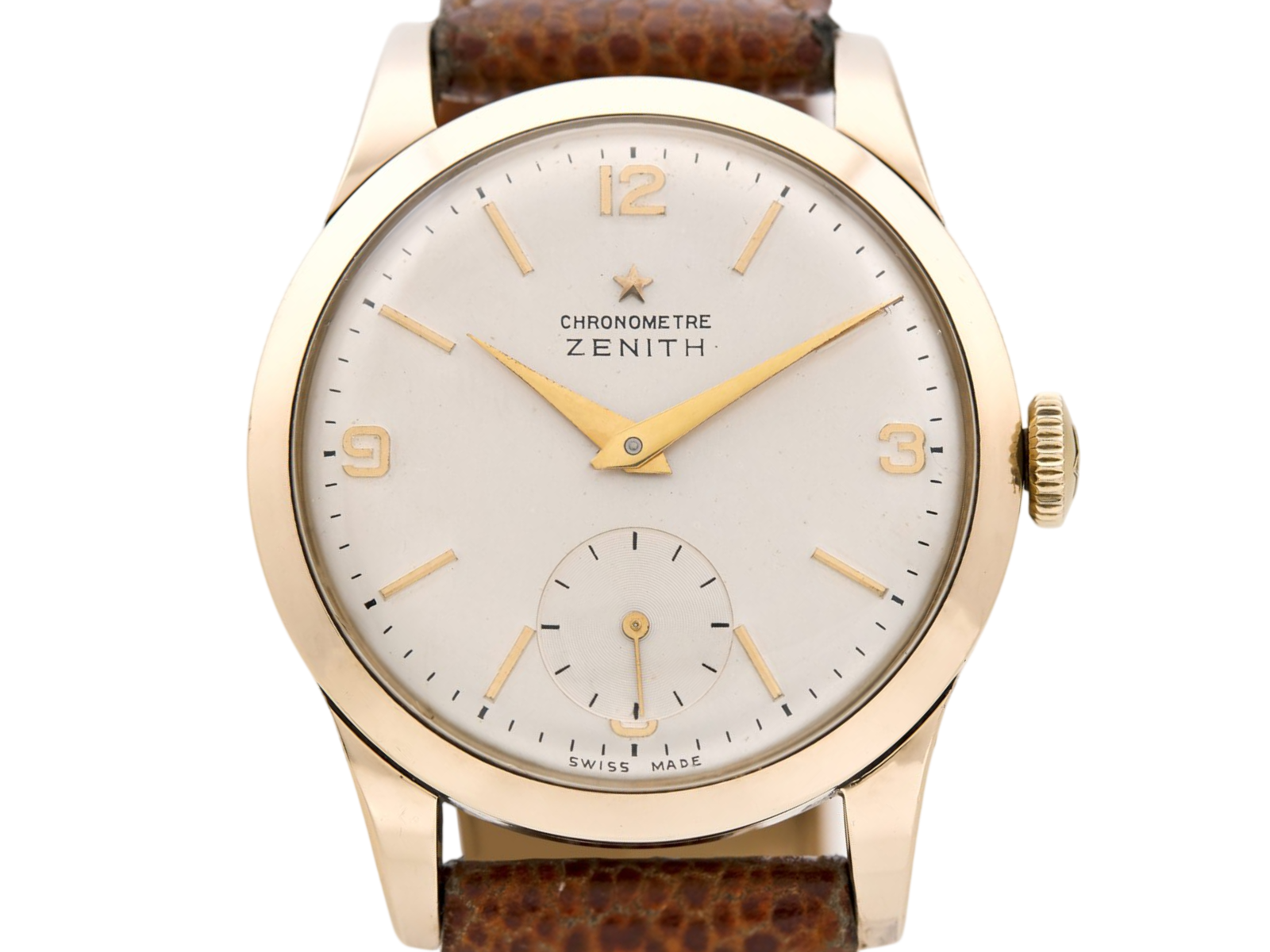 135
135Calibre 135 Chronometer
A refined post-war Zenith built around one of the manufacture’s most celebrated hand-wound precision movements.
 A386
A386El Primero A386
The archetypal early El Primero: round case, tri-colour registers and the high-frequency 3019 PHC automatic chronograph calibre.
 A384
A384El Primero A384
An angular tonneau-cased El Primero whose panda dial and ladder bracelet capture Zenith’s modernist 1969 design language.
 A385
A385El Primero A385
A distinctive early El Primero with smoked gradient dial, combining the A384 case form with a much warmer visual identity.
 A3642
A3642DEFY A3642
The original 1969 DEFY: octagonal case, 14-sided bezel and an architecture so solid it became known as the “bank vault”.
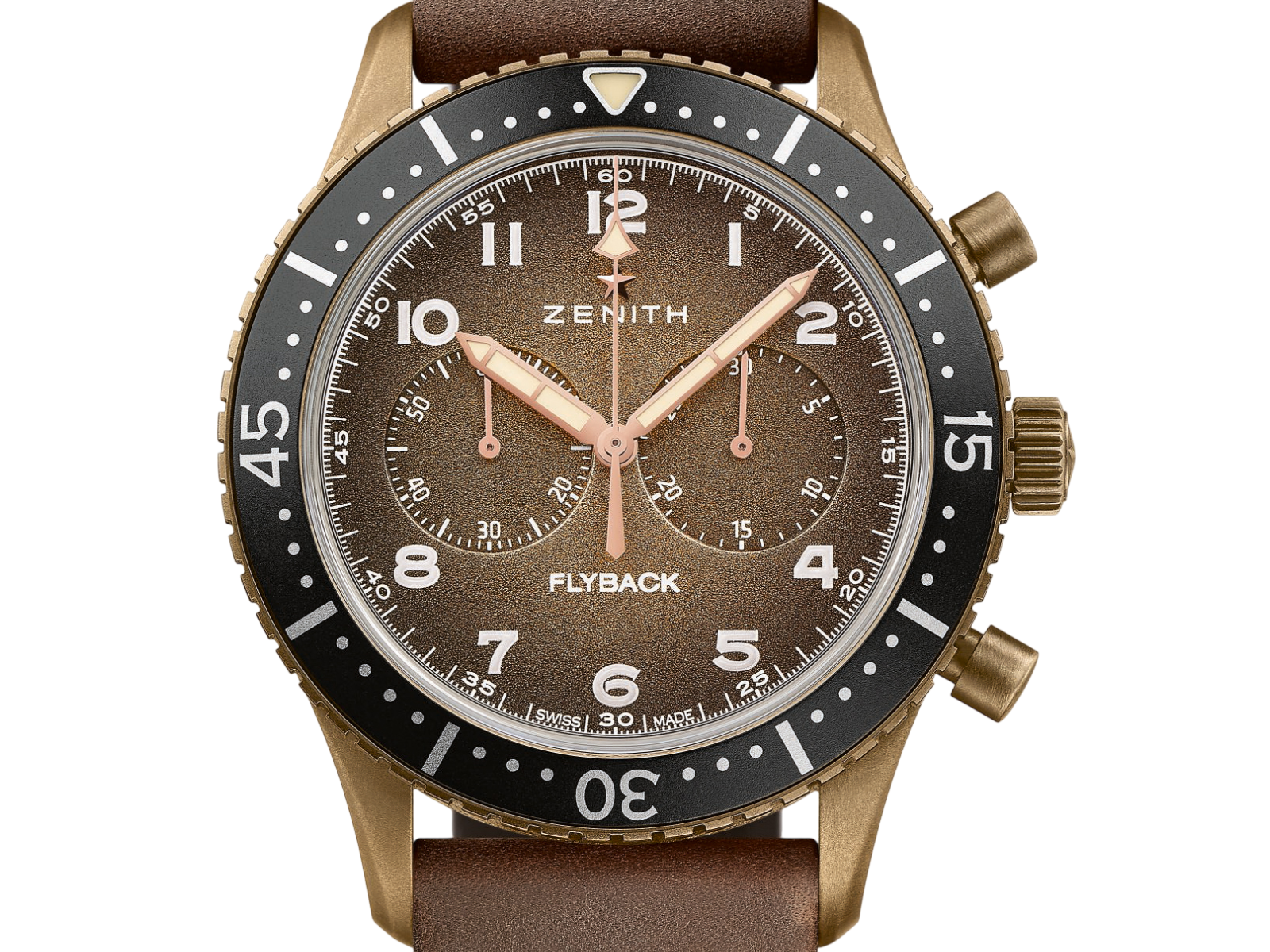 CP-2
CP-2Tipo CP-2
A large military-style chronograph associated with Italian military aviation and prized for its legibility, scale and specialist provenance.
Reading the catalogue.
Old catalogues, movement records and period advertising help decode Zenith’s broad output, especially the transition from classical chronometers to El Primero and DEFY.
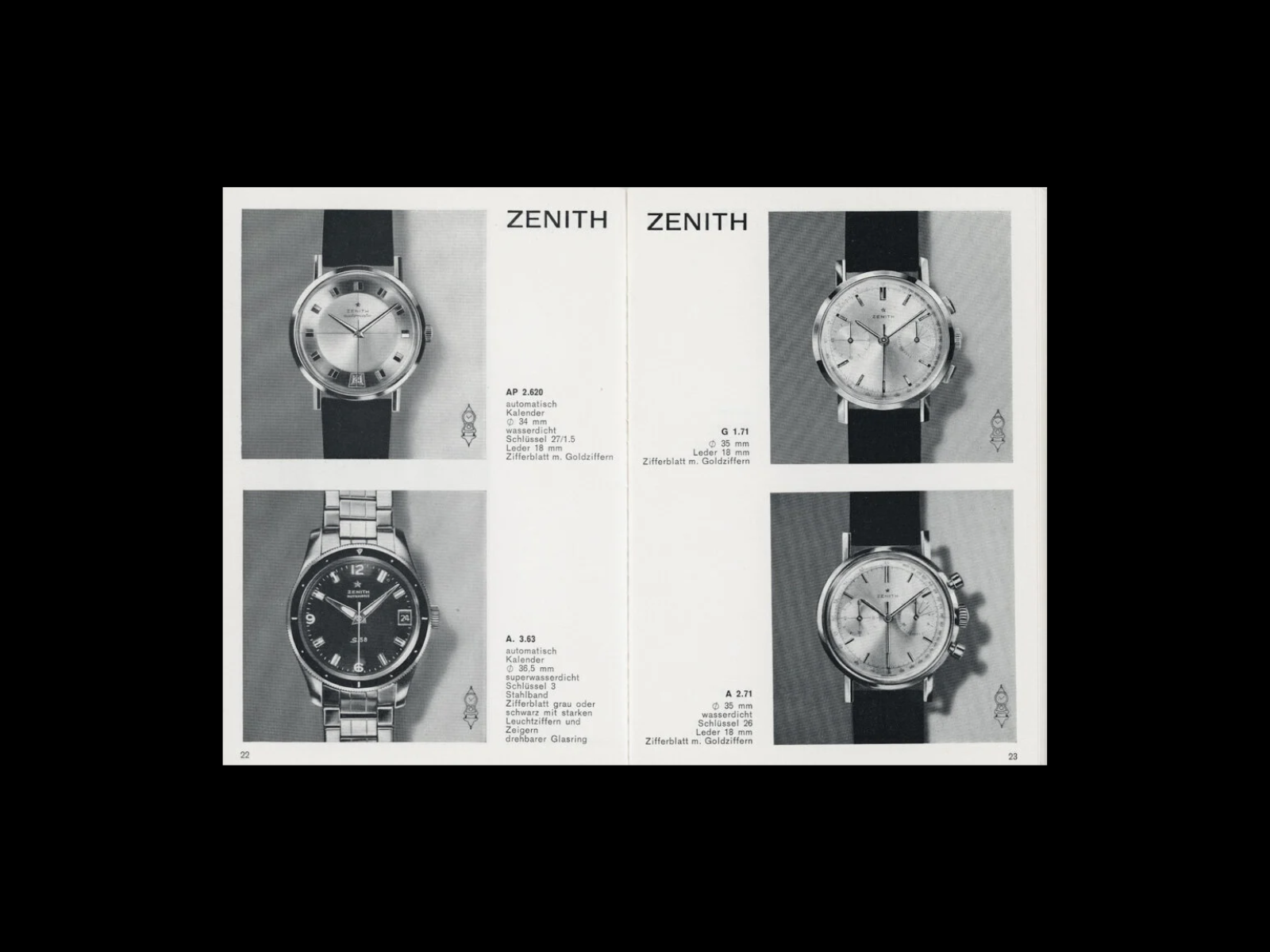
What makes a vintage Zenith look like a Zenith?
Zenith has two powerful vintage visual languages. The first is classical: restrained dials, slim cases and precision-oriented movements. The second is late-1960s modernism: high-contrast chronographs, geometric cases, gradient dials and architectural bracelets.
The best vintage Zenith watches often feel technical without becoming sterile. Movement innovation and industrial design remain visibly connected.
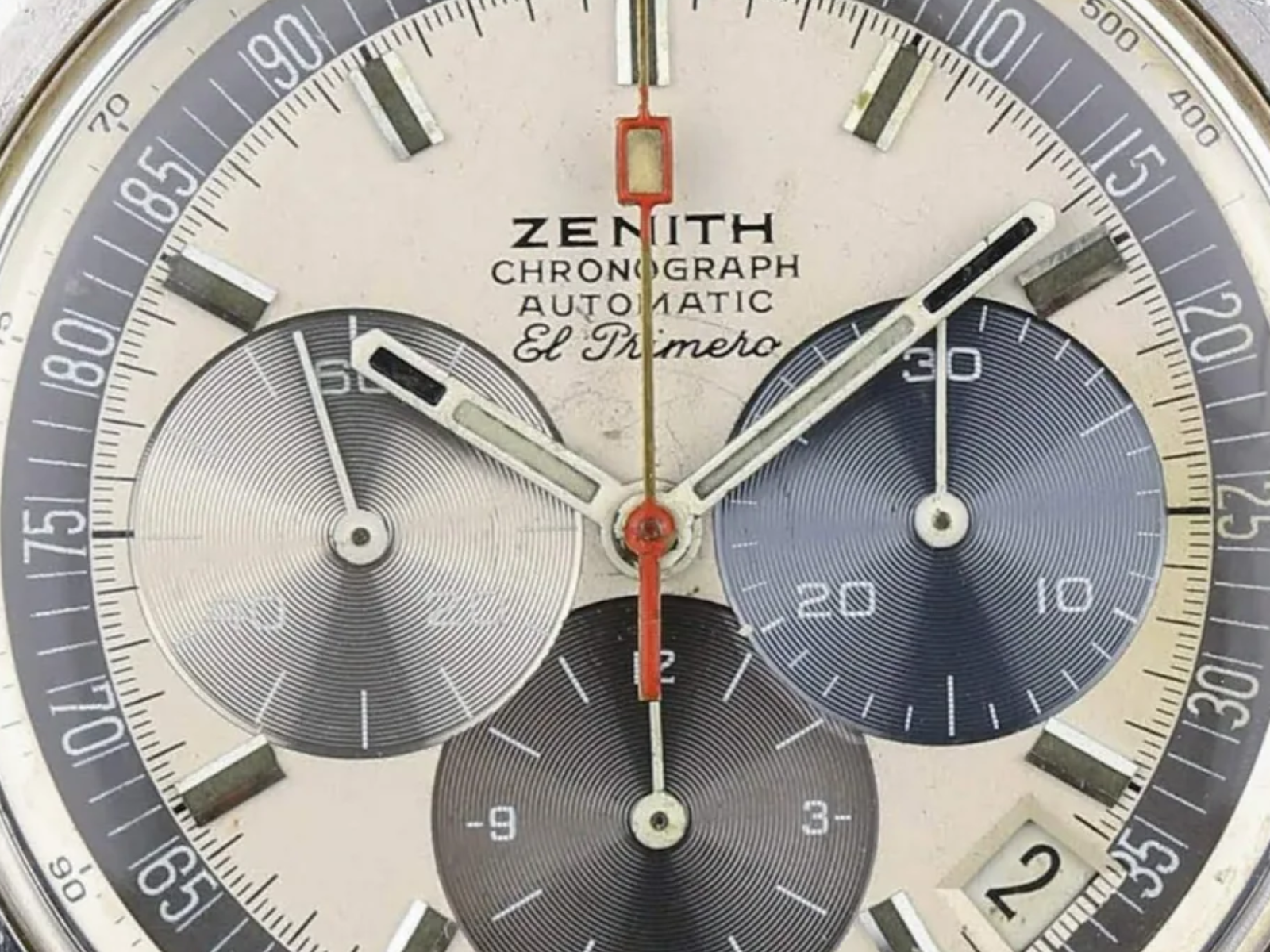 EP
EP36,000 vibrations per hour.
El Primero’s high frequency is not merely a specification. It is the technical idea around which much of modern Zenith identity has been built.
Tri-colour sub-dials
The A386’s grey, blue and anthracite registers became one of the most recognisable chronograph signatures in watch design.
Sharp case geometry
A384 and DEFY cases rely on crisp facets and transitions, making over-polishing especially damaging.
Chronometer movements
Calibre 135 and related precision work connect Zenith’s mid-century dress watches to a deeper observatory tradition.
Ladder bracelets
Open-link Gay Frères bracelets give many early El Primero and DEFY watches an unmistakable period silhouette.
Three things collectors learn quickly.
Vintage Zenith rewards movement literacy. Calibre 135, early El Primero variants and later revival calibres all sit within different technical and collecting contexts.
Collectors also learn that case condition is especially important on the angular watches. Once the facets of an A384 or early DEFY are rounded away, much of the original design is lost.
The movement can be the watch.
With Zenith, technical significance often sits beneath the dial. Calibre family should always be part of the buying decision.
Case geometry matters enormously.
A sharp tonneau or octagonal case can be more desirable than a brighter but heavily polished example.
Bracelets are part of originality.
Correct ladder bracelets and end links materially improve both the historical coherence and value of early sports models.
Where the interest sits.
Collector interest is strongest where movement importance and design originality overlap. Early El Primero watches dominate the modern collector narrative, while Calibre 135 and first-generation DEFY increasingly attract specialists.
These ratings are editorial indicators rather than price forecasts. Dial originality, case sharpness, movement condition and bracelet completeness can materially change desirability.
Very high
The definitive early El Primero and one of the most important automatic chronographs of the late 1960s.
High
Bold tonneau cases and distinctive dials make these central to Zenith’s 1969 design story.
High
A direct link to Zenith’s great chronometry era and highly respected among movement-focused collectors.
High
An increasingly appreciated 1969 design with strong architectural identity and historical importance.
Very high
Military association and scarcity make correct examples specialist territory.
Medium
A comparatively approachable route into one of watchmaking’s most important chronograph calibres.
Modern Zenith alternatives.
Modern Zenith draws directly from its archive. Chronomaster Original revisits the A386 formula, while DEFY Revival and the contemporary DEFY family reinterpret the brand’s angular 1969 design language.
For buyers who want the historical ideas without vintage servicing or originality concerns, the current catalogue offers unusually direct continuations.
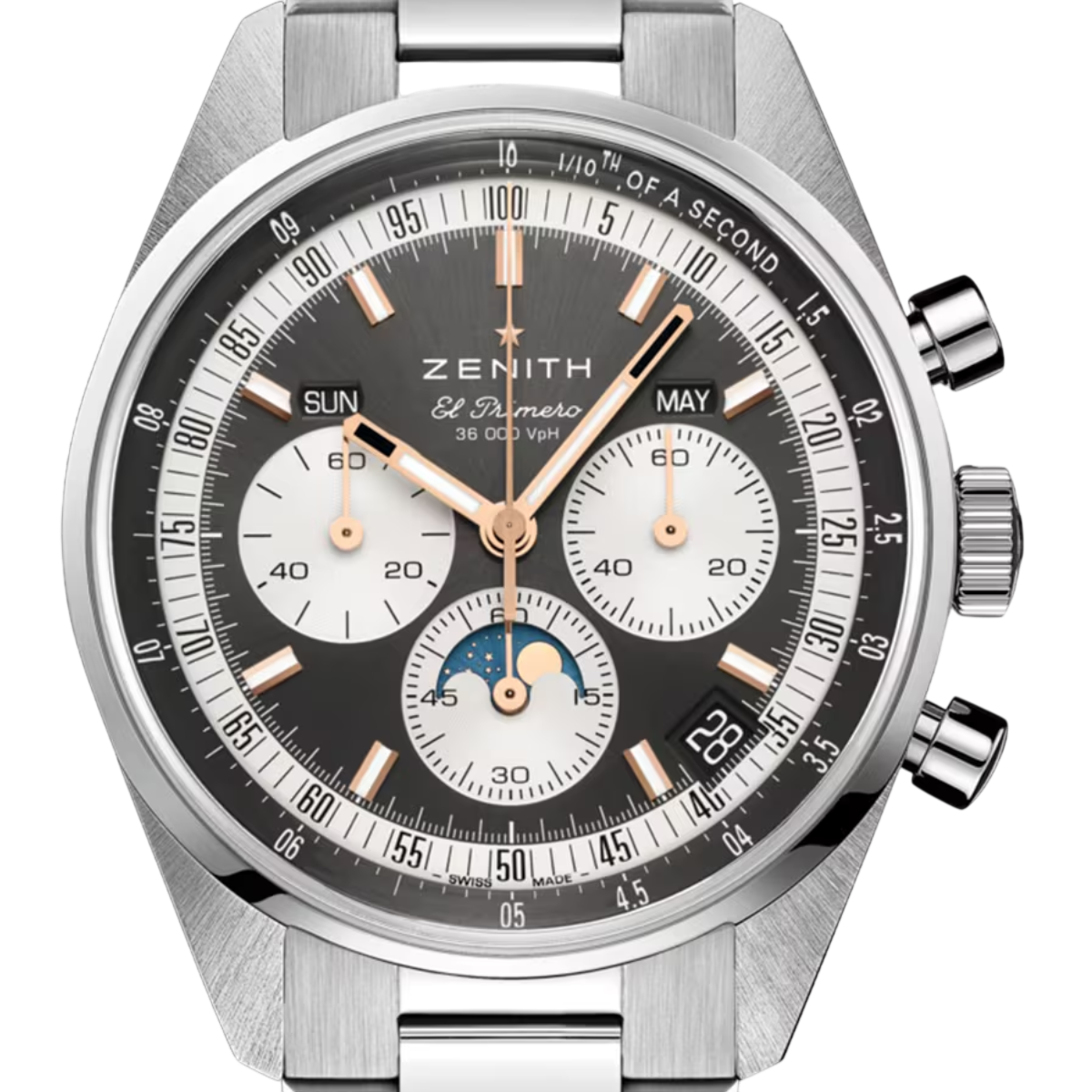
Chronomaster Original
The modern watch most directly descended from the A386 and its tri-colour high-frequency chronograph layout.

DEFY Revival
A close modern reinterpretation of the angular A3642 introduced alongside El Primero in 1969.
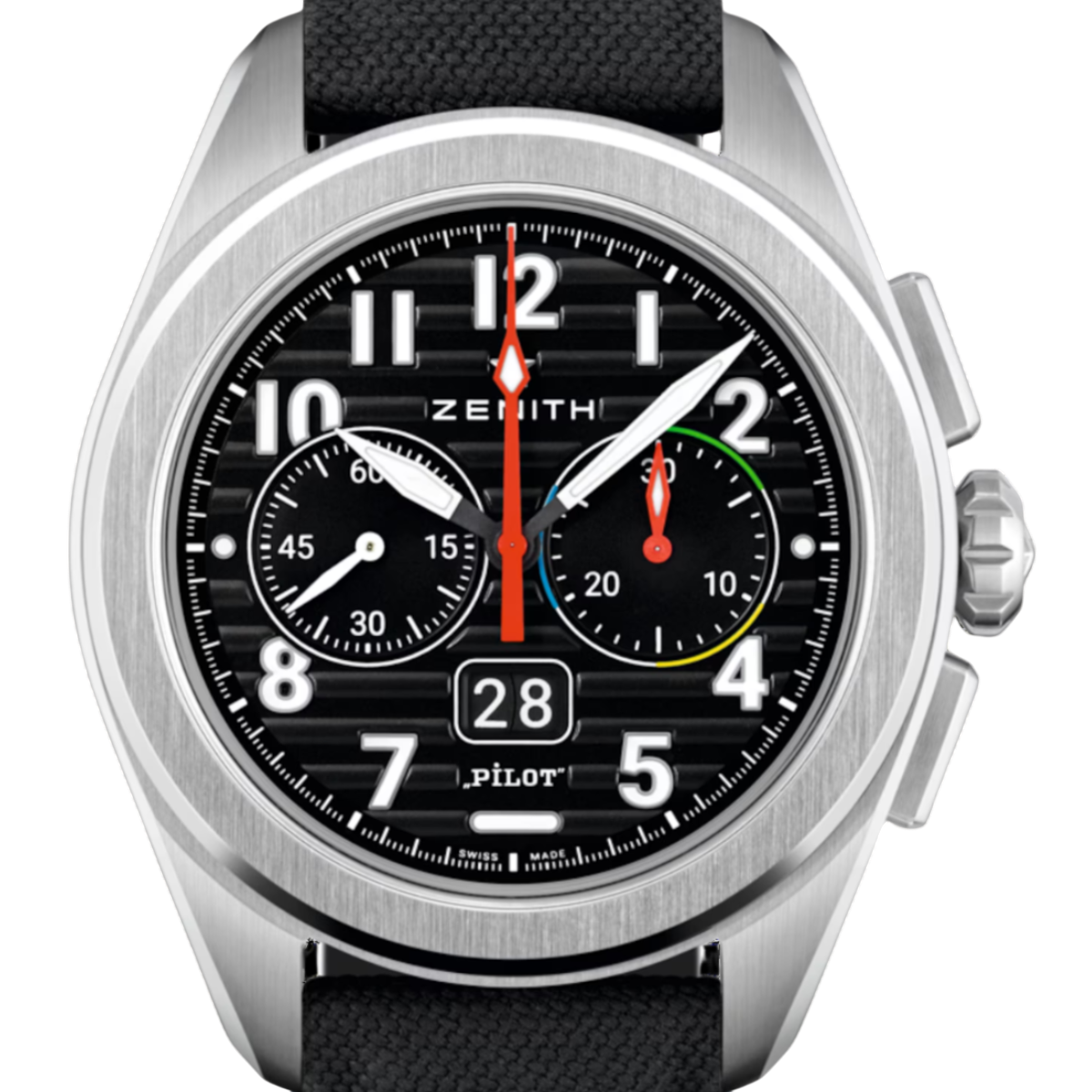
Pilot
A contemporary expression of Zenith’s long association with aviation instruments and highly legible pilot’s watches.
The Zenith archive is a story of precision that nearly disappeared.
From Favre-Jacot’s integrated manufacture and Calibre 135 to the A386, DEFY and Charles Vermot’s hidden tooling, Zenith’s vintage history is unusually coherent: precision first, design second, survival when it mattered most.