Vintage
Omega
From observatory precision and military service to the Seamaster, Constellation, Speedmaster and Moon landing: the collector’s guide to Omega’s defining vintage eras.
Vintage Omega spans almost every important strand of 20th-century watchmaking. The brand produced elegant chronometers, rugged military watches, professional divers, high-grade automatics and the chronograph that became inseparable from human spaceflight.


A century measured against the world.
Omega’s vintage importance comes from breadth without dilution. The company competed at observatory trials, supplied armed forces, timed international sport, equipped divers and developed chronographs capable of surviving the demands of spaceflight.
The catalogue therefore contains several distinct collecting worlds. Constellations reward attention to chronometer movements and dial geometry; Seamasters span dress watches, waterproof automatics and professional divers; Speedmasters require reference-level knowledge of bezels, hands, cases and calibres.
For collectors, Omega offers a rare combination of major historical narratives and accessible depth. Beyond the headline Moonwatch are military references, Rancheros, Genève models, Seamaster chronometers, Flightmasters and many less obvious watches with strong movements and compelling design.
Vintage Omega is not one story. It is a map of how the modern wristwatch entered work, sport, exploration and space.
The quick collector’s view
Most recognisable
The Speedmaster Professional: the chronograph whose design became inseparable from NASA and the Moon.
Connoisseur choice
An early CK2915 or CK2998 Speedmaster, sharp Seamaster 300, or exceptional pie-pan Constellation.
Best entry point
Honest calibre 30T2 watches, early Seamasters, Genève models and later calibre 861 Speedmasters.
From precision manufacture to global instrument maker.
Omega began with Louis Brandt in 1848 and developed rapidly under the next generation. By concentrating production in Biel/Bienne and creating efficient interchangeable movement systems, the company combined industrial scale with serious horological ambition.
That dual identity shaped the brand’s greatest vintage watches. Omega could produce vast numbers of dependable military pieces while also competing in precision trials, building chronometer-grade automatics and developing specialised watches for diving, engineering and space exploration.
Louis Brandt establishes the business
Louis Brandt begins assembling and selling watches from La Chaux-de-Fonds, laying the foundations of the company that would become Omega.
Industrial production and the Omega calibre
The Brandt brothers move operations to Biel/Bienne and develop a highly successful movement system whose name, Omega, is adopted by the company.
Precision trials and international timing
Omega builds a reputation through observatory competition, precision movements and increasingly visible roles in sport and public timekeeping.
Military production at scale
During the Second World War, Omega supplies large numbers of robust wristwatches to Allied forces, strengthening its reputation for dependable precision.
Seamaster and Constellation
The Seamaster introduces a durable waterproof family, while the Constellation translates chronometer performance into a refined flagship collection.
The professional trilogy and spaceflight
Speedmaster, Seamaster 300 and Railmaster establish Omega’s professional-watch identity. NASA later qualifies the Speedmaster for crewed missions.
Experiment, quartz and revival
Flightmaster, marine chronometers, electronic watches and quartz technology broaden the catalogue before mechanical icons return to prominence.
An Omega timeline.
Omega’s major milestones show how precision moved from observatories into public life. Military service, Olympic timing, diving, engineering and spaceflight each demanded reliability under different conditions.
The dates below identify broad historical landmarks. Individual references, case generations, military markings and movement variants should still be researched separately.
Louis Brandt begins the business
The future Omega company is founded in La Chaux-de-Fonds.
Move to Biel/Bienne
Production is relocated to support more integrated and industrialised watchmaking.
The Omega calibre
A successful interchangeable movement system gives the company its future name.
Olympic timekeeping
Omega becomes official timekeeper of the Olympic Games in Los Angeles.
Allied military supply
The company produces large numbers of wristwatches for military service.
Seamaster
A waterproof watch family is launched in Omega’s centenary year.
Constellation
Omega introduces a chronometer-focused flagship collection.
Professional trilogy
Speedmaster, Seamaster 300 and Railmaster appear in the same landmark year.
NASA qualification
The Speedmaster is selected for crewed American space missions after comparative testing.
The Moon landing
A Speedmaster is worn on the lunar surface during Apollo 11.
Flightmaster
Omega introduces a large, colourful pilot’s watch designed for long-distance aviation.
Marine Chronometer
A highly accurate quartz wristwatch receives marine chronometer certification.
Omega in its own words.
Period advertising shows how the brand connected precision with modern life—from executive dress watches to diving, sport and space exploration.

The four vintage eras.
Vintage Omega is easier to understand when divided by changes in production, professional use and movement technology. The catalogue evolves from pocket-watch manufacture to military scale, post-war collection building and increasingly specialised professional watches.
Each era brings different signatures, calibre families, case constructions and collecting risks. Establishing the period first makes it easier to judge whether a watch is coherent and fairly valued.
Manufacture and precision
Industrial production, pocket watches, observatory testing and early wristwatches establish Omega as a major international maker.
Military and post-war confidence
Military supply, calibre 30T2 watches, Seamaster and Constellation create the foundation of modern vintage Omega collecting.
The professional golden age
Speedmaster, Seamaster 300, Railmaster and NASA qualification place specialist tool watches at the centre of the brand.
Experiment and transition
Flightmaster, electronic movements, marine chronometers, quartz and mechanical revival shape later vintage Omega.
Six important vintage Omegas.
This is not a complete reference catalogue. It is a map of the families that best explain vintage Omega: early Speedmasters, professional Seamaster divers, pie-pan Constellations, Ranchero, Flightmaster and the military-associated 165.024.
Each family demands different knowledge. Bezels, dials, hands, case backs, calibre generations, luminous material and service parts can all determine whether an example is compelling.
 2915
2915Speedmaster CK2915
The first Speedmaster, distinguished by broad-arrow hands, a steel bezel and the calibre 321 chronograph movement.
 300
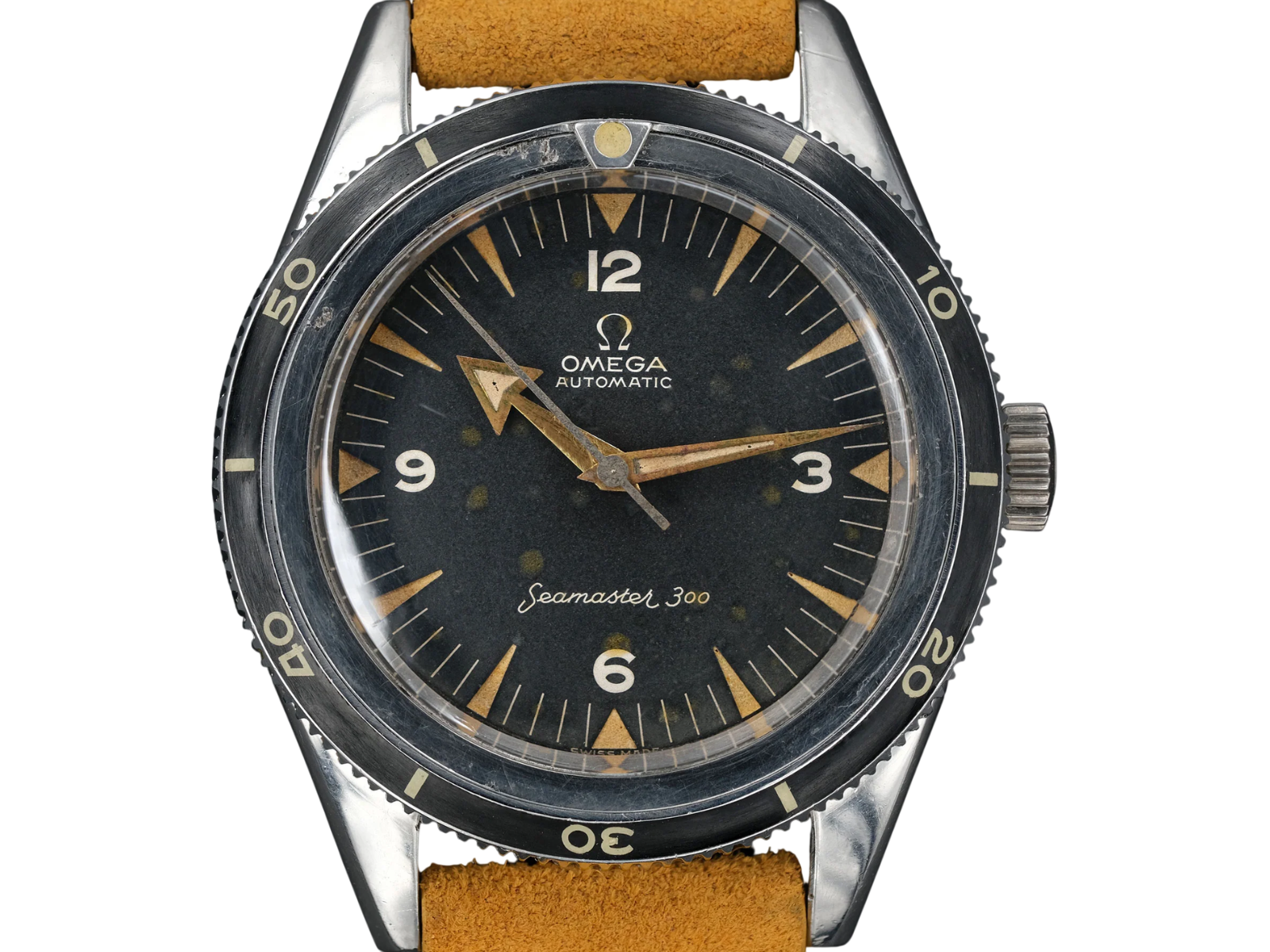
300Seamaster 300 CK2913
Omega’s foundational professional diver, combining broad-arrow design, rotating bezel and strong military associations.
 PP
PPConstellation Pie Pan
A chronometer-grade automatic whose faceted dial, applied furniture and observatory medallion define post-war Omega elegance.
 R
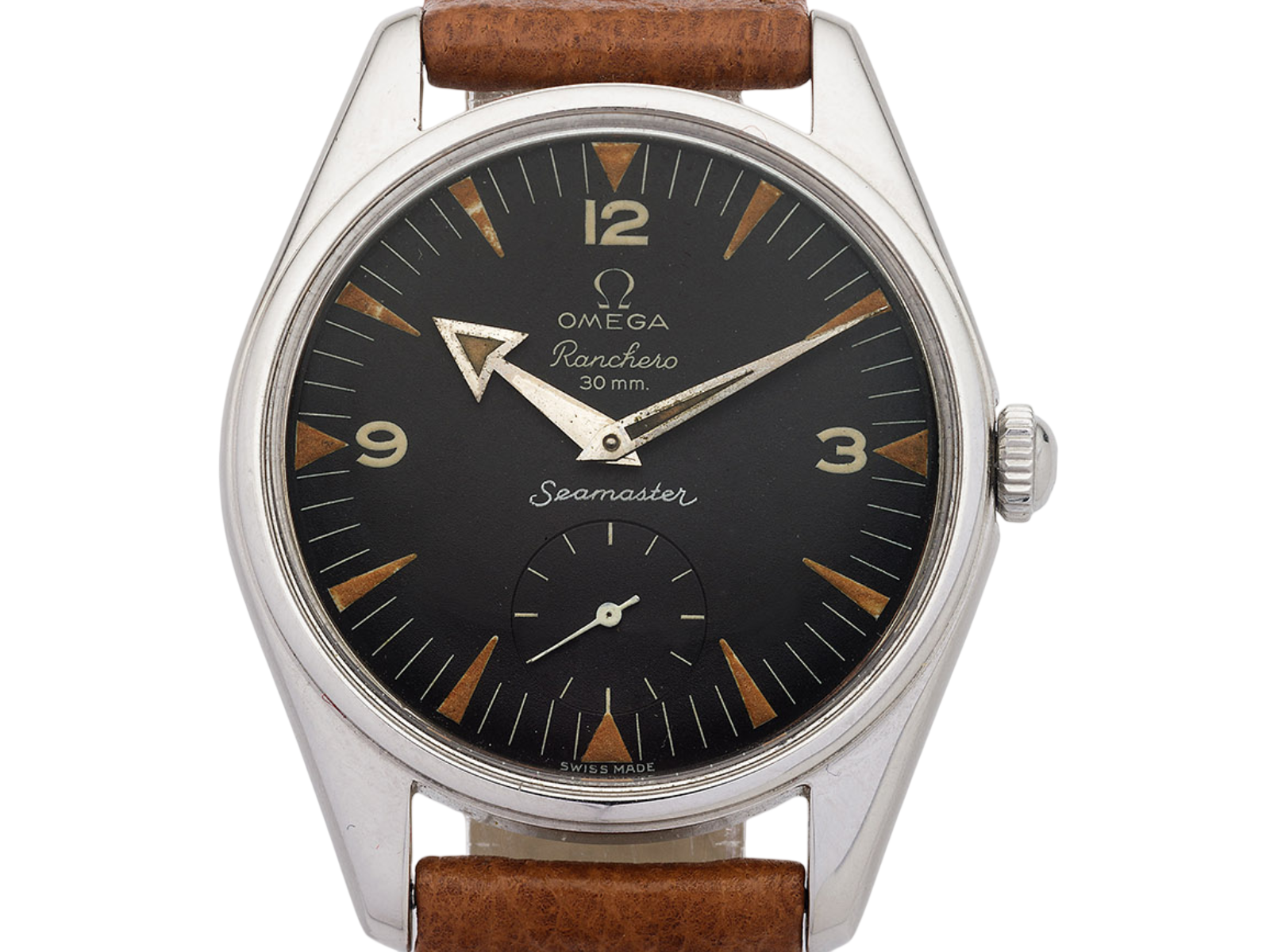
RRanchero
A short-lived, highly collectible model combining luminous tool-watch graphics with a restrained hand-wound case.
 FM
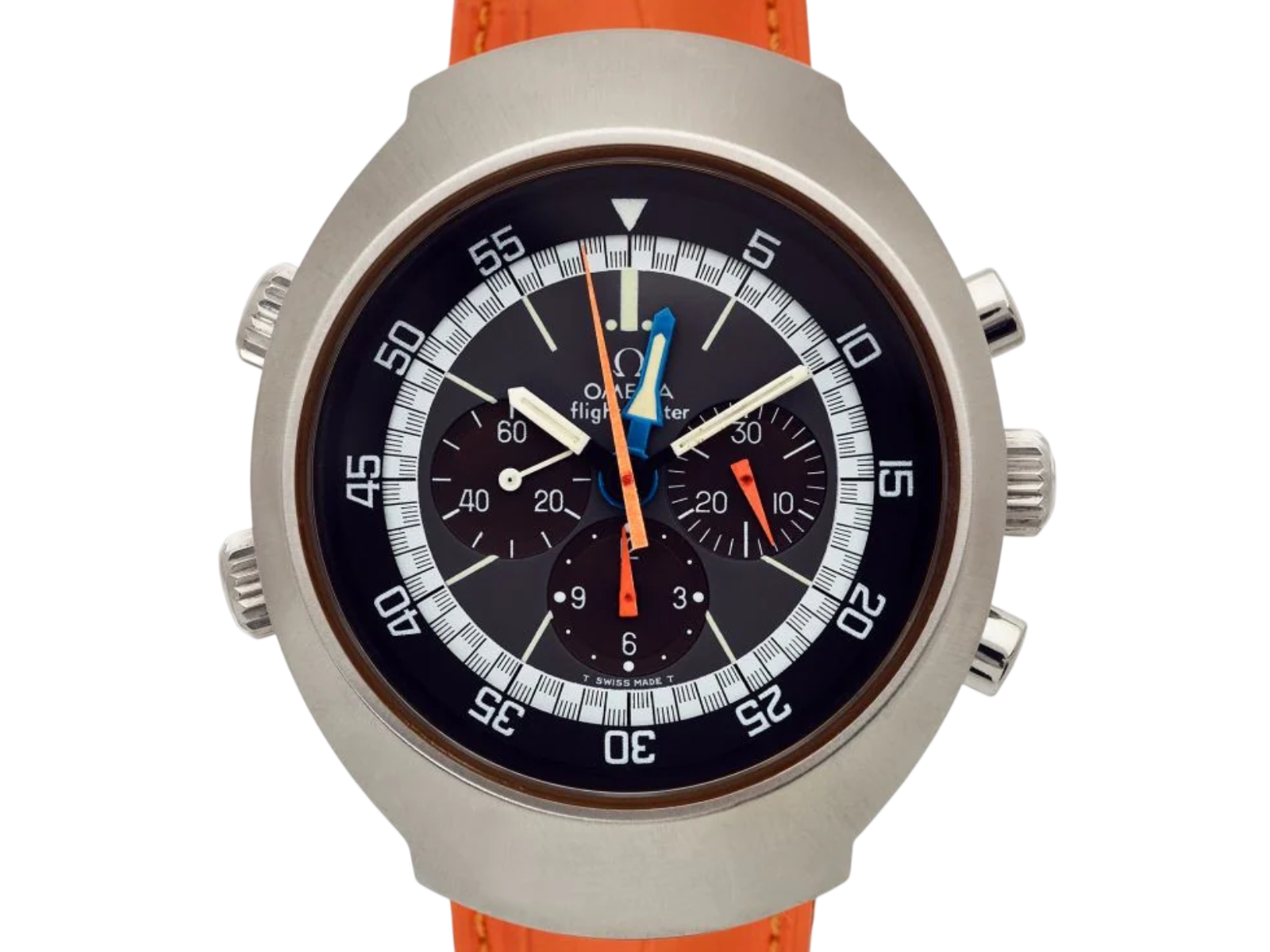
FMFlightmaster
A large purpose-built pilot’s watch with multiple crowns, colourful hands and independently adjustable second time zone.
 165
165Seamaster 300 Ref. 165.024
The classic 1960s Seamaster diver, used by professional and military divers and central to vintage Omega sports collecting.
Reading the catalogue.
Old catalogues, movement charts, NASA documentation and military records demonstrate the global appeal of the brand, and can clarify reference numbers, calibre families, dial layouts and intended professional use.

What makes a vintage Omega look like an Omega?
The recurring details vary by family but share a strong sense of purpose: balanced dial geometry, applied logos, precise scales, distinctive case backs and movements engineered for dependable use.
Learning that vocabulary helps distinguish original watches from attractive assemblies. The strongest examples feel coherent because every element belongs to the same reference and production period.
 321
321Movements define the era.
From the 30T2 and 500-series automatics to calibres 321 and 861, movement architecture is central to identifying and valuing vintage Omega.
Applied Omega logos
Metal logos and carefully proportioned signatures give many mid-century dials a crisp, architectural presence.
Case-back medallions
Seahorses, observatories and collection-specific engravings communicate identity and often reveal polishing or replacement.
Purpose-built bezels
Tachymeter, diving and navigation bezels turn professional models into working instruments and major originality checkpoints.
Strong dial geometry
Pie-pan facets, broad-arrow hands, sector layouts and high-contrast scales create highly recognisable visual families.
Three things collectors learn quickly.
Vintage Omega rewards exact reference knowledge. Small differences in bezel font, hand shape, dial printing or case back can separate a coherent watch from one assembled during decades of servicing.
Collectors also learn that service parts are common and not automatically unacceptable. The important question is whether replacements are disclosed, appropriate and reflected in the price.
Reference families are complex.
Speedmaster, Seamaster and Constellation names cover many generations. Always identify the full case reference.
Service history shapes originality.
Omega routinely replaced bezels, hands, crowns and dials. A well-serviced watch may be excellent but not collector-original.
Condition varies by purpose.
A military or diving watch may show honest use, while a dress chronometer is judged more heavily on dial and case preservation.
Where the interest sits.
Collector interest is strongest where professional history, reference scarcity and component originality overlap. Early Speedmasters and Seamaster 300s dominate the headline market, while Constellations, Rancheros and specialist 1970s watches offer substantial depth.
These ratings are editorial indicators rather than price forecasts. Dial originality, bezel type, calibre, case condition and documented provenance can matter more than the family name alone.
Very high
Foundational references with strong historical importance and extreme sensitivity to original components.
High
Core Moonwatch references associated with the Apollo era and powered by calibre 321.
Very high
Professional divers with military associations and frequently replaced bezels, dials and hands.
High
Chronometer-grade automatics whose value depends heavily on dial originality and case condition.
Very high
Short-lived and heavily redialled, making convincing original examples difficult to find.
Medium
A distinctive specialist pilot’s watch increasingly appreciated for its design and technical complexity.
Modern Omega alternatives.
For buyers drawn to Omega’s historical designs but unwilling to accept the uncertainty and maintenance demands of a vintage watch, the modern catalogue preserves several of its strongest families.
These models offer contemporary reliability while retaining the chronograph layout, diving identity and refined everyday versatility associated with the archive.
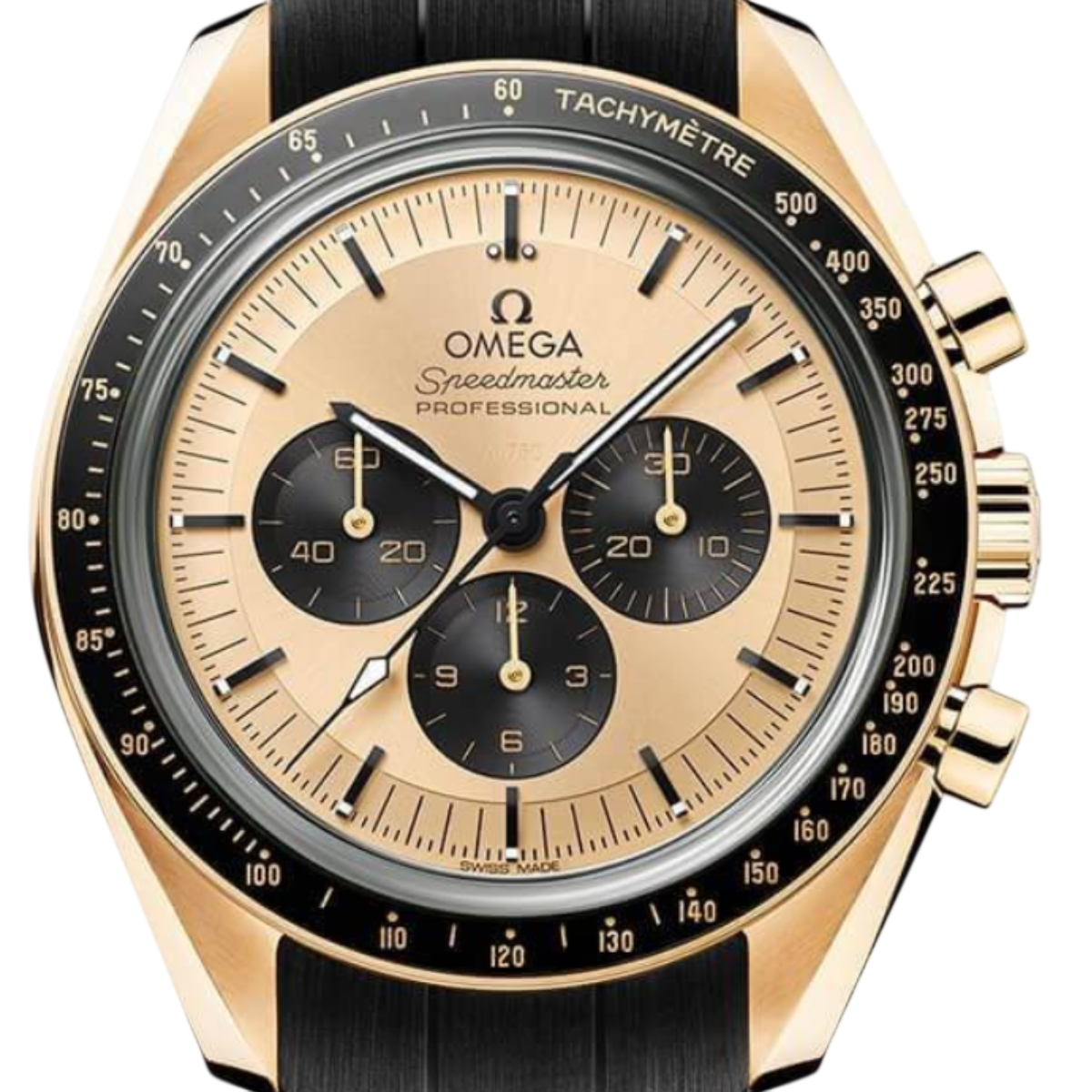
Speedmaster Professional
The direct modern continuation of the Moonwatch tradition, retaining manual winding and classic chronograph architecture.

Seamaster Diver 300M
A modern professional diver combining strong Omega identity with contemporary materials and water resistance.

Aqua Terra
A versatile modern expression of the Seamaster’s original everyday, water-resistant brief.
The Omega archive extends far beyond the Moonwatch.
The Speedmaster is the natural entry point, but the richest collection moves across military watches, observatory chronometers, pie-pan Constellations, professional Seamasters, Flightmasters and the many movements through which Omega repeatedly redefined precision.